

Three debut Australian novels explore diverse territory: the recognisable real world of parental estrangement, and a dystopian near-future where it never stops raining.
Articles on Fatherhood
Displaying 21 - 40 of 87 articles
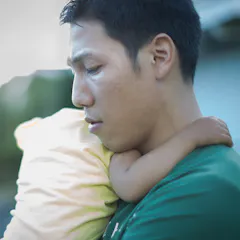
Postnatal depression is thought to affect up to 10% of fathers.

Kevin Brophy grew up fearing his violent father. Going through the papers of his war record, he began to wonder if his dad was someone else as a young man — someone he might have enjoyed knowing.

A contrast to the bumbling and immature fathers commonly found on sitcoms, Bob Saget’s character on ‘Full House’ reflected a shift in expectations of fatherhood that began in the late 1970s.
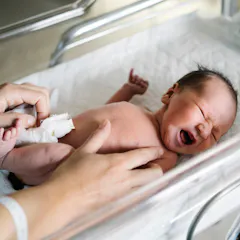
Interviewees describe ‘scrimping and saving’ to make ends meet.
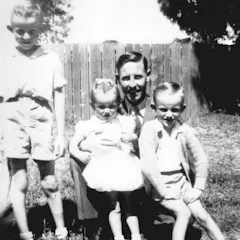
Australian fatherhood remains closely tied to ‘breadwinning’. History helps us to understand why.
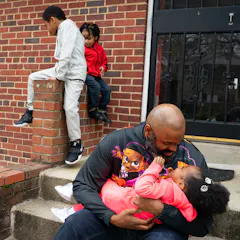
A fatherhood researcher argues that US work policies, income inequality, gender attitudes and health care all make it harder for dads to be highly engaged at home.
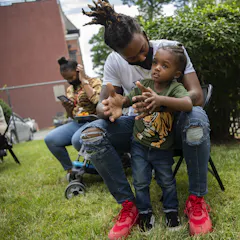
Fathers whose own dads were highly nurturing tend to have healthier levels of competition and be more emotionally open.

Biden’s relationship with his father contrasts with perhaps every president in the last four decades, who either had absent or distant fathers or abusive or alcoholic fathers or stepfathers.
A new study found that while becoming a father gave men more leadership opportunities, becoming a mother diminished them for women.

While the man the world knows as ‘Papa’ balanced the demands of parenting with his work, his letters and fiction offer a window into the depth of his paternal feeling.

Dads are taking parenting much more seriously. But according to a study of sitcoms, the stereotype of the foolish father remains stubbornly in place.
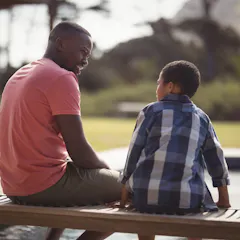
The South African child support grant is progressive in its gender-neutrality, yet men make up only 2% of those who collect it.

Almost one in three new mothers report severe problems getting their baby to sleep and settle. Every baby is different but some women are more likely to struggle – here’s why.
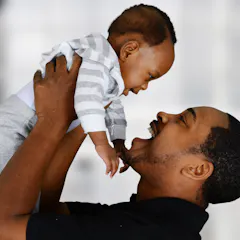
Two experts ask whether dads are making their health a priority. Evidence suggests not. Pressures to provide income often hold fathers back.

Before the advent of genetic testing, definitions of paternity were primarily social and legal. Science has destabilized these older definitions, but it has not replaced them.
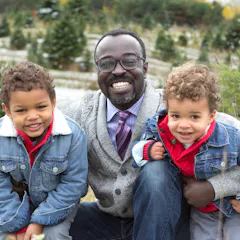
As dads blog about their lives and changing norms and issues around fatherhood and parenting, they’re pushing for social changes to benefit families in Canada — one blog post at a time.
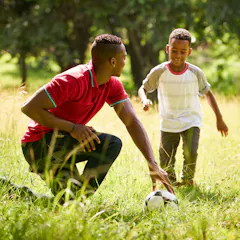
Most Canadian children spend too much time on screens and don’t eat enough fruit and vegetables. Fathers can help by modelling healthy behaviours and getting involved in research.

New research has found one in five dads has experienced symptoms of depression and/or anxiety after having children.

The tasks of fatherhood are changing, but society’s expectations haven’t caught up. Many dads use online discussion groups, blogs and videos to explore their new identities.
Top contributors
-

Associate professor, University of Newcastle
-
Associate Professor of Sociology and Director of Canadian Studies, Brigham Young University
-
Professor of Psychology, USC Dornsife College of Letters, Arts and Sciences
-
Chair in Social Sciences and Health and UNESCO Chair on Masculinities and Gender Equality, Queen's University Belfast
-
Senior Research Associate, Africa Health Research Institute (AHRI)
-
Research Affiliate, Faculty of Health Sciences, University of Sydney
-
Student area of expertise unplanned pregnancy and father absence, University of the Witwatersrand
-
Professor of Sociology, University of Minnesota
-
Principal Fellow, Murdoch Children's Research Institute
-
Professor of General Practice Research, Director of Clinical Academic Training, Keele University
-
Assistant Professor of Sociology, The Ohio State University
-
Casual Academic, University of Technology Sydney
-
Professor of Psychology and Neuroscience, University of North Carolina at Chapel Hill
-
Professor of Critical Social and Health Psychology, Keele University
-
PhD student, The University of Melbourne