
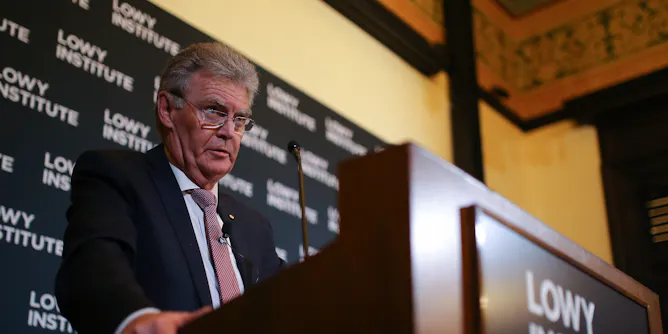
In an address to the Lowy Institute, outgoing ASIO head Duncan Lewis warned that “the scale and scope of foreign intelligence activity against Australian interests is unprecedented”.
Articles on Far-right extremism
Displaying 81 - 100 of 103 articles
A survey by the Commission for Countering Extremism revealed many don’t feel able to define extremism – or found the government’s definition helpful.
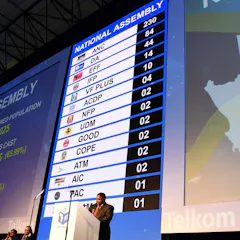
The recent election has shown again that the extremism which worries democrats in much of the world has little traction in South Africa.
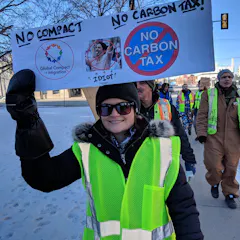
Far-right yellow vest extremists in Saskatchewan could jeopardize Saskatchewan’s efforts to grow and attract immigrants.
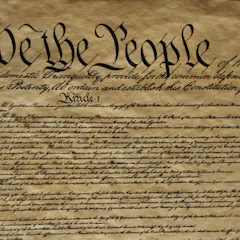
The growing number of self-taught, right-wing experts on the Constitution believe not only in the rights of white people, but have a comprehensive – if not comprehensible – view of the Constitution.

In a context of defiance against media, how can journalists recover the public’s trust and their image of “truth tellers”? Brazil provides a few examples.

Groups promoting right wing extremism, like the Antipodean Resistance and the Lads Society, have recently dominated headlines, but they are far from the sum of the extreme right in Australia.
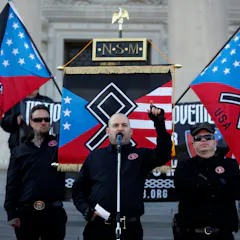
The recent massacre at a New Zealand mosque is a traceable, direct outgrowth of an American white nationalist movement that insists immigrants and people of color are a threat to ‘white civilization.’
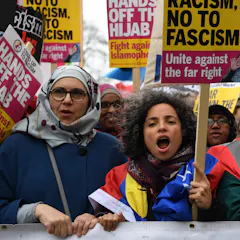
Globally, Muslims have been by far the most victimised group by terrorism in the post-9/11 era.
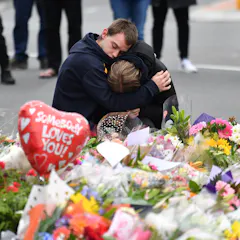
There is deep sadness in the Christchurch attacks, but little shock. We need to address the permissive political environment that allows such hateful extremism to be promulgated so openly.
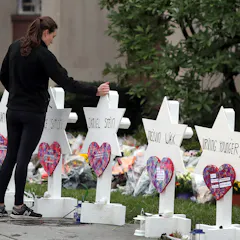
The shooting at a Pittsburgh synagogue joins a list of more than 200 other ideologically motivated attacks by far-right extremists since 1990.
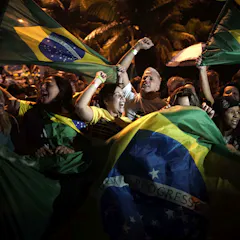
Jair Bolsonaro, a right-wing congressman and former army captain, is Brazil’s next president, with 56 percent of votes. Critics see a threat to democracy in his scathing attacks on Brazilian society.
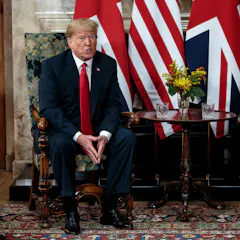
Britain is experiencing a moment of great cultural tension. The US president isn’t helping.
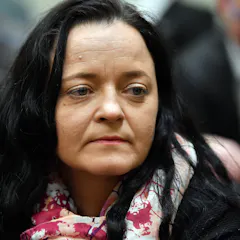
A life sentence for the neo-Nazi who murdered ten people. But questions remain about how she evaded authorities for more than a decade.
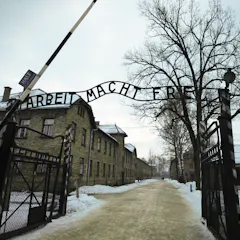
More than 70-years after World War II, is Auschwitz still relevant to children today?
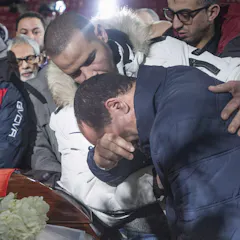
As Canadians, we shouldn’t blame U.S. President Donald Trump for the rise of hatred here. He may have emboldened the so-called alt-right in Canada, but it was flourishing long before his election.
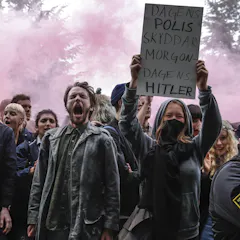
It’s not just the US which is seeing a rise in support for neo-Nazi organisations and right-wing politics. In Scandinavia it’s infiltrating the mainstream.
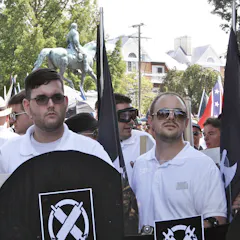
The United States is seeing an uptick in far-right extremist violence. It’s time to pay more attention to this scourge and its causes.
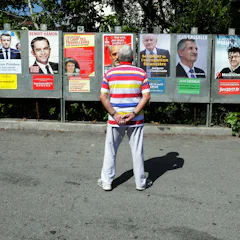
As France heads to the polls ton April 23, citizens seem more confused than ever about just what is “left” and what is “right”.
For the first time, parliament plans to ban a right-wing extremist group, called National Action.
Top contributors
-

Professor of Old English and Old Norse, University College Cork
-
Associate Professor of Criminal Justice and Criminology, University of North Carolina – Charlotte
-
University Professor and Joseph H. & Belle R. Braun Professor of American Jewish History, Brandeis University
-
Associate Professor of Criminology and Criminal Justice, University of Alabama
-
Research Lead, Center on Terrorism, Extremism, and Counterterrorism, Middlebury College
-
Distinguished Professor of Anthropology; Director, Center for the Study of Genocide and Human Rights, Rutgers University - Newark
-
Associate Professor of Global and International Studies, University of California, Irvine
-
Visiting Assistant Professor of Geography, Macalester College
-
Associate Professor of Graphic Design, Iowa State University
-
Chair in Global Islamic Politics, Alfred Deakin Institute for Citizenship and Globalisation, Deakin University
-
Professorial Fellow, University of Canberra
-
Associate Professor of Political Science, Boise State University
-
Professor of Political Studies, University of Johannesburg
-
Lecturer, Political Science and International Studies, University of Birmingham
-
Assistant Professor of Political Science, University of New Hampshire