
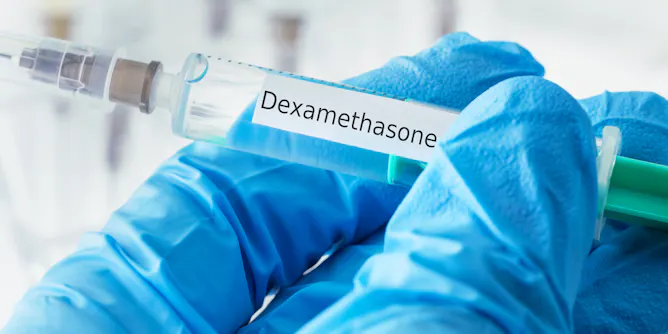
Scientists have discovered that a widely used, cheap steroid can fight off COVID-19 in the most severe cases. Here’s how it works.
Articles on Explainer
Displaying 61 - 80 of 564 articles

Pets might not protect us from the coronavirus, but they can help us get better.

If enacted, the funding cuts may cause the WHO to go bankrupt in the middle of a pandemic. Trump’s move also signals the US is no longer prepared to provide a leadership role in global health issues.

How accurate will the 2020 census be? A demographer explains which communities are hard to count, how the coronavirus could affect the process and what’s at stake.

Exponential growth, such as in a viral epidemic, starts deceptively slowly, then quickly balloons. A mathematician explains the importance of early action and the costs of delay.

As the sun sets on world markets, rumours of the death of investors’ favourite safe haven have been much exaggerated.

Polls have become an essential component of the news coverage of presidential campaigns. That may affect who voters decide to back on an election day.

Nietzche has a reputation as a bit of a downer, but there are upsides to dancing close to the abyss and embracing our mortality.

Systemic racism looks at the way racism operates over all of society, not just in one-on-one interactions.

Rogue coffee cups and changing hairstyles can distract film audiences. Whose job is it to maintain continuity? And does it matter in the big picture?
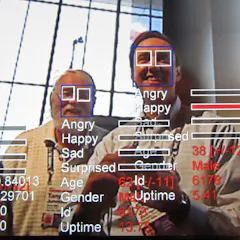
A report calls for banning the use of emotion recognition technology. An AI and computer vision researcher explains the potential and why there’s growing concern.
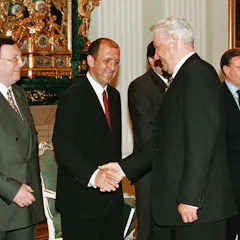
Oligarchs have made headlines recently as the impeachment hearings against President Donald Trump move forward.

Babies in Australia have been vaccinated against hepatitis B since May 2000, but 240,000 Australians still live with the disease.

Private prisons have long been a topic of controversy in the U.S. A professor of sociology explains what they are and why they matter.

A conductor’s role is about communication with performers and their audience. They do so using eye contact, dress, and of course, the fabled waving of the arms.

Ebola has now now spread to Goma – a city of 2m people.

The US hit the debt ceiling in March and is expected to run out of ways to get around the new $22 trillion limit by September. An economist explains why the ceiling is a dysfunctional relic.

Western civilisation and Islam are sometimes seen as diametrically opposed. Yet Islamic cultures have contributed much to the West, in language, philosophy and literature.

Cold water shock explained.

Sjögren’s syndrome has no cure. Here’s how it affects the body and what the future might bring for people with this challenging autoimmune disease.
Top contributors
-

Professor of Infectious Diseases, Monash University
-
Associate Professor in Law and Public Policy, University of Oxford
-
Professor of Dermatology, The University of Melbourne
-
Chair, The Conversation Media Group
-
Clinical Associate Professor, School of Medical Science & Sydney Infectious Diseases Institute; Principal Hospital Scientist, University of Sydney
-
CBRN defence scientist, Charles Darwin University
-
Post Doctoral Research Associate, Centre for the Subatomic Structure of Matter, Adelaide University
-
Senior Curator (Astronomy), Museums Victoria Research Institute; The University of Melbourne
-
Senior Lecturer in Networking, The Open University
-
Research Fellow, School of Law, The University of Queensland
-
Associate Professor in Astronomy, Monash University
-
John Curtin Distinguished Professor of Health Science, Curtin University
-
Project Manager; Centre for Advanced Training Systems, University of Newcastle
-
Senior Research Fellow; Rheumatology Research Group, Centre for Inflammatory Diseases, Monash University
-
Associate Professor, School of Engineering, RMIT University