
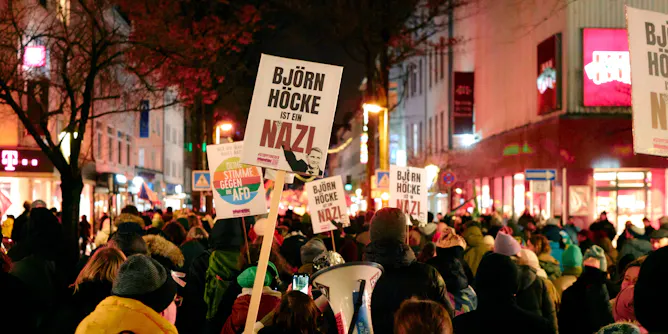
Our fast-track society has made voters impatient – the far right promises fast-track, simplistic solutions to complex problems.
Articles on European elections 2024
Displaying 1 - 20 of 23 articles
For the far-right party’s voters, school is a source of concern and mistrust and also a key to understanding its success among women and voters with few qualifications.
Sunday’s vote show that the growing presence of far-right parties in almost all member states, but the increase wasn’t the groundswell expected and conceals differences.
Many EU countries are lowering their voting age, but Europe’s youth vote is starkly polarised.
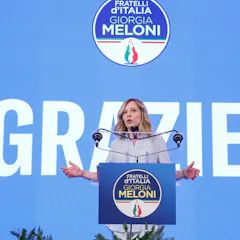
Italy’s prime minister won big in the European elections, leveraging her campaign to bring her exclusionary politics into the mainstream.
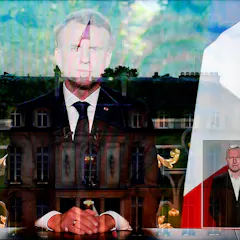
Julien Robin, a specialist in French parliamentary life, looks at what the surprise dissolution means for French politics.

The two countries have a history of quarrels on energy, in particular in relation to nuclear power. Yet a recent survey reveals much common ground on which to build future energy partnerships.

European voters head to the polls to elect new MEPs – the results will shape who takes the EU’s top jobs.
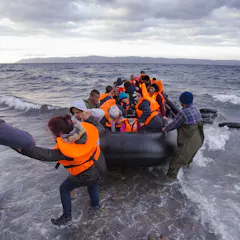
European citizens have remarkably similar preferences on asylum policy, including being strongly in favour of asylum seekers being allowed to work.
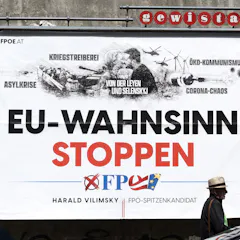
The FPÖ is the favourite to come out on top in the European elections and also win the parliamentary elections next September.
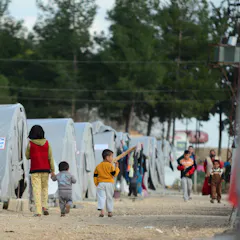
By externalising migration control the EU endangers lives, props up dictators, and empowers far-right parties.

EU elections are a pivotal moment for the bloc’s citizens to exercise their collective rights, yet many remain unaware of their importance.
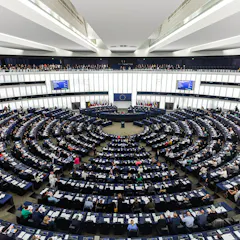
Complex though they may be, European Union laws have directly impacted citizens’ lives for decades.
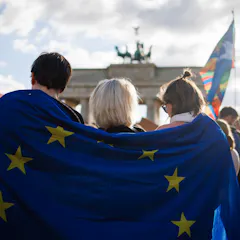
The far-right Alternative for Germany is courting the youth vote on TikTok with great success, ahead of the elections in June.
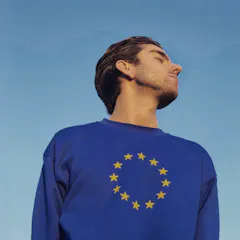
The French have an ambivalent relationship to the European Union, expressing a strong feeling of European belonging on the one hand, and Euroscepticism toward institutions on the other.
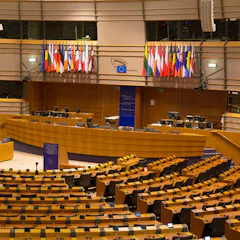
Ten states are currently vying for EU membership, but most of them will face significant challenges.
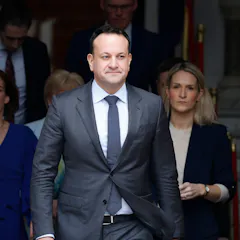
The taoiseach has not explained his sudden decision to leave but could he have an eye on Europe’s top job?
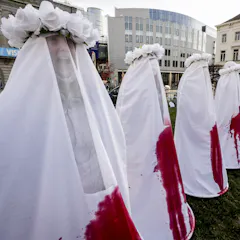
Legendary European parliament president Simone Veil fought for women’s reproductive rights in France and in Brussels. Is her legacy about to be re-opened?

The European Media Freedom Act aims to fight misinformation and ensure an independent press, while also keeping media outlets in business.

In an uncertain world our natural instinct is to seek out answers that reassure, even when they don’t make sense.
Top contributors
-

Jean Monnet Professor for Comparative Politics & European Integration, University of Tübingen
-
Chercheur en science politique - CEVIPOF, Sciences Po
-
Post-Doc, Ghent University
-
Catedrático de Historia del Pensamiento y de los Movimientos Sociales y Políticos, Universidad del País Vasco / Euskal Herriko Unibertsitatea
-
Catedrático de Ciencia Política, Universitat de Barcelona
-
Professeur émérite de science politique, Sciences Po Grenoble, Auteurs historiques The Conversation France
-
Postdoctoral research fellow, Queen Mary University of London
-
Profesor contratado doctor de Derecho administrativo, Universidad de Navarra
-
Professeure associée et coordinatrice de la chaire « Energy for Society », GEM
-
Postdoctorant, CESDIP, Université de Versailles Saint-Quentin-en-Yvelines (UVSQ) – Université Paris-Saclay
-
Karlsruhe Institute of Technology
-
Principal Fellow, Melbourne School of Government, The University of Melbourne
-
Professor of Political Science, University of Copenhagen
-
Associate Professor in Politics and International Relations, University of Westminster
-
Profesor de Ciencia Política, Universitat de Barcelona