
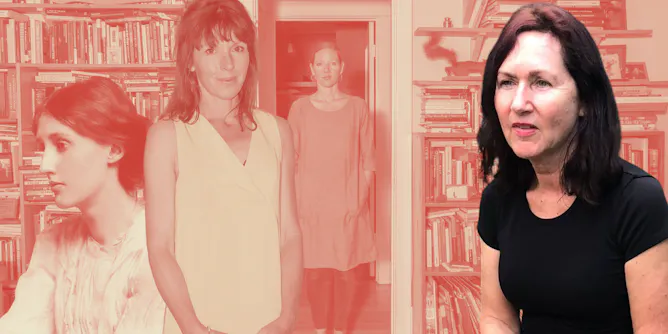
When Jane Gleeson-White’s marriage ended two years after her mother died, she lost her voice. Books by women writers like Rachel Cusk, Olivia Laing and Maggie Nelson helped her find it again.
Articles on Elena Ferrante
Displaying all articles
Fans often prefer to remain in the dark about the identity of their favourite authors and artists

Half-wild Lyra from Northern Lights was the first female character who felt real to Jane Gleeson-White. Then she met Elena Ferrante’s ‘ferocious, filthy, quicksilver’ Lila, a more complex version.
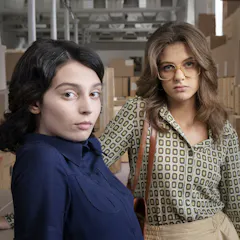
In her new essay collection, Elena Ferrante tells the compelling story of her reading and writing life, and the battle between form and wildness.
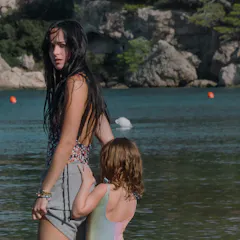
The Netflix adaptation of Elena Ferrante’s The Lost Daughter explores motherhood as complexly as the book, but some things get lost in translation.

The White Lotus is a tense, new drama about the lives of the rich and privileged, set in a Hawaiian resort. But the protagonists are not lying around reading airport novels.
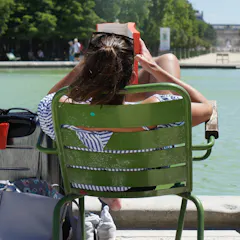
The books Goodreads users read more often than are assigned in university tend to be by women writers and to feature strong female protagonists.
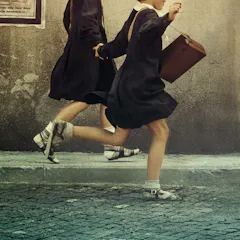
How important is the identity of an author? Can a novelist ever really ‘become’ someone else?
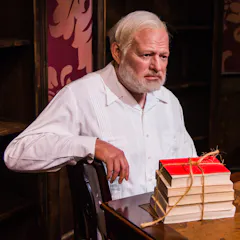
Bob Dylan is now a literary celebrity. And next week, the Booker Prize judges will anoint another. The tag is still chiefly attached to men but women authors shouldn’t despair: fame and good writing can be uneasy bedfellows.
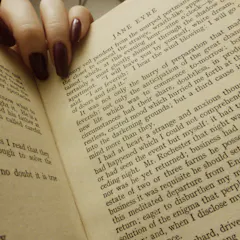
The unmasking of Charlotte Brontë changed the way that her books were read.
In her novels, in numerous articles and in correspondence, Elena Ferrante has chosen to depict the world from a female point of view. She has always claimed that the woman’s gaze is decisive.
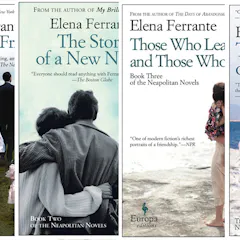
The unmasking of the real author of the Neapolitan series was an act of vandalism.
Italian novelist Elena Ferrante has been called “one of the great novelists of our time” and her Neapolitan novel cycle “an unconditional masterpiece”. But the author herself remains an intangible figure.
Top contributors
-

Teaching Fellow, Trinity College Dublin
-
Adjunct Lecturer, English and Creative Writing, UNSW Canberra, UNSW
-
Associate Professor, Università per Stranieri di Siena
-
Associate Professor, Department of Italian Studies, University of Sydney
-
Scholar in Media and Cultural Studies, Macquarie University
-
Senior lecturer, English, University of Sydney
-
Professor in Philosophy, Australian Catholic University
-
Professor of Writing and Literature, Deakin University
-
Lecturer, Australian Catholic University
-
Lecturer, Department of English, University of Sydney
-
Associate Professor, Durham University
-
Associate Professor of English, University of Calgary
-
Senior Lecturer in Creative Writing, University of Sydney
-
Researcher and Tutor, University of Oxford
-
Professor of Cognitive Psychology and Director of the Institute for Climate Risk and Response, UNSW