
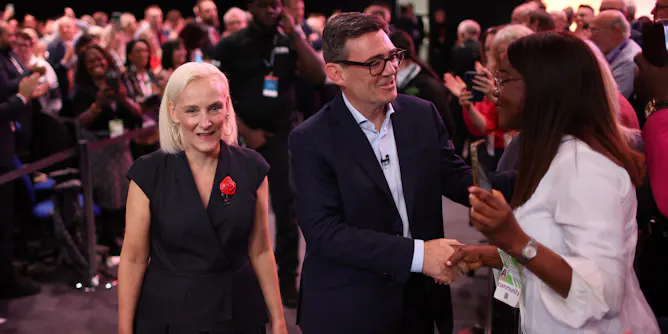
Involving both the public and all parties in shaping reforms on how they vote will be crucial.
Articles on Electoral system
Displaying 1 - 20 of 21 articles
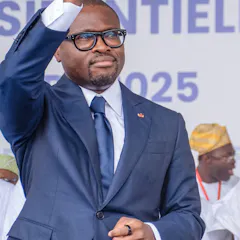
Romuald Wadagni’s election is viewed by many as a continuation of a pre-existing political system, rather than a genuine change in leadership.
As President Trump and other Republicans cast doubt on the legitimacy of the US electoral system, other democracies offer lessons in protecting the integrity of voting systems.

The electoral system used by many global democracies eliminates gerrymandering and has been shown to give more equal representation to minorities and women.

Voters proved hesitant to overhaul the election systems they were already familiar with, as almost all of the reforms in nine ballot measures across seven states and Washington failed to pass.
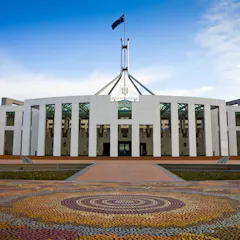
An election expert breaks down the big questions.
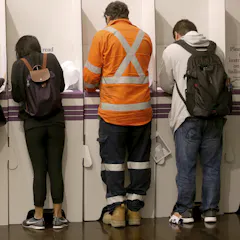
An expert on preferential voting rates the Australian voting system on 4 key measures.
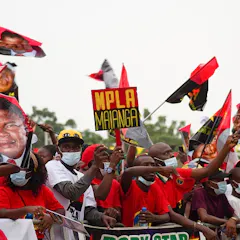
Angola needs a mixed electoral system. This would promote accountability through the direct election of representatives from constituencies.
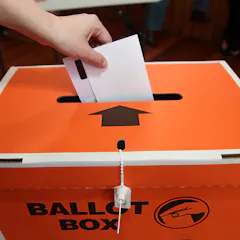
Changing the voting age from 18 would allow more young citizens to make voting a habit before they lose interest in politics.
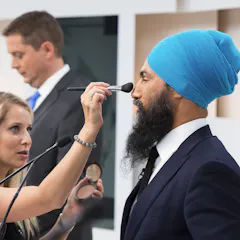
Given entrenched characteristics of Canadian electoral politics, the 2019 election is unlikely to deal in any meaningful way with concrete solutions to the important problems of our times.

Islanders currently stand as independent candidates, but this special system could be about to disappear.
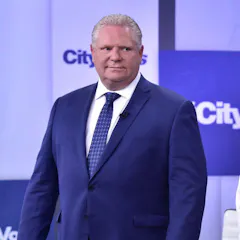
How you vote is an indication of the role you think government plays in society. As elections loom in Canada and beyond, here’s a guide to non-partisan, responsible voting.
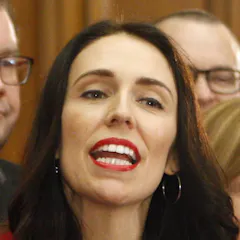
While the Maori Party got wiped out in this weekend’s New Zealand election, there’s still a Maori presence in the country’s political system. That’s why Canadian First Nations should take note.
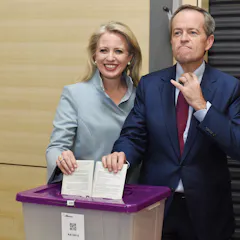
It may be several days, or even longer, before we know the shape of our next government, but the business of government will carry on as usual.

Advanced electoral technology could actually work against democracy in the wrong hands.
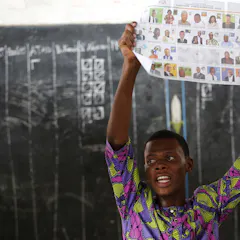
A classical political science debate focuses on whether democracy is dependent on development. The director of the Electoral Integrity Project revisits the issue using new data from African elections.

Voting for national leaders has become the global norm in a remarkably short time – in Africa in 1988, only 25% of countries had multiparty elections, but 94% do today. Yet all is not well.
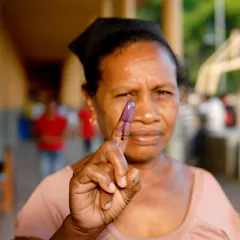
The recall is an ancient electoral procedure that has gained support in recent decades as a means for voters to defend the democratic state against extremism and serious abuses of power.
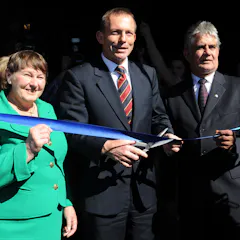
‘Better Communities’ funding is supposedly non-partisan: every electorate gets $300,000 for local projects. But only incumbent MPs have a say in this spending and 60% of them are government members.
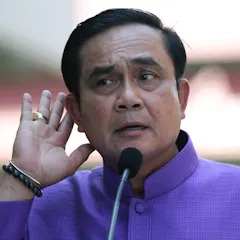
A year ago, a military coup toppled Thailand’s elected government. The junta promised elections once a new constitution is adopted, but its authoritarian rule betrays a hostility to real democracy.
Top contributors
-

Assistant researcher, University of Sydney
-
Senior Lecturer, Department of Languages and Linguistics, La Trobe University
-
Lecturer and Teacher, Department of Politics and International Relations, Cardiff University
-
Researcher in the Department of Government, Uppsala University
-
Associate professor in Political Science, Université Paris Ouest Nanterre, Institute for Social sciences of Politics (ISP), Université Paris Nanterre
-
Adjunct Professor in Parliamentary Studies, Swinburne University of Technology
-
Associate Professor in Marketing, University of Nottingham
-
Associate Professor in Politics and International Relations, School of Social Sciences, Monash University
-
Lecturer in Comparative Politics, UNSW
-
Adjunct Professor, Stout Research Centre, Victoria University of Wellington and Auckland University of Technology, Professor of Political Science, Charles Sturt University
-
NRF/British Academy Postdoctoral Research Fellow under the SA-UK Bilateral Chair in Political Theory, University of the Witwatersrand
-
Professor Emeritus of Political Science, University of Toronto
-
Distinguished Fellow, PM Glynn Institute, Australian Catholic University
-
Distinguished Research Professor, Political Science, Carleton University
-
Ashbel Smith Professor, School of Economic, Political and Policy Sciences, University of Texas at Dallas