

Ideas are cheap. Getting major reforms through is the hard part, but we’ve done it before.
Articles on Economic reform
Displaying 1 - 20 of 35 articles

Economic globalization was supposed to encourage democracy around the world. But sometimes the opposite happens.

Africa does not lack household savings, but only a small share of these are placed in formal institutions.

The treasurer is hosting an economic reform roundtable, but how much it will achieve remains unclear.
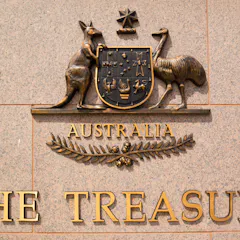
Unless we are happy to keep government debt, – which is already close to a trillion dollars – growing indefinitely, taxes will need to rise.
Labor’s tax changes this week do not tackle tax reform, or why we desperately need it.

How can Generation Z serve as effective agents of economic reform in a system they don’t believe in?

Ghana’s sovereign risk has been downgraded to near junk status by ratings agencies in recent times.

Governments of the past 20 years really are less prepared to take difficult decisions than the governments before them.

It’s time to reform stamp duty, one of the most inefficient and distorting taxes collected by Australia’s state and territory governments.

As debate grows over what should happen to JobSeeker Payment, a ‘liveable income guarantee’ turns the idea of an unemployment benefit on its head.

Ghana has completed yet another IMF financial assistance programme. Given its long history of living within its means and then blowing the budget again, will it be knocking on the IMF’s doors soon?
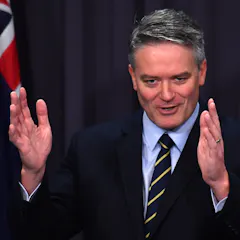
Minister for Finance Mathias Cormann said corporate tax cuts in the US had led to ‘stronger investment, stronger growth, a lower unemployment rate and higher wages’. Let’s take a closer look.
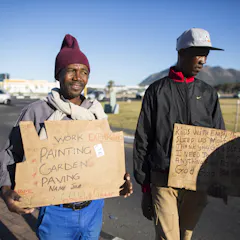
It’s becoming increasingly difficult to take South Africa’s ruling party seriously when it talks about economic reform.
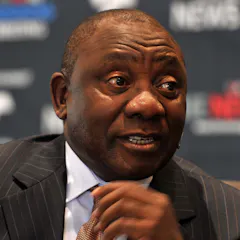
South African President Cyril Ramaphosa has to show that he’s a decisive leader who can take unpopular decisions.

South Africa needs a robust economic policy agenda to make it more open, productive and inclusive.

Land expropriation without compensation in South Africa will be resolved by opening up the economy and addressing inequalities.

It’s still unclear whether Zimbabwe will manage an effective transition to participatory democracy and freedom. And the current signs are not encouraging.

Its been 13 years since Mauritius introduced codes of corporate governance for listed companies with mixed results. Its experience is useful for other developing countries looking to do the same.
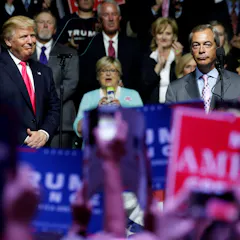
While populism is considered a threat to democracy, there are in fact lessons our leaders can learn from the experience of populism in other countries.
Top contributors
-

Vice-Chancellor’s Fellow, University of Tasmania
-
Head: Wits School of Governance, University of the Witwatersrand
-
Senior Lecturer, Edge Hill University
-
Chair in Finance, University of Sheffield
-
PhD Candidate, School of Government and International Relations, Griffith University
-
Senior Lecturer in Management, University of Tasmania
-
Dean of Business School, University of Southern Queensland
-
Senior Research Fellow New South Institute, Emeritus Professor at The Nelson Mandela School of Public Governance, University of Cape Town
-
Professor of Economics, Centre for Competition, Regulation & Economic Development, UJ, and at SOAS University of London; advisor Shamba Centre for Food & Climate, University of Johannesburg
-
Professor of Political Studies, University of Johannesburg
-
Professor in History, Australian National University
-
Professor of International Relations, Australian National University
-
Professor of Politics, Department of Government and International Relations, University of Sydney
-
Lecturer, Public Policy and Political Communications, The University of Melbourne
-
Professor of Economics, Monash University