
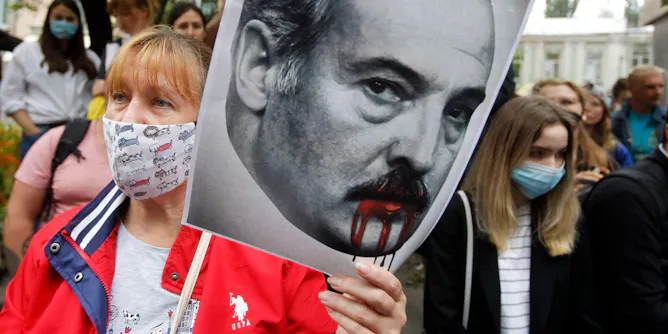
Recent actions against critics of the Belarusian government show that Lukashenko’s crackdown on dissent is extending beyond the country’s borders.
Articles on Eastern Europe
Displaying 81 - 100 of 150 articles
A new anti-LGBTQ+ law in Hungary is populist Prime Minister Viktor Orbán’s tactic for securing support ahead of elections.
While Serbia’s Covid-19 infection rate continues to be worrisome, the country has shown the ability to vaccinate a higher proportion of its population than EU nations.

Gay men earn 11% less while lesbian women earn 9% more than their heterosexual counterparts.

Western leaders learned the hard way 25 years ago that conflict in the Balkans can become ethnic cleansing. Add Russia into the mix, and Montenegro’s new problems are US and European problems, too.

Plus what protesters in Belarus want to happen next. Episode 1 of The Conversation’s new weekly podcast.
They grew up understanding that the state would take of them into old age. But that was before communism fell.

Eastern European countries are making the same mistakes now as western European countries did in the spring.

Lauded as a success story during the first wave, the country is now struggling with an explosion of cases.
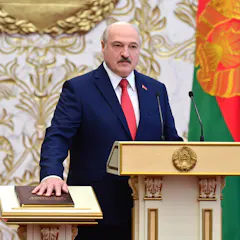
Has Europe’s last dictator finally gone too far?

The Czech Republic, Hungary and Bulgaria all showed early signs of success but have since seen their COVID-19 cases rise.
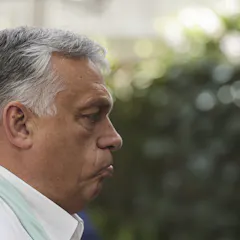
Fighting populism requires us to recognise its embeddedness in business elites. Viktor Orbán’s regime is a case in point.
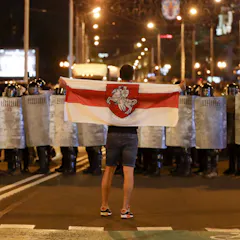
Pres. Lukashenka of Belarus has stayed in power for 26 years by being a master tactician. But he has seriously mishandled opposition protests, says a Belarus-born scholar of Eastern European politics.
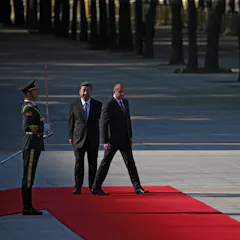
After a decade of cooperation, central and eastern Europe increasingly sees China as a threat.
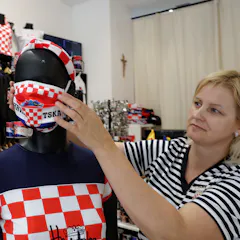
Death rates are low in the region but this has largely gone ignored.
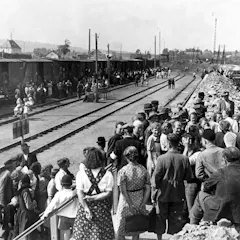
After World War II ended in Europe, millions of ethnic Germans faced an uncertain future. The political repercussions of their expulsion continue even today.
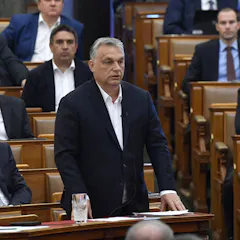
The government now has the power to do whatever it deems necessary to manage the crisis, effectively for an unlimited period of time.
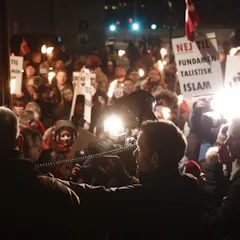
The perception of an immigrant threat in Europe is often thought to be driven by rising numbers of asylum seekers, but research indicates that political and media discourses are often the driving factor.

The HBO series ‘Chernobyl’ has reignited interest among tourists to visit Pripyat, but growing up in the disaster’s shadow has made us wary.
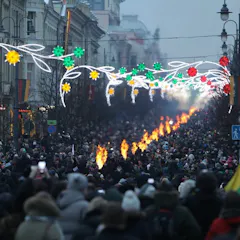
While many countries across Eastern Europe celebrate 100 years since they were born or restored as nation-states after the First World War, not everyone in these states are celebrating.
Top contributors
-

Senior Lecturer in Czech Studies, University of Glasgow
-
Associate Professor of Instruction in the School of Interdisciplinary Global Studies, University of South Florida
-
Associate Teaching Professor of Political Science, Penn State
-
Professor of History and Political Science, University of Michigan
-
Professor of Government and International Affairs, Virginia Tech
-
Professor of International Security, University of Birmingham
-
Professor of Political Science, University at Buffalo
-
Professor of Political Science, Kansas State University
-
Associate professor, Dalhousie University
-
Reader in International Relations, University of Westminster
-
Lecturer, School of Modern Languages and Cultures, University of Glasgow
-
Professor of History, Clarkson University
-
Professor in International Politics, Glasgow Caledonian University
-
Research Associate, Department of Sociology, University of Cambridge
-
Senior Lecturer in Sociology, University of Bristol