

Research demonstrates that playing board games helps develop socio-emotional growth, strengthens relationships and helps build community.
Articles on Dungeons & Dragons
Displaying all articles
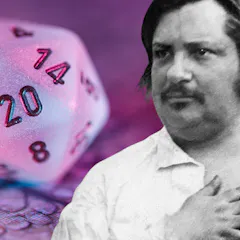
Most people think originality comes from endless freedom. Dungeons & Dragons suggests the opposite.
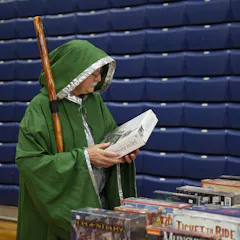
When a hobby becomes something larger, with a focus on improving skills and developing deep knowledge, it can deliver surprising rewards.

Dungeon & Dragon’s expansion over the last 50 years was driven by digital social networks in the same way that the evolution of digital social networks was driven by D&D.

Dungeons and Dragons may soon be used be psychotherapists.

Research shows many of us are lonely. Embracing analogue gameplay could go a long way in helping us become happier, socially connected people.

For years, the biggest video game publishers have operated under the assumption that compelling stories and captivating characters don’t offer a good return on investment.

Dungeons & Dragons: Honor Among Thieves is a great example of why the storytelling world of Dungeons & Dragons has persisted and thrived for so many years.

Recent events have forced fans to reconcile their love of Dungeons & Dragons with the reality that the game’s owner, Wizards of the Coast, is a large corporation with commercial interests at heart.

To maintain its competitive edge, the owners of Dungeons & Dragons are proposing changes to the ownership of the game’s intellectual property and the way it makes money.

The tabletop role-playing game scene once epitomized by ‘Dungeons and Dragons’ has seen new game genres emerge where people experiment and play with solutions to structural inequalities.

How a bunch of wizards and goblins drove a 25-fold explosion in the share price.

As Netflix plans additional choose-your-own-adventure TV movies, a game designer explains how they’re made and the long history of audience-directed fiction.
Top contributors
-

Professor of Information Sciences & Director, Social Change Enabling Impact Platform, RMIT University
-
Adjunct Senior Industry Fellow, School of Global, Urban and Social Studies, RMIT University
-
Professor of Law, University of Lincoln, Director, Observatory on Online Violence Against Women, University of Lincoln
-
Professor of English, Macalester College
-
Lecturer in Forensic Psychology, Manchester Metropolitan University
-
Postdoctoral research associate, University of Sydney
-
Associate Professor and Director, School of Interactive Games and Media, Rochester Institute of Technology
-
Senior Lecturer in Game Design and Games Studies, Teesside University
-
PhD, Communication, Concordia University
-
Sessional Instructor in Digital Futures, OCAD University
-
Associate Professor of Rehabilitation and Recreational Therapy, Florida International University
-
Teaching Associate French, School of Languages, Arts and Societies., University of Sheffield
-
Professor of English, Concordia University
-
Assistant Professor, Department of Central, Eastern, and Northern European Studies, University of British Columbia