
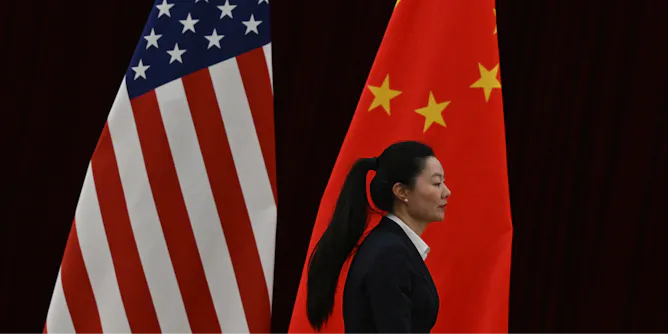
The men and women tasked with implementing policy are governed by the same incentives and constraints − whether in Beijing or Washington.
Articles on Diplomats
Displaying all articles
The PKK has been fighting the Turkish state for more than 40 years. Whether peace can take root will depend on each side’s commitment to a credible peace process.
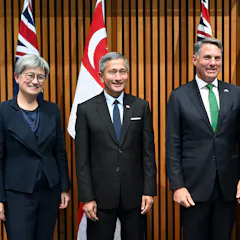
The budget increases funding for the Department of Foreign Affairs and Trade by over $450 million, in what’s a positive first step towards remedying our long-term reduction in diplomatic resources.
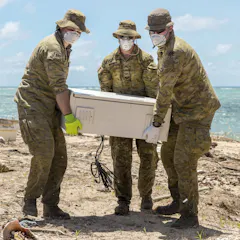
New research on Australia’s statecraft shows the individuals behind official programs and policies are as important as the work itself.
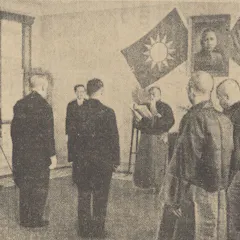
Under the shadow of World War II, Australia began to form its own foreign policy, separate from the British Empire. A legation in China was Australia’s third foreign outpost.

High-power microwave weapons are useful for disabling electronics. A new report says they ‘plausibly explain’ some ailments suffered by US diplomats and CIA agents in Cuba, China and other countries.
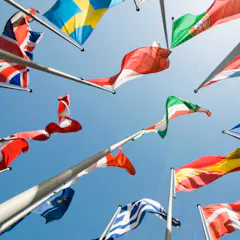
The United States is the only developed, democratic country that has a political culture of selling ambassadorships.
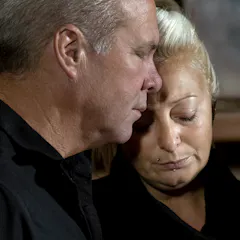
Both sides can point to the Vienna Convention and to diplomatic tradition to support their case.

Data show that the US intervenes more in other countries’ affairs than it did in the past. It also currently hires fewer career professionals for ambassadorial or foreign affairs positions.

Multiple sclerosis and endometriosis in women both used to be diagnosed as hysteria. The same could be happening with ‘Havana syndrome.’

Kim Jong-un may be able to “chat” in English. That’s not enough to understand Donald Trump.
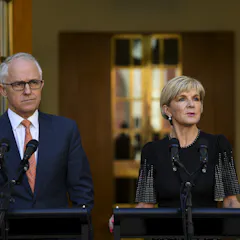
Australia has joined its allies in expelling Russian diplomats as retaliation for a nerve-agent attack on a former Russian agent and his daughter. But the action is unlikely to trouble Russia.

Governments need to build trust, especially during a time of heightened tensions around the threat of international terror attacks.
Top contributors
-

Full Professor of Translation Psychology and Wellbeing, The Open University
-
Senior research fellow, School of Arts and Humanities, Edith Cowan University
-
Postdoctoral Research Fellow, University of the Witwatersrand
-
Honorary Research Fellow, Museums Victoria Research Institute
-
Researcher, German Institute of Development and Sustainability (IDOS)
-
Associate Professor of International Studies, American University School of International Service
-
Project Lead and Senior Researcher, German Institute of Development and Sustainability (IDOS)
-
Project Coordination, German Institute of Development and Sustainability (IDOS)
-
Adjunct lecturer, School of Advanced International Studies (SAIS), Johns Hopkins University
-
Senior Lecturer in Humanities, University of Tasmania
-
Professorial Lecturer of International Politics, American University School of International Service
-
Shelby Cullom Davis Professor of International Security and Director of the Center for Strategic Studies, The Fletcher School, Tufts University
-
Professor of International Security, Adelaide University
-
Jason A Hannah Professor of the History of Medicine, Professor of Psychiatry, University of Toronto
-
Honorary Fellow, Asia Institute, The University of Melbourne
