
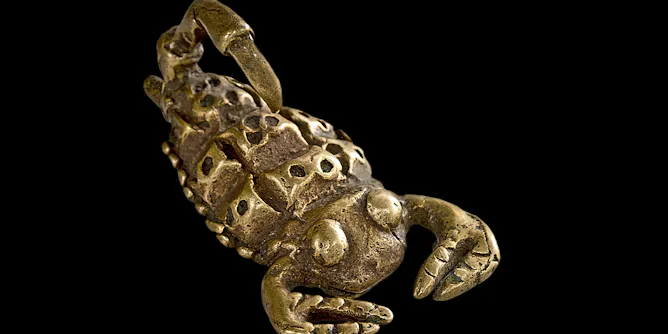
Incorporating Akan folklore in the curriculum will promote quality and lifelong education in Ghana.
Articles on Culture
Displaying 121 - 140 of 425 articles

Suicide in Ghana is regarded as taboo for most families.
Martin Puchner’s engaging new history argues that every culture has its backstory of influences
Gender plays a major role in how mourning is done by the Akan ethnic group of Ghana

More people are seeking out traditional forms of medicine, from acupuncture to herbal medicines. The WHO is working to develop standards to make these healing practices implementable on a wide scale.

By bridging culture and computation, heritage algorithms challenge the myth of ‘primitive cultures’ and forge a new understanding of science and art.

The Marriage Bill should strike a balance between preserving non-discriminatory cultural and religious practices and promoting liberal values.

As actors join screenwriters in a strike that has shut down movie productions, a labor historian looks back at union action on the silver screen.
The country’s creative and critical music culture will be substantially diminished if the university funding crisis hits any harder.
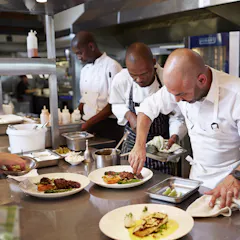
Immigrant chefs and cuisines are often constrained by Eurocentric definitions of what constitutes good food. As immigrant groups become more assimilated into US culture, so does their food.
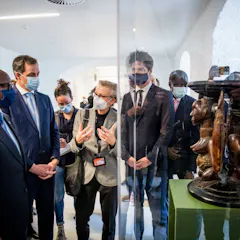
The restitution of looted objects from former colonies in Africa is an essential component of post-colonial reparation.
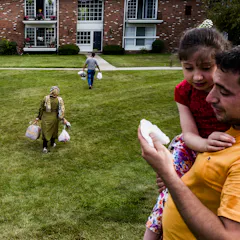
The US is home to more international migrants than any other country. But even though immigration is an actively debated topic, immigrants are poorly understood.

The final Indiana Jones movie is coming out June 30. The fifth in a series over 42 years, many of its ideas are taken from 19th-century orientalist and racist archaeology.
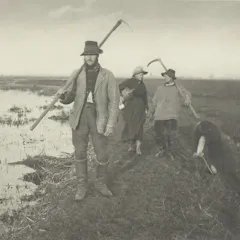
People with a common history – often due to significant geographic or social barriers – often share genetics and language. New research finds that even a dialect can act as a barrier within a group.

The revitalization of Indigenous languages is essential because language reflects philosophies that guide social, political, cultural and ecological relationships.
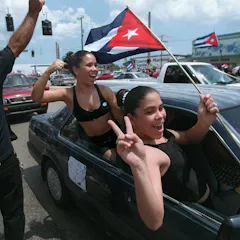
It came about through sustained contact with native Spanish speakers who directly translated phrases from Spanish into English, a form of linguistic borrowing called ‘calques.’

Nights out dancing! How African and Caribbean music and dance have shaped British culture.

A number of theories try to explain how cultural differences come to be. A new study quantifies how such factors as resource abundance, population density and infectious disease risk can contribute.
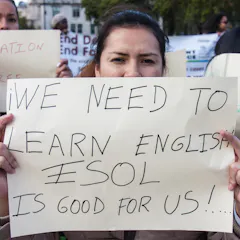
Although English to speakers of other languages (Esol) is treated like any other subject, it can offer far more to those learners.

Record numbers of visitors are flocking to blockbuster exhibitions. Behind all the excitement, there are difficult questions over how to address their carbon footprint.
Top contributors
-

Professor of Creative Arts, Griffith University
-
Reader in Music, Politics and Society, Newcastle University
-
Assistant Professor of Biological Sciences, Vanderbilt University
-
Professor of Cultural Economy, Adelaide University
-
Director, Cities of Culture Research Observatory, University of Liverpool
-
Professor of Psychology, The University of Melbourne
-
Professor of Communication and Media Studies, Loughborough University
-
Professor in Marketing, ESCP Business School
-
SARCHI Ocean Cultures and Heritage, Nelson Mandela University
-
Distinguished University Professor, Department of Psychology, University of Maryland
-
Associate Professor Visual Communication, University of Technology Sydney
-
Associate Professor and Principal Fellow (Hon), School of Culture and Communication, The University of Melbourne
-
Associate Professor, Queensland University of Technology
-
Contract Faculty, Ted Rogers School of Management, Ryerson University; SEDRD Adjunct Professor, University of Guelph
-
Associate Professor of Human Dimensions of Natural Resources, Colorado State University