

Translation is only part of the challenge for multinational companies. Words, slogans and symbols can take on entirely different meanings across cultures.
Articles on Cultural competency
Displaying all articles

When LGBTQ+ patients can be open with their providers about their identity, they are much more likely to get essential care.

Though some LGBTQ+ health care providers may try to separate their personal and professional identities, the prejudice they experience highlights their queerness in the clinic.
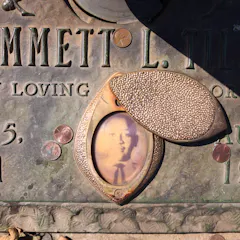
Many Black audiences are justifiably weary of works about their community told from white perspectives. But authorship isn’t always black and white.

Some older patients forego the food provided at their health care facility because it isn’t aligned with their religious and cultural preferences.
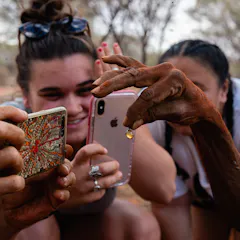
Historically, research has been imposed upon Indigenous people, instead of conducted with them. This is an exploration of more collaborative ways to research when working with Indigenous communities.

By working together with culturally and linguistically diverse groups, health services can position themselves to deliver culturally responsive care to our multicultural population.

From herbal remedies to acupuncture, traditional therapies are valued particularly by ethnically diverse groups.

Interpreters are essential in providing ethical and high quality health care to Australia’s culturally and linguistically diverse population.
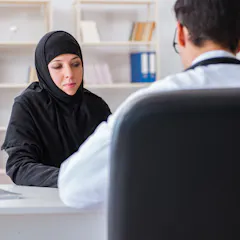
The holy month of Ramadan begins on Sunday night. This can present a challenge for Muslim people with type 2 diabetes who want to fast but can’t necessarily do so safely.

To improve Indigenous health in Canada we need more Indigenous health professionals and more culturally competent health-care providers. We also need to listen properly to Indigenous stories.

Language learning can make people more open to seeing a new way of doing things and develop a greater level of comfort with unfamiliar situations.
Top contributors
-

Associate Professor & Canada Research Chair, Indigenous Peoples' Health and Well-being, Dalhousie University
-
Professor of Applied Linguistics and Chair of World Languages, Literatures, and Linguistics, West Virginia University
-
Professor of African American Studies and Performing Arts, Co-Founder/Director Racial Justice Institute, Georgetown University
-
PhD candidate, University of Technology Sydney
-
Senior Lecturer in Physiotherapy, Victoria University
-
Endocrinologist, Western Sydney University
-
Professor in the Sydney School of Education and Social Work; and Chair, Aboriginal Education and Indigenous Studies, University of Sydney
-
Research Fellow and Senior Lecturer in Speech and Language Pathology, Charles Sturt University
-
Assistant Professor of Anthropology, University of Memphis
-
Assistant Professor of Health and Kinesiology, University of Illinois Urbana-Champaign
-
Senior Lecturer, School of Psychology and Public Health, La Trobe University
-
Associate Professor, The University of Sydney School of Education and Social Work, University of Sydney
-
Endocrinologist and Associate lecturer, Western Sydney University
-
Senior Lecturer in Historical Archaeology and Heritage, University of Sydney
-
Senior Research Fellow of Linguistics, University of Colorado Boulder; Griffith University; University of New England