
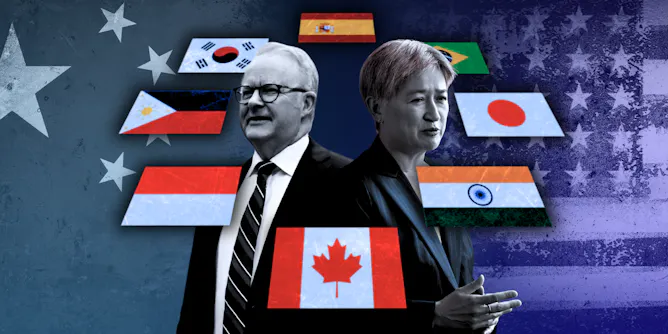
Even before Trump’s return to power, Australia has been building stronger mini-groupings and bilateral ties in the region.
Articles on CPTPP
Displaying all articles

Abandoning its WTO case is a quicker path to getting Australian barley back into China. It could also be a template for resolving tariff disputes over other products, including Australian wine.
While there are some benefits to the free trade agreement, the UK would be better off striking a deal with its neighbours.

The United States wants to use the negotiations to counter Chinese influence in the Indian and Pacific Oceans.
New Zealand is accusing Canada of undercutting its commitments under the Comprehensive and Progressive Trans Pacific Partnership on dairy. Canada’s problem is that New Zealand’s case is strong.
Government modelling projects a mere 0.3% increase on current GDP when the NZ-UK free trade agreement comes into full force. Does that justify the concessions the deal makes?
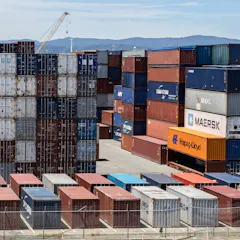
New Zealanders won’t see the full text of the UK free trade agreement until it is signed, meaning it will proceed without open public debate – despite locking in constraints on future governments.
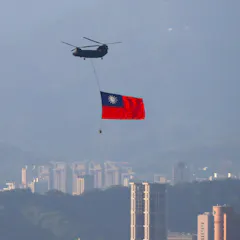
Forced to balance traditional alliances with its trade-dependent relationship with China, New Zealand walks a fine diplomatic line over Taiwan.

The CPTPP probably won’t invigorate post-Brexit Britain economically, and it could even be dangerous, geopolitically speaking.

More countries, including a post-Brexit UK, are looking at joining the CPTPP free trade agreement. But the secrecy around negotiations makes serious analysis virtually impossible.

Rejoining the Trans-Pacific Partnership would boost trade in Southeast Asia, counter China and help show the world the US is back.
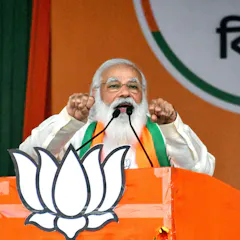
What the deal involves and why it matters.
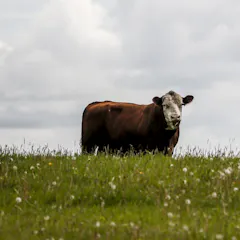
Canadian beef and pork exporters have become increasingly reliant on China. That’s why the latest salvo in the Canada-China diplomatic dispute is so ominous for the agri-food sector.

Cities have not been central to public policy discussions on trade growth and diversification that are typically centred on trade pacts between countries. But cities are now driving a lot of trade.
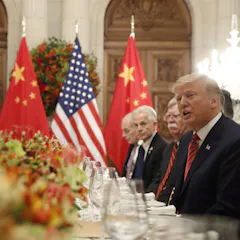
America may have missed a window of opportunity to curb China’s rise when it pulled out of the Trans-Pacific Partnership.
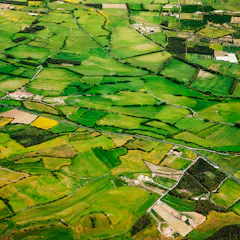
Despite promises, it’s hard to deny that the UK’s standards on agriculture, air pollution, and climate change are under threat.
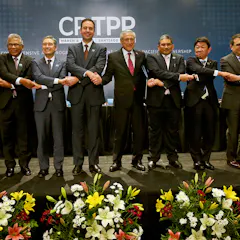
Trump, who withdrew the US from the Trans-Pacific Partnership when he became president, briefly appeared to consider joining the trade accord again.

It will be the private remarks between senior Australian business leaders and foreign investors at Davos that will likely be the most consequential for the Australian economy in the coming few years.

The new TPP means fewer barriers for Australian exports, but there a number of loose ends – not least if the United States decides to rejoin.
Top contributors
-

Emeritus Professor of Law, University of Auckland, Waipapa Taumata Rau
-
Scientia Professor of Economics, UNSW
-
Senior Lecturer in Environmental Law, University of Sussex
-
Master Student, University of Guelph
-
Professor of International Business, Ivey Business School, Western University
-
Professor of Global Business Strategy, Simon Fraser University
-
Postdoctoral Fellow in the Department of Political Science, Dalhousie University
-
MSc. Candidate Food, Agricultural and Resource Economics, University of Guelph
-
Associate Professor of Agricultural and Applied Economics, Virginia Tech
-
Director and Professor, Australia-China Relations Institute (UTS:ACRI), University of Technology Sydney
-
Professor of Agricultural Economics and Blasingame Chair of Excellence, University of Tennessee
-
Professor of International Trade Policy, Aston University
-
Associate Professor in Economics, University of Edinburgh
-
Honorary research associate, University of Sydney
-
Associate Professor, Co-Director of China International Business and Economic Law (CIBEL) Centre, Faculty of Law and Justice, UNSW Sydney, UNSW