

In an era of tight budgets and complex social challenges, New Zealand can not afford to ignore the tools such as the CBAx, which can improve decision making – and save money.
Articles on Cost benefit analysis
Displaying 1 - 20 of 25 articles

Traditional cost-benefit analyses treat wetland restoration as a one-off expense with fixed returns. New research shows this misses long-term climate and biodiversity benefits.

Trade wars, digital currencies and robots automating workplaces - the Star Wars film franchise provides numerous lessons in the basics of economics.
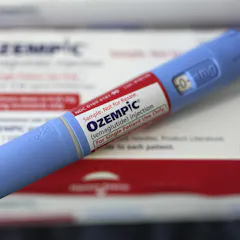
The future of the blockbuster drugs could hinge on a trial in Pennsylvania.

After almost half a century, the United Nations has waded back into the murky world of water policy. But one of the ideas following this year’s international meeting has been shot down.
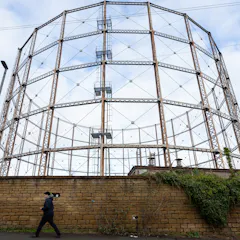
Preparing a bid for such funding can cost project hopefuls up to £30,000.

As President Biden signs the bipartisan infrastructure bill, it’s important to determine which road, freight and information networks are the most vital to protect.

Different people and groups have differing, and often opposing, goals that they value differently. That makes public discussion, compromise and agreement difficult.
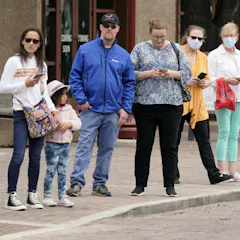
Texas and many other states have eased all or most coronavirus restrictions such as mask-wearing. A cost-benefit analysis suggests reversing those moves for just a short period could make a big difference.

A high-speed rail network in Australia would create many benefits by reshaping cities and regional communities along its route.

Putting a dollar value on human lives to compare the costs and benefits of stay-at-home orders can have unintended consequences. These researchers found a different way.

Decisions about the spending of enormous amounts are about to be made quickly. Here are eight rules to determine value for money.
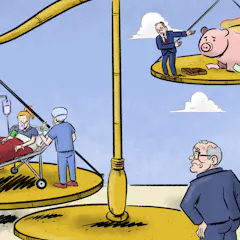
The economists who support the use of social distancing measures to slow the spread of COVID-19 are not only in the majority, they are also more certain of their opinions than those who do not.

A realistic estimate of the economic costs of a two-year lockdown amounts to $90 billion. The benefit in lives saved amounts to at $1.1 trillion.

The lock-downs are saving more lives than they cost, but eventually the costs will rise to the point where they exceed the value of lives saved.

We’ve prevented many deaths, many of them at the cost of other deaths. The accounting ought to be made clear.

When we unlock, we should do it cautiously, starting with small social gatherings, and we should test widely.

GDP is well suited to many things, but not to measuring the impact of disasters.

We are getting closer to being able to apply private sector rigour to the examination of public sector projects with social benefits.

Business Briefing: the business of prisons
CC BY31.3 MB (download)
Prisons are big business in Australia. Companies not only run entire prisons but provide many of the services. But what does the research say about the impact?
Top contributors
-

Scientia Professor of Economics, UNSW
-
Eugene M. Isenberg Chair in Integrative Studies, UMass Amherst
-
Fiona Haines is a Friend of The Conversation.
Professor of Criminology, The University of Melbourne
-
Senior Research Associate, Renewable Energy & Energy Systems Analyst, UNSW
-
Senior Lecturer in Economics, Lancaster University Management School, Lancaster University
-
Director, Gilbert + Tobin Centre of Public Law, UNSW
-
Professor of Management, Bond University
-
Professor of Information Technology and Organisation, University of Sydney
-
Director, Kath McFarlane Consulting & Adjunct Associate Professor, The Kirby Institute, UNSW
-
Professor, School of Economics, UNSW
-
Casual Academic, UNSW
-
Professor of Political Science, Co-founder of the Political Economy Forum, University of Washington
-
Professor of Law, Villanova University
-
Professor of Economics, The University of Melbourne
-
Director of Sydney Executive Plus, Business School, University of Sydney