
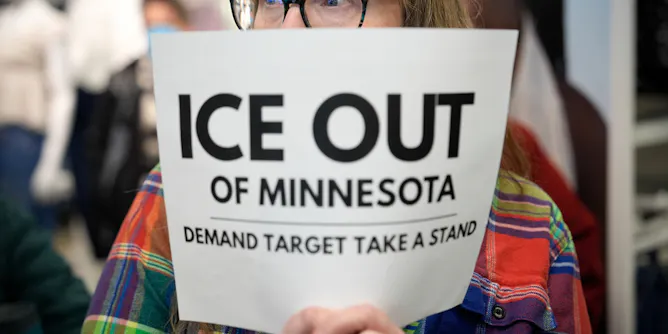
Federal immigration raids in Minnesota prompted a social backlash. But the business community is largely hedging its bets due to a changed political calculus.
Articles on Corporate Activism
Displaying 1 - 20 of 27 articles

When done authentically, corporate activism looks and appears easy, but it’s actually easy to get wrong.
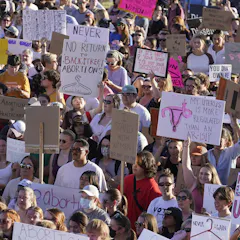
In contrast to their reaction to gay rights or the war in Ukraine, relatively few companies have openly criticized the Supreme Court ruling ending a constitutional right to abortion.

Over 300 companies so far have closed stores, reassigned staff or halted sales in Russia in the two weeks since the invasion began.

While many companies promote social causes, advocates are skeptical of how genuine their commitment is.
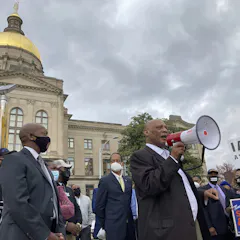
The growing rift between Republicans and US businesses has widened in recent weeks over efforts to restrict voting across the country.

Usually, companies use this power to secure financial benefits for themselves, such as tax or regulation relief. But increasingly, they’re using it for social causes as well.
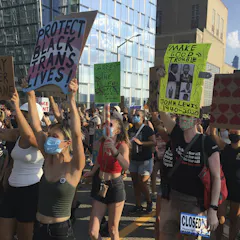
Millennials and Gen Z overwhelmingly support the movement, and consumer brands are well aware of their growing spending power.
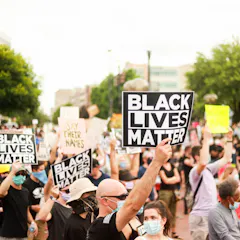
Companies are increasingly taking stands on hot-button political issues from LGBT rights to Black Lives Matter. New research shines light on whether and when it can benefit the bottom line.
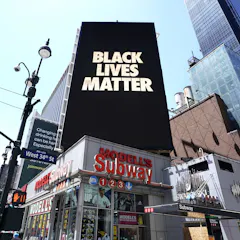
Big businesses often engage in social activism because they want to sway public policy outcomes. They’re not exclusively trying to appeal to liberal customers.
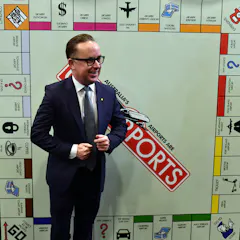
The phoney debate about corporate activism distracts from the need for a debate about inequality.
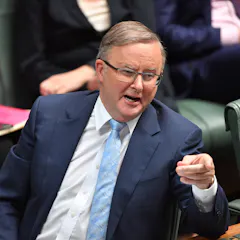
Opposition leader Anthony Albanese appears to be distancing himself from his predecessor Bill Shorten with his pro-business rhetoric.

Gillette recently made headlines with their controversial campaign against toxic masculinity, but other brands appear to be better at taking action.

Gillette isn’t the only male-centric brand to have recently challenged masculine stereotypes. But advertising research can help us understand why it’s been getting the most flack.

Gillette’s controversial advertisement is an important sign the #metoo movement has changed the global zeitgeist.

Businesses pulling out of the recent Saudi investment conference over journalist Jamal Khashoggi’s death is just the latest example.

Trump’s plan to slap $200 billion more in tariffs on Chinese goods is premised on yesterday’s waste-fueled economy. Tomorrow’s economy is ‘circular.’

Four reasons why the line between activism and business is blurring.

United’s CEO called the Trump policy ‘in deep conflict’ with his company’s values, the latest example of a corporate leader speaking out on a political issue, something almost unheard of a few decades ago.

Incidents that may have been mere hiccups a few years ago can go viral in an instant today. ABC seems to have learned from the mistakes of others.
Top contributors
-

Fellow at the Center for Advanced Study in the Behavioral Sciences at Stanford and Professor of Management and Sociology, University of Michigan
-
Assistant Professor of Strategic Management, Rice University
-
Professor of Business and Society, University of Technology Sydney
-
Professor of Information Systems, Michigan State University
-
Assistant Professor of Government, American University School of Public Affairs
-
Professor of Organisational Studies, University of Sydney
-
Professor of Business, American University Kogod School of Business
-
Associate Professor of Marketing, Drexel University
-
Professor of Management, Rochester Institute of Technology
-
Assistant Professor of Communication, University of Dayton
-
Professor of Management, Newcastle Business School, University of Newcastle
-
Associate Professor, Organisation, Technology & Sustainability, University of Bristol
-
Senior Research Fellow, University of Exeter
-
Professor in Organisation & Sustainability, University of Exeter
-
elea Research Fellow in Social Innovation, International Institute for Management Development (IMD)