
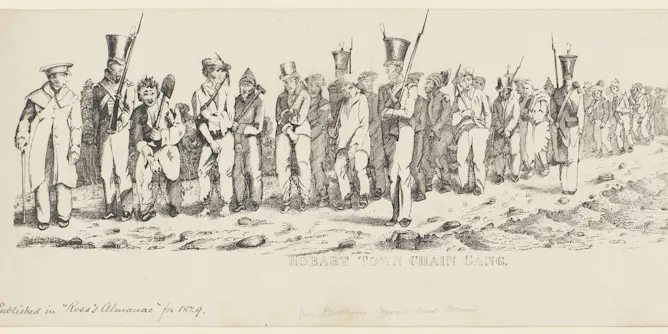
Many former convicts changed their names and hid their past. But over the last 50 years, Australians have increasingly discovered – and embraced – convict relatives.
Articles on Convicts
Displaying all articles

The history of a simple jail building in the Bay of Islands reveals the ways early settler New Zealand viewed itself, and wanted to be viewed by others.
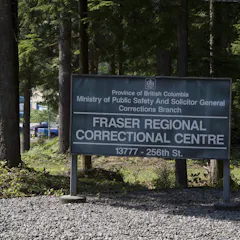
British Columbia’s proposed ban on name changes could impact people’s Charter rights and undermine the rehabilitation and reintegration of those convicted of crimes.
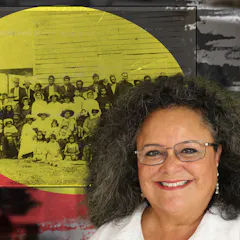
When Shauna Bostock began researching a book on her family, she thought it would be limited to her Aboriginal ancestry. But then a late-night phone call led her down a surprising path.
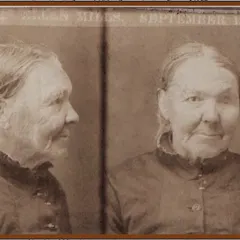
Transported to Van Diemen’s Land aged 11, Ellen Miles went on to riot in Launceston’s Female Factory, seek fortune in gold-rush Victoria and live to nearly 90.
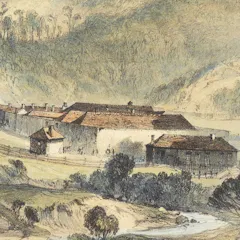
Deported to Australia as a convict at the age of 18, Alexandrina Askew reinvented herself as a woman of means, with a mysterious habit of misplacing her purse.

Long regarded as guardians of morality, women who swore were often policed and punished. But whether protesting or parodying, they have used bad language in creative ways.
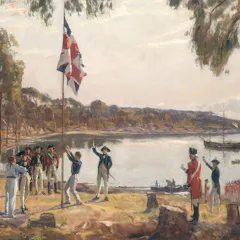
Britain had an urgent problem after it lost its American colonies: where to send its convicts. It settled on NSW after rejecting other options, but the new spot didn’t exactly live up to its billing.

Since Reconstruction, states have leased prisoners to US industries. That diminished in the 20th century, but now it’s resurging, with prisoners leased to harvest food for American consumers.
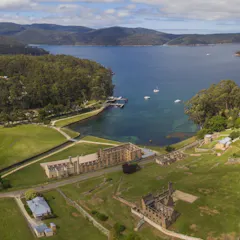
Without due process, archeological digs turn into into expensive and directionless treasure hunts from which little research value can be extracted.
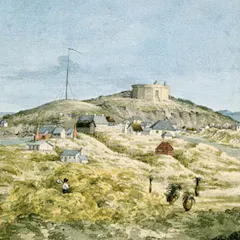
A century and a half after the last convict ship docked in Australia, new research is uncovering what happened to those who were transported.
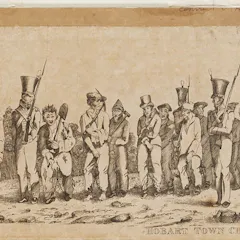
Governor Arthur Phillip regarded sodomy as one of the worst offences that convicts under his charge could commit. But sex between men and between women flourished in convict Australia.

Wooredy and his second wife Truganini set off into the Tasmanian wilderness with settler George Robinson in 1830, on a “conciliatory” mission to find other original Tasmanians. Their stories bear witness to a psychological and cultural transition without parallel in modern colonialism.
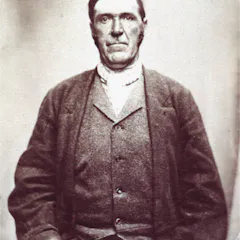
A new study highlights the stark difference in living conditions experienced by old- and new-world working-class adults in the Victorian era.
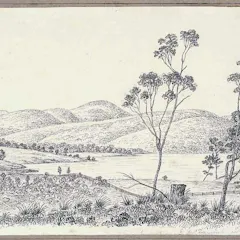
The egalitarian myth behind the great Australian dream of home ownership is at odds with the first rules of land granting in the colonies. Even then, property ownership depended on wealth and status.
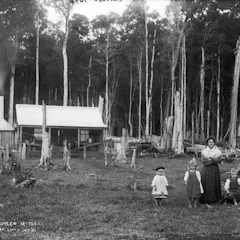
The experience of Australia’s first century shows that it’s possible to achieve fast growth, and at the same time, a reduction in inequality.
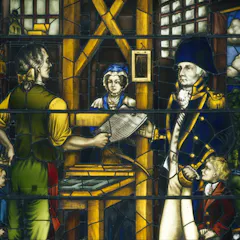
What science issues did Australia’s first newspaper - edited by a convict - discuss in its letter pages? The same ones we talk about today: the environment, education and health.

The discovery of battered old boots, tattered garments, trinkets and dead cats concealed in the walls of historic buildings sheds new light on the lives of Australia’s early white settlers.

The First Fleet had three layovers on its voyage to Australia – one was Rio de Janeiro. As Australia and Brazil celebrate 70 years of diplomatic relations, it’s worth remembering this encounter.
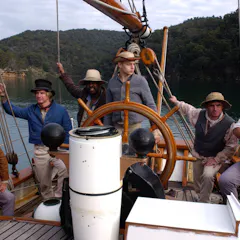
Today, a convict ancestor is a matter of pride. But for past generations, including some convicts themselves, it was a shame that had to be hidden at all costs.
Top contributors
-

Professor of Social Justice, University of Liverpool
-
Emeritus Redmond Barry Distinguished Professor, The University of Melbourne
-
Senior Lecturer, Political Science and International Relations, University of Canterbury
-
Postdoctoral Research Associate, University of Liverpool
-
Associate Professor, History, University of Newcastle
-
PhD Candidate, Criminal Justice, University of Canterbury
-
Honorary Fellow, School of Historical and Philosophical Studies, The University of Melbourne
-
Assistant Professor, Criminology, Toronto Metropolitan University
-
Associate Professor, Economic History, The University of Melbourne
-
Postgraduate Research Scholar, University of Newcastle
-
Adjunct Professor in History, University of Tasmania
-
Lecturer in Humanities, University of Tasmania
-
Professor of History, University of Tasmania
-
ANU PhD, Australian National University
-
Director, Australian National Dictionary Centre, Australian National University