

Fear of COVID-19 has sparked some to react with violent racism towards Asian Americans and Canadians. This is not the first time fear of disease has led to outbreaks of violent anti-Asian racism.
Articles on Chinese
Displaying 21 - 35 of 35 articles

Public criticism of the Chinese government’s handling of coronavirus shows that the Chinese people can overcome both strict censorship and a gaping class divide when they get angry enough.

Patriotism means pride in country, but what are we proud of? A former national park ranger suggests that visiting historic sites can remind Americans of the heritage, good and bad, that they share.

WeChat is now a must for politicians. How they can best harness it to win key votes is a trickier question.

There’s been a growing number of students taking up the language in schools across the UK.
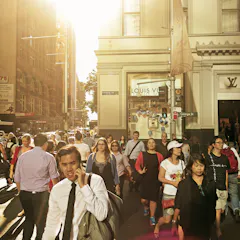
Asian Australians experience high levels of racism. Almost six in ten Asia-born Australians report having had experiences of discrimination when trying to rent or buy housing.

China-born migrants in Australia’s capital cities are becoming more suburban, but there are differences in settlement patterns between the biggest cities and smaller cities.

This is the first article in our series, Australian Cities in the Asian Century, which looks at the impact of the rise of China and Chinese migration on our cities.

Chinese language learning offers singular opportunities for cultural capital.

China is succeeding in a high-stakes poker game on the Korean Peninsula. Did Canada and the U.S. just play into Chinese hands?

Coming on the heels of ‘gold’, ‘blond’ and ‘wealthy’, ‘north’ is a telling symbol of how Japan saw 2017.
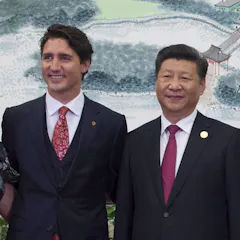
Prime Minister Justin Trudeau is in China to discuss a trade deal. It’s laughable for Canada to believe it can negotiate a “progressive” trade agenda with the Chinese.
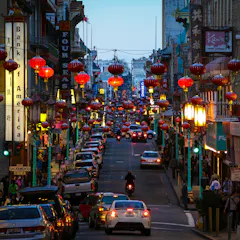
This highly-stylised slice of the Orient was originally a defence against racism.

Chinese professionals are influenced by the Confucian values. This means they are uncomfortable with refusing tasks or questioning directions, unlike their Australian counterparts.
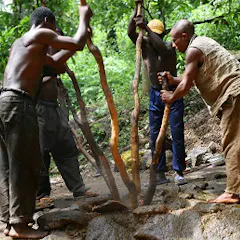
To understand the full scale of the world’s linguistic diversity, we should be thinking about languages and how speakers relate to them.
Top contributors
-

Associate Professor of Political Science, Brock University
-
Teaching Associate, Faculty of Education, Southern Cross University
-
Associate Professor in Urban Geography, The University of Melbourne
-
Pro Vice Chancellor Research, Western Sydney University
-
Associate Professor of Linguistics, University at Buffalo
-
Senior Lecturer in Social and Cultural Geography, Western Sydney University
-
Lecturer in Education, Goldsmiths, University of London
-
Lecturer in Japanese Studies, University of Sheffield
-
Pro-Vice-Provost East Asia, UCL
-
Professor of Human Geography, The University of Queensland
-
Lecturer in Business Ethics and CSR, Monash University
-
Associate Professor of Strategic Management, Xi'an Jiaotong-Liverpool University
-
Doctoral Researcher in Chinese American Literature, University of Sussex
-
Associate Professor of Human Geography, The University of Queensland
-
PhD Candidate, School of Social Sciences and Psychology, Western Sydney University