
University of Canberra Professorial Fellow Michelle Grattan and Assistant Professor Caroline Fisher discuss the week in politics
Articles on China-Australia relations
Displaying 21 - 40 of 74 articles
Defence minister Richard Marles’ historic trip sheds some light on the new government’s approach to national security matters.
Word from The Hill: Bowen says “bumpy” time ahead on power, but you can keep the heater on
Michelle Grattan discusses politics with politics + society editor, Amanda Dunn

War with China is very likely, but it is avoidable if we take the threat seriously and act now.
A new survey shows there is no material difference between the major parties’ China policies. Style and tone might be what matter, whoever wins the election.
Australia’s usual approach to big international negotiations is to hold out, before reluctantly making “concessions”. It’s the wrong approach for trade, and the wrong approach for climate change.

A new survey of Taiwanese and Australian citizens has revealed some surprising results about their views on security and China.
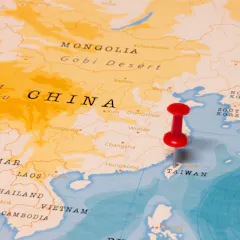
With ideological issues such as Hong Kong and Taiwan, lecturers told of how a vocal minority of international Chinese students are attempting to police teaching materials and class discussions.
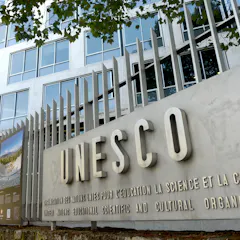
Australia has suggested a UNESCO recommendation to list the Great Barrier Reef as ‘in danger’ was motivated by politics. This is hardly the first such accusation levied at the organisation.
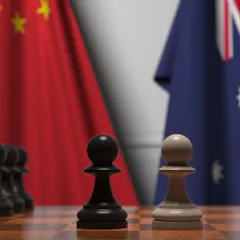
China’s aggressive stands and the sharp deterioration of the bilateral relationship are flowing through strongly to produce record negativity by Australians towards our biggest trading partner.
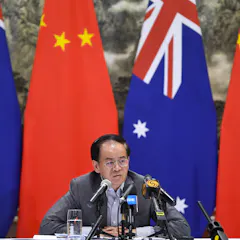
Beijing’s suspension of the China-Australia Strategic Economic Dialogue sends a strong signal it is prepared to escalate tensions.
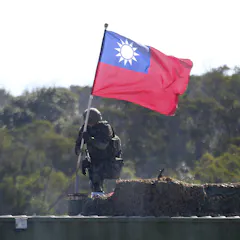
The likelihood of open conflict is low, given the risks to China and the US. With the Biden administration treading carefully over Taiwan, why is there so much loose talk of war in Canberra?

The move is designed to demonstrate to the Australian public, the Chinese leadership, and Australia’s allies that Canberra is holding firm in its ‘push back’ against Beijing.
There’s a sizeable gap between Western perceptions of the role of journalists in democratic societies and China’s view that media should serve the interests of the state.
Workplace culture, management systems and recruitment processes are holding Chinese-Australians back from making meaningful contributions to China policy.
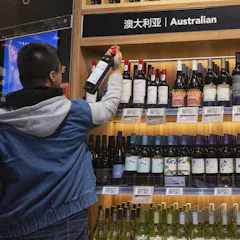
China’s import restrictions hurt Australia, but they also hurt China. In more ways than one.

With scant details of the reasons for the news anchor’s arrest, the future looks grim for Cheng Lei with Beijing signalling its intent for a full-scale criminal investigation.
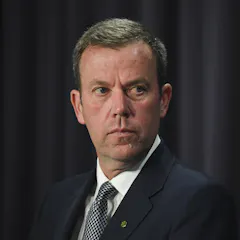
Tehan will outline some ideas for re-engaging with China at his first press conference this week. The business community will be watching closely.
As China’s influence and economic strength grows, it is unlikely to give middle powers like Australia more latitude to manage their relations with both Beijing and Washington.
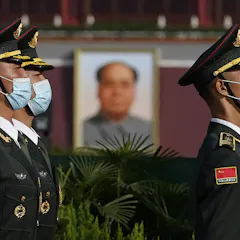
Australia’s policy-makers are pursuing a one-dimensional “stand up to Chinese bullying” approach — and it clearly isn’t working.
Top contributors
-
 Tony Walker AM is a Friend of The Conversation.
Director, La Trobe University
-
Professorial Fellow, University of Canberra
-
Director and Professor, Australia-China Relations Institute (UTS:ACRI), University of Technology Sydney
-
Honorary Fellow, Asia Institute, The University of Melbourne
-
Head of analysis, Australia-China Relations Institute, University of Technology Sydney
-
Professor of Media and Cultural Studies, University of Technology Sydney
-
Postdoctoral Fellow in China Studies, Australian National University
-
Professor of International Law, Australian National University
-
Honorary Professor of Public Policy, Australian National University
-
Professor of Public Ethics, Charles Sturt University
-
Professor of Chinese Business and Management, University of Sydney
-
Senior Lecturer, University of Sydney
-
Associate Professor of International Relations, Department of Politics, Media and Philosophy, La Trobe University
-
Professor, Centre of Policy Studies and the Impact Project, Victoria University
-
Visiting Fellow, Crawford School of Public Policy, Australian National University