
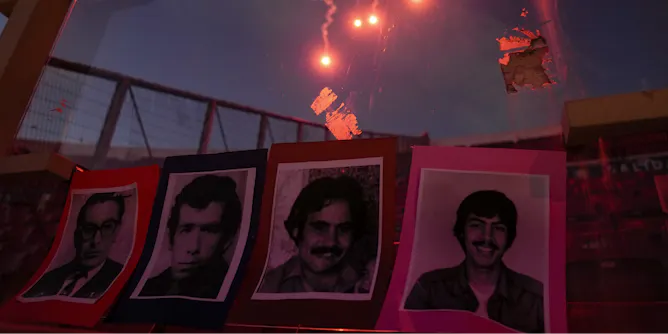
Despite hosting the 2023 Pan American Games and electing a president with a progressive agenda, Chile continues to grapple with entrenched economic inequality.
Articles on Chile protests
Displaying all articles
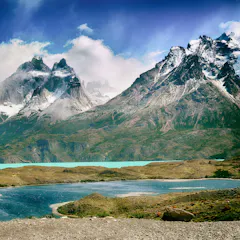
Like Australia, Chile is facing mounting environmental pressures, such as an escalating water crisis. If the constitution is approved in September it’ll deliver profound changes to the country.

Three decades after the Chilean people toppled the notorious Pinochet regime, a new standard bearer for the far right is leading the polls.
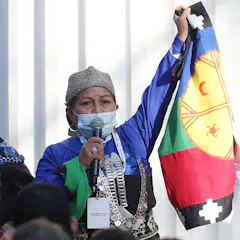
Elisa Loncon has pledged to prioritise indigenous and women’s rights as part of the constitutional reform.
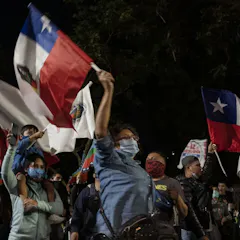
On October 25, Chilean citizens overwhelmingly voted to replace the country’s dictator-era constitution. This is an opportunity to look at the process of drafting basic laws around the world.
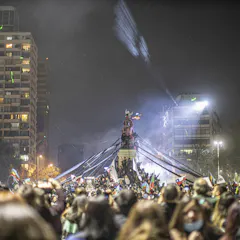
After a year of unrest Chileans voted decisively on Oct. 25 to replace their constitution, a relic of the military dictator Pinochet. Civilians, half of them women, will write the new constitution.
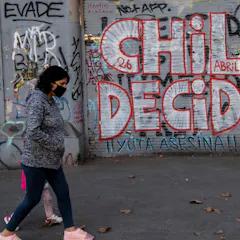
On Oct. 25 Chile will decide whether to replace its dictatorship-era constitution with a new one written wholly by the Chilean people. The vote shows how protests can change the course of a nation.
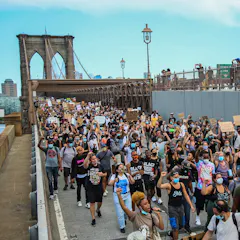
Unrest in the US looks familiar to Latin Americans, who are accustomed to resisting undemocratic governments – and to their protest movements being met with violent suppression.
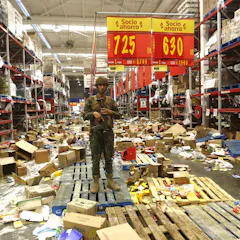
Latin American history shows that sending out troops to quell unrest is a perilous move even in strong democracies. Usually, protesters die. Sometimes, the end result is authoritarianism rule.
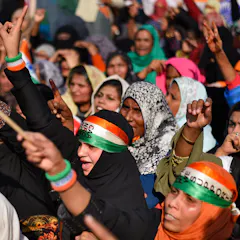
A round-the-clock strike of Muslim women in a working-class neighborhood of Delhi is India’s most enduring pocket of resistance to religious discrimination, inequality and gender violence.
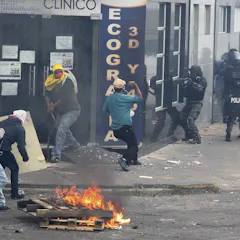
All those democracy protests in South America may be having some unintended consequences.
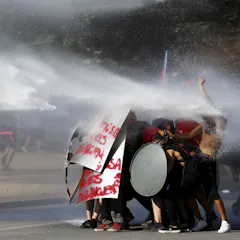
There’s much more going on in the world than the Trump impeachment and Brexit. Here are five momentous global stories to track in 2020.

A Chilean feminist anthem is being sung across the world in protest at violence against women.

Chilean art activists are using social media to expose abuses and, in doing so, they’re engaging in the legacy of Latin American mail art

As protests raged across Chile last month, President Piñera repeatedly addressed the nation. Researchers fed his speeches into an AI system to assess the emotions behind his words.
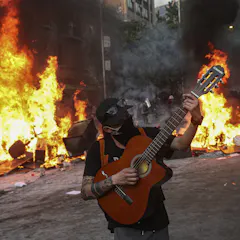
To quell weeks of protest over extreme inequality, Chile’s president has agreed to rewrite the country’s constitution, passed in 1980 under the deadly military regime of Augusto Pinochet.

From Santiago and La Paz to Beirut and Jakarta, many of the cities now gripped by protest share a common problem: They’ve grown too much, too fast.
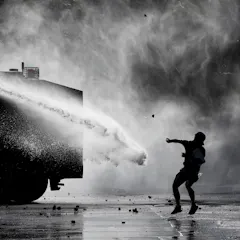
In the last century, several South American countries faced coups, military dictatorships and social uprisings. Despite economic improvements in recent years, the continent remains mired in unrest.

Alberto Fernández has been elected as Argentina’s new president, defeating Mauricio Macri, who was punished for his economic record.
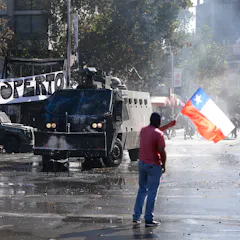
Unresolved legacies of the dictatorship of Augusto Pinochet are driving anger at the cost of living in Chile.
Top contributors
-

Professor, Department of Political Science and International Affairs, Wake Forest University
-
Associate Professor of Politics, Occidental College
-
PhD Candidate, Department of Spanish, Portuguese & Latin American Studies, King's College London
-
PhD researcher in Hispanic Studies; Basque Studies, University of Liverpool
-
Associate Lecturer, School of Kinesiology and Health Science, York University, Canada
-
Senior Lecturer in Anthropology, University of Melbourne, The University of Melbourne
-
Assistant Professor of Sociology, Fitchburg State University
-
Honorary Research Fellow in Mining and Society, School of Geography, Earth and Atmospheric Sciences, The University of Melbourne
-
Ph.D. Candidate, University of Minnesota
-
Professor of Politics, Oberlin College and Conservatory
-
Post-Doctoral Fellow, Johnson Shoyama Graduate School of Public Policy, University of Saskatchewan
-
Profesor titular Facultad de Comunicaciones, Universidad de Artes, Ciencias y Comunicación UNIACC
-
Associate Teaching Professor, School of Interdisciplinary Arts and Sciences, University of Washington, Bothell
-
Associate Professor, Clark University
-
Research Associate, University of Birmingham