
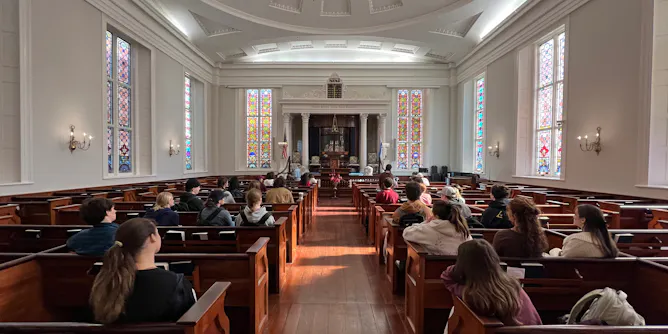
For many people, Jewish American history is synonymous with northern cities like New York and Chicago. But the South played an important role, especially in the early 1800s.
Articles on Charleston
Displaying 1 - 20 of 29 articles

School choice heavily influences immigrant students’ experiences in Charleston schools and can leave them in segregated academic environments, new findings show.
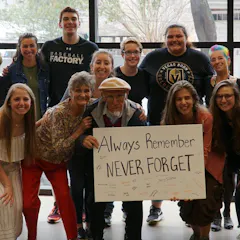
Students respond to history that feels local and personal. There are ways to do that even as Holocaust survivors pass away, one professor writes.

The Civil Rights Movement is often told in terms of court decisions, brutal beatings and racist demagogues. It’s rarely told from the view of children, who suffered in ways that left emotional scars.
A scholar of extremism writes that the use of the term often obscures deeper societal issues such as rising political violence and is dangerously simplistic.
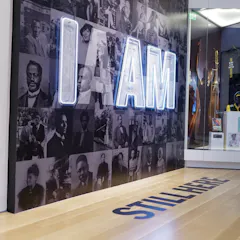
The new museum opened at a time when the teaching of Black history is under attack by conservative politicians.
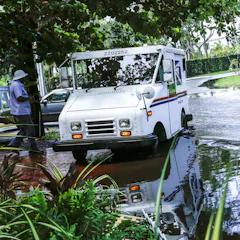
Many coastal US cities are contending with increasingly frequent and severe tidal flooding as sea levels rise. Some are considering building seawalls, but this strategy is not simple or cheap.
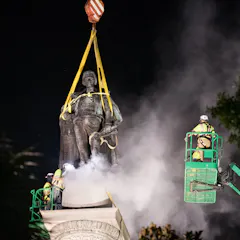
Despite his defense of slavery, the former vice president and US senator from South Carolina has been honored with statues and streets, schools and counties. That’s finally changing.
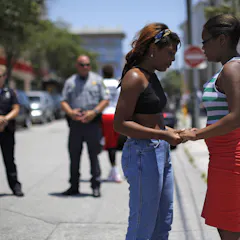
Six of the nine people who died were black women. One year later, a Brandeis professor examines how black women have endured a legacy of racial violence in the U.S.
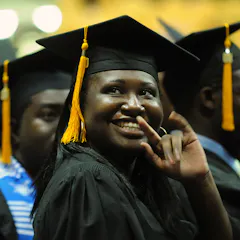
Historically black colleges account for only 3% of all colleges and universities. But, even today, 20% of black Americans earn their degrees at these schools.
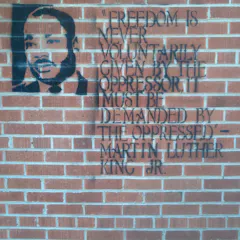
One year on from Ferguson, the message of Martin Luther King’s Letter from a Birmingham Jail could not be more relevant.
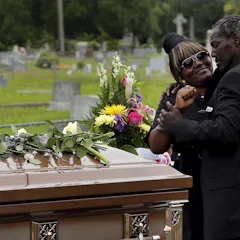
Forgiveness, as we have seen in the aftermath of the Charleston killings, is a hallmark of the Black Church. But what psychic toll do these acts of forgiveness exact?

On July 6, the South Carolina Senate voted to remove the Confederate flag from the statehouse grounds. In the past white-on-black violence has led to real change - but under specific conditions.

Public opinion on the flag may have shifted with lightning speed, but how did it hold on as long as it did? The answer has to do with how it served both Democratic and Republican parties alike.
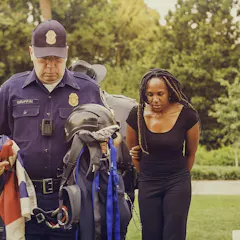
Newsome’s actions can be thought of as a significant piece of performance art.
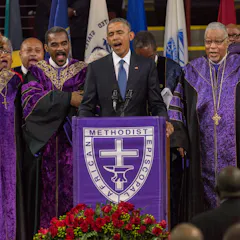
Only a hard heart could fail to respond on some emotional level when Barack Obama, eulogising at one of the most emotionally and racially charged funerals in US history, started singing Amazing Grace.
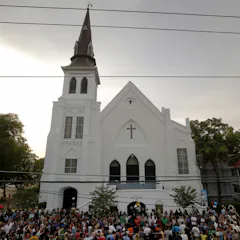
The history of the AME Church represents a preeminent case of collective action in the name of social justice.
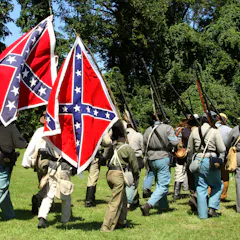
Symbols matter – and there’s no stronger symbol than a flag in a post-conflict society.
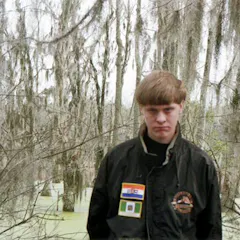
Hate violence is as diverse and widespread as ever – and its effects are legion.
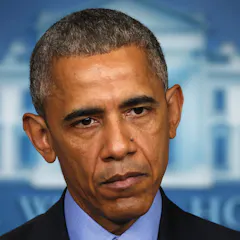
What does it mean for any president, much less a black one, to use such a word?
Top contributors
-

Professor of Political Science, University of Washington
-
Assistant Professor, Department of Political Science, University of Washington
-
Chancellor, Rutgers University - Newark
-
Associate Professor, Political Science, Emory University
-
Paul and Charlene Jones Chair in Law, University of Alabama
-
Assistant Professor of Sociology, Birmingham-Southern College
-
Associate Professor of Social Work; McSilver Faculty Fellow, New York University
-
Professor of History, Emory University
-
Professor of Sociology, Tulane University
-
Professor of Criminology and Criminal Justice, Lancaster University
-
Professor of Africana Studies and Art & Design, University of Delaware
-
Samuel J. and Augusta Spector Professor of History and African and African American Studies, Brandeis University
-
Professor, Department of Human and Organizational Development, Peabody College, and the Divinity School, Vanderbilt University
-
C. Wendell and Edith M. Carlsmith Professor of Law, Stanford University
-
Professor of Post Conflict Studies, Queen's University Belfast