

The resistance during this election cycle is even more passionate than in recent years.
Articles on Chad
Displaying 81 - 100 of 119 articles

Due to the poor security response of the Nigerian state, insurgency will continue to pose a serious threat to its northeast border communities.
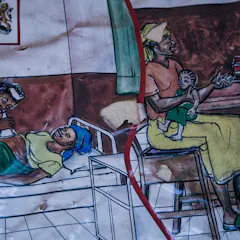
High quality antenatal care can improve maternal health in West and Central Africa by identifying and addressing underlying problems that can cause pregnancy complications.
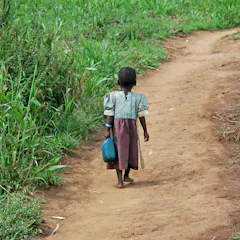
Social norms, practices and attitudes in African societies hinder the lives, survival and development of girls.
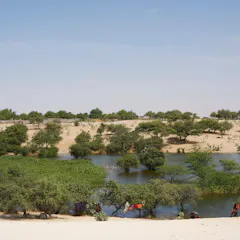
The shrinking of Lake Chad contributes to instability in the countries which sit around its expanse.
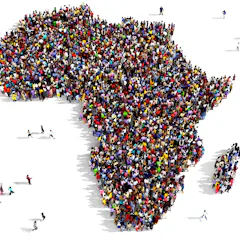
The gap between the continent’s most democratic and authoritarian regions is likely to continue to grow.

It’s been 60 years since most of France’s former colonies in Africa gained independence. But France still maintains a significant military presence on the continent.
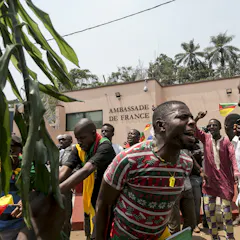
The African Union’s intervention track record in conflict situations is mixed.

Social media is shaping Africa’s political engagement in diverse and complex ways.

In a surprising change in trends, citizens in many African countries increasingly support government restrictions of press freedom.

Ghana is the latest country in Africa to mandate the use of pictures on cigarette packages to convey health warnings.

Scientists are trying to figure out what risks changes in Lake Chad’s levels pose to people in the region.
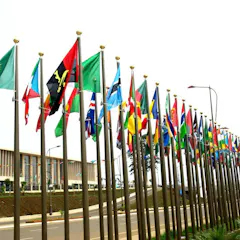
The African Peer Review Mechanism got off to a good start, but enthusiasm soon waned.

Liberian President George Weah believes the current citizenship regulations in the country are unnecessarily “racist” and restrictive.
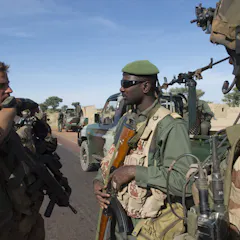
The build-up of foreign armed forces does not bode well for the citizens of Niger.
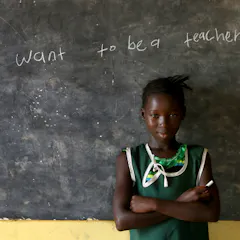
Female teachers can act as role models who enhance girls’ motivation and learning outcomes.

More leaders in more African countries will abolish term limits unless organisations like the African Union take action.

The US Secretary of State’s mission to Africa will produce few benefits for the continent or for US-Africa relations.
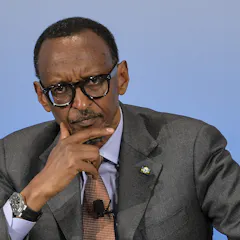
The Rwandan model can’t be replicated easily given that it depends heavily on political dominance and tight, centralised control of patronage networks.
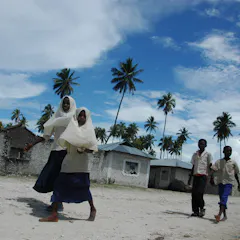
Creating more opportunities for young women and girls to work and earn money is a possible solution to early marriages. Subsidising secondary education to keep poorer girls in school is another.
Top contributors
-

Associate Researcher, Arnold Bergstraesser Institute
-
Lecturer in Political Economy of Violence, Conflict and Development, SOAS, University of London
-
Lecturer and Senior Research Fellow at the South African Research Chair in International Law (SARCIL), University of Johannesburg
-
Associate Professor, Royal Danish Defence College
-
Former Lead Research Fellow at Uni of Warwick, Currently a Policy and Programme Officer at UNWFP, Chad, University of Warwick
-
Professor of Democracy, University of Birmingham
-
Research Fellow at the University of the Free State, South Africa and Assistant Professor in the History of International Relations, Utrecht University
-
Professor of Conflict Studies, School of Conflict Studies, Université Saint-Paul / Saint Paul University
-
Executive director, Africa Institute of South Africa, Human Sciences Research Council
-
Associate Lecturer in Development Studies, Birkbeck, University of London
-
Associate Professor International Law, Roskilde University
-
Research Fellow, Africa Center for Strategic Studies
-
PhD candidate in Political Studies at the Department of Politics and International Relations, University of Johannesburg
-
Professor of Politics, University of Birmingham
-
Associate Professor, Global Political Sociology, Roskilde University