

A huge amount of money flows into campaigns in the United States. For 20 years, the Supreme Court has been loosening rules for who can contribute and how much. It just loosened the rules again.
Articles on candidates
Displaying all articles
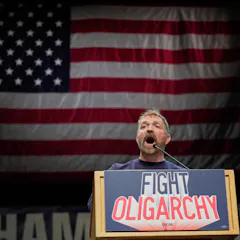
Class-war rhetoric from Democratic candidates jams working-class voters into a prefabricated progressive agenda, an expert on rural and working-class communities argues.

Many Americans are unhappy with the two major parties but seldom support alternatives. New England is an exception.
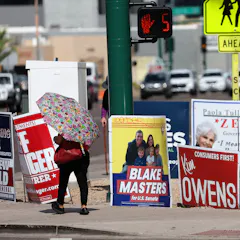
Supporters and volunteers love them. But it’s difficult for political scientists to determine whether they even influence the outcome of elections, since no two campaigns or election cycles are alike.

Jim Lehrer moderated 12 presidential debates between 1988 and 2012. His lessons on how to run a debate should be studied by today’s moderators, writes a former presidential speechwriter.
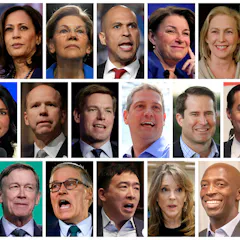
The number of candidates in presidential primaries has skyrocketed since the 2016 election. Divisions inside political parties and easy ways for candidates to raise money are among the reasons why.
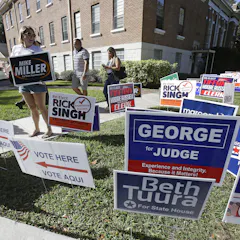
Is money the root of all evil in politics? It’s easy to see a correlation between winning and fundraising – money flows to likely winners and competitive races. But correlation is not causation.
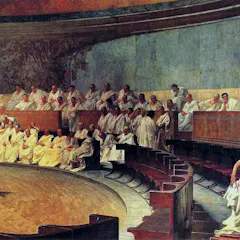
Many of the most commonly used election terms have a long linguistic history, stretching from ancient Rome to modern-day America and Australia.
Top contributors
-

Adjunct Professor of Politics and Director of Think Again, University of Virginia
-
Senior Lecturer in Linguistics, Monash University
-
Professor of Linguistics, Monash University
-
Assistant Professor of Political Science, University of Florida
-
Associate Professor of Political Science, Florida State University
-
Professor of English, Arizona State University
-
Professor of Political Science, Middlebury College
-
Goldfarb Family Distinguished Chair in American Government, Colby College; Institute for Humane Studies
-
Assistant Professor of Law, Quinnipiac University