

Commitments to Indigenous health research cannot be clawed back as part of proposed dismantling of equity, diversity and inclusion criteria for federal research funding.
Articles on Canadian Constitution
Displaying 1 - 20 of 22 articles
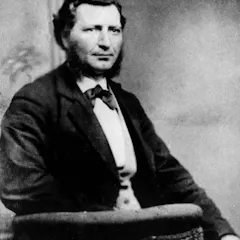
Riel regularly reappears in political debates, artistic creations and discussions of identity. Rebel, prophet, MP, traitor — Riel’s legacy reflects a country still struggling to understand its own foundations.

Is the new Official Languages Act unfair? Three constitutional experts say that those who claim it is are distorting Canadian realities.

Despite a finding by the Québec Superior Court that Bill 21 has a cruel and dehumanizing impact on Muslim women, the law has survived. Now, the Supreme Court of Canada will hear challenges to it.
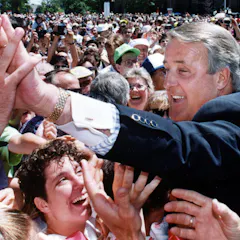
The death of former Canadian prime minister Brian Mulroney will lead to a wide examination of his legacy. A lasting policy of the Mulroney regime is free trade with the United States.

The Supreme Court of Canada has ruled that the federal Impact Assessment Act needs amendments for Constitutional compliance, but the court’s recommended approach is no longer viable.

Saskatchewan’s provincial government must work with Indigenous nations on a shared vision for the future that is more likely to withstand the tests of time and litigation.

As Charles is crowned King, maybe the time has come for Canada to reassess its connection with the British monarchy and become a republic.
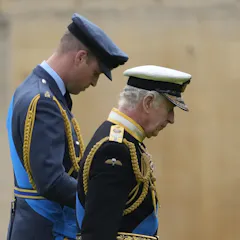
Whatever Queen Elizabeth’s personal qualities, it’s time to determine how the monarchy fits Canada’s current situation as an independent country and its aspirations for the future.

Long-term assessments of the trucker convoy will depend less on questionable interpretations of individual freedom and more on whether the state’s fundamental obligations were seriously threatened.

The Canadian Constitution compels a proportionate weighing of all Charter rights against the threat of COVID-19, meaning that individual freedom is not absolute.
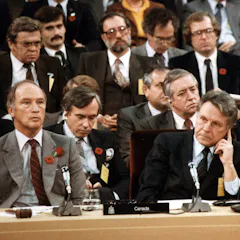
The constitutional reform agreement reached in November 1981 has produced a bitterness in national relations that lingers to this day and imposes on Canada a cost that has weakened the nation.

Given low levels of turnout and high levels of “no” support in urban areas, Alberta lacks a clear mandate to press for changes to Canada’s Constitution after its equalization referendum.
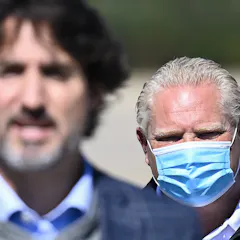
Ontario has historically been the province in Confederation most concerned about buoying Ottawa and limiting its own relative power for the sake of national unity. Doug Ford puts that legacy at risk.
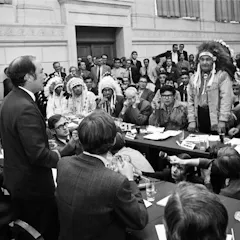
How did a national leader whose animating political spirit was protecting human rights come to adopt a passive acceptance of Canada’s worst face of colonialism?
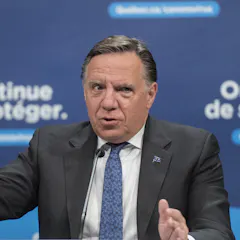
Québec Premier François Legault’s recent constitutional proposals have caused alarm. But it’s largely a game aimed at finding common ground between federalist and separatist voters in the province.
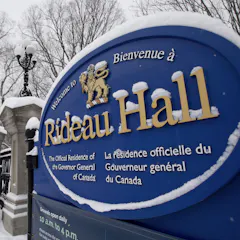
For the first time in Canadian history, the Governor General has resigned. Now is the perfect time to imagine a different kind of head of state for the country.
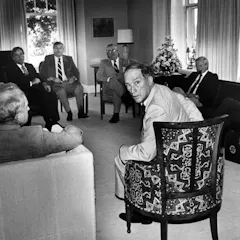
Pierre Trudeau’s contribution to the remaking of Canada cannot be questioned. Throughout the 1980 to 1982 constitutional debates, he reminded Canadians of their country’s basic values.
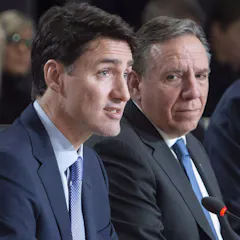
Canada’s Charter of Rights and Freedoms doesn’t mean much if it can’t be enforced. That’s why the Court Challenges Program is so important — no matter what the Québec premier says.
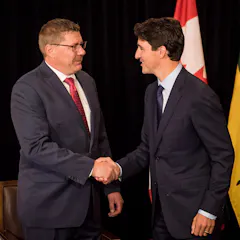
A ruling by the Saskatchewan Court of Appeal recognizes the threat of climate change, but its approach is too narrow.
Top contributors
-

Instructor, Legal Studies and Criminology, Kwantlen Polytechnic University
-
Professor and Department Head, Department of History, University of Regina
-
Professor Emeritus, Politics and International Studies, University of Regina
-
Professor, School of Public Policy and Administration, York University, Canada
-
Law Student, Legal Researcher, Thompson Rivers University
-
Professor, Political Science, University of Alberta
-
Assistant Professor, Politics, University of Toronto
-
Assistant Professor, College of Law, University of Saskatchewan
-
Full Professor, Faculty of Law, L’Université d’Ottawa/University of Ottawa
-
Law Student, Legal Researcher, Thompson Rivers University
-
Adjunct professor, Environment and Sustainability, University of Saskatchewan
-
Professor of Environment, Resources and Sustainability, University of Waterloo
-
Associate professor, Faculty of Law, L’Université d’Ottawa/University of Ottawa
-
Instructor, Law and Legal Studies, Carleton University
-
Professor of Law, University of Calgary