

At a time when Americans disagree deeply over the meaning of citizenship, belonging and education, summer camps remain places where visions of the nation are communicated to young people.
Articles on Camp
Displaying all articles

Camp can be an attitude, a style or a behaviour and it consists of several components – exaggeration, artificiality or theatricality, breaking social norms and silliness which results in humour.

Thanks to the popularity of shows such as RuPaul’s Drag Race, camp is now mainstream. This is perhaps one reason Eurovision has suddenly become perceived as cool.

Offering an inclusive and diverse space for self-expression, Eurovision has found an appreciative audience in the LGBTQ+ community over the years.
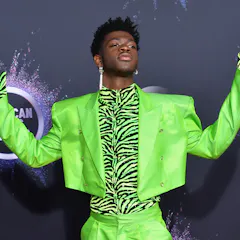
Camp defies easy categorisation and has come to mean many things over the span of queer history

A hands-on approach to learning about bugs can help students from urban communities take an interest in science.
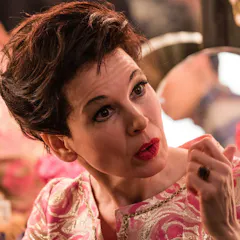
Fans of divas like Judy Garland formed complex social networks and communities around their fandom that were also about joy and celebration.

This 2013 film has a lazy script and crude humour – but Melissa McCarthy’s high camp performance of outrageously dressed, highly coiffed femininity is a delight.

Many of the gowns and costumes at this year’s Met Gala attempted to capture the essence of camp, and in trying to do so missed the point of camp entirely.

Susan Sontag once wrote that the ultimate camp statement is, “It’s good because it’s awful”. But can camp go too far? To paraphrase a line from the 2001 film Ghost World, can something be so awful that…
Top contributors
-

PhD Candidate in English and Cultural Studies, The University of Western Australia
-
PhD Candidate in Film, Media & Communication, University of Portsmouth
-
The University of Melbourne
-
Professor, Sociocultural Studies of Education, Iowa State University
-
Griffith University
-
Associate Professor in Twentieth-Century American Literature, University of Birmingham
-
PhD Candidate, Department of English, McGill University
-
Senior Lecturer Visual and Material Culture, Nottingham Trent University
-
Professor of Linguistics and English Language, Lancaster University
-
Senior Lecturer, Griffith University
-
Derek H. Alderman is a Friend of The Conversation.
Chancellor's Professor of Geography, University of Tennessee
-
Visiting Honors Lecturer, Southern Illinois University Edwardsville