
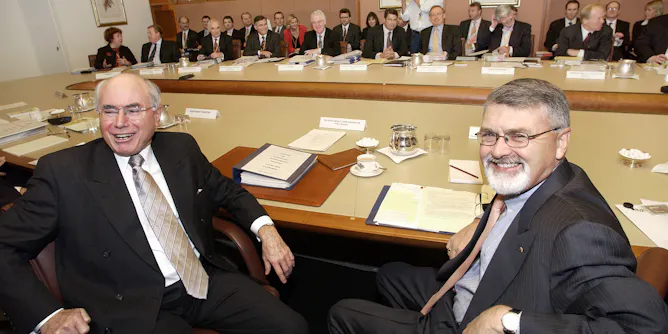
In 2005, the Howard government introduced its controversial WorkChoices legislation. It would be a key factor in the government’s defeat in the 2007 election.
Articles on Cabinet papers
Displaying all articles

And, for the first time, this cabinet paper release contains records from the national security committee, a powerful subgroup of cabinet.

New papers released by the National Archives of Australia reveal how the decision was made for Australia to join the US’s “coalition of the willing”.

This year’s release, from the cabinet records of 2002, is framed by two events of the previous year: the Tampa affair and 9/11.

Storing sensitive papers in a filing cabinet makes no sense when we could digitise them and control access.

We need to balance a legitimate desire for transparency in politics with the need for free and thoughtful debate.

It’s increasingly difficult for investigative journalists to hold governments to account – partly due to anti-terror and security laws making it harder for whistleblowers to act.
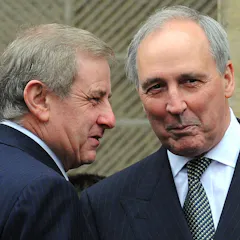
Cabinet papers released today by the National Archives show Working Nation began as a rational exercise but was soon overtaken by a desire to make the policy everything to everyone.
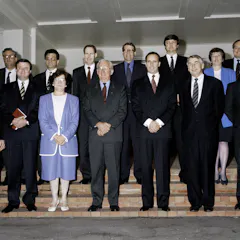
Paul Keating’s government, faced with the prospect of international action on climate change, took steps to preserve the coal industry - a tactic that has been rebooted many times since.

The Hawke government in the 1980s is widely considered to be the most competent and effective of recent years. Some may say this is not setting the bar terribly high, but the cabinet papers of 1988-89…

The release of the 1988-89 cabinet documents show that the Hawke government’s plans for Australian higher education were in some ways as radical as the policies that Education Minister Christopher Pyne…
Top contributors
-

Associate Professor of History, UNSW
-
Adjunct Professor, Australia-China Relations Institute, University of Technology Sydney
-
Associate Professor, Queensland University of Technology
-
Senior Designer, Chair in Digital Economy, Queensland University of Technology
-
Professor and Founding Director of QUT Centre for the Digital Economy, Queensland University of Technology
-
Professor Emeritus, School of Government and International Relations; Adjunct Professor, Centre for Governance and Public Policy, Griffith University
-
Sir John Bunting Chair of Public Administration, Australian National University
-
Associate Professor, Melbourne Centre for the Study of Higher Education, The University of Melbourne
-
Former Visiting Fellow, SPRU, University of Sussex Business School, University of Sussex
-
Associate Professor, School of Media, Film and Journalism, Monash University