
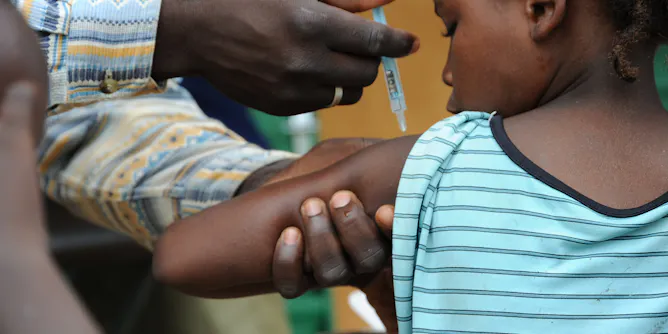
Vaccines that help prevent meningococcal disease don’t give lifetime protection.
Articles on Burkina Faso
Displaying 141 - 160 of 161 articles
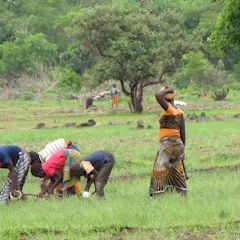
Foraging and gathering food can play a huge role in feeding people.
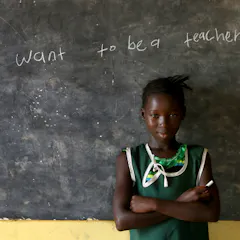
Female teachers can act as role models who enhance girls’ motivation and learning outcomes.
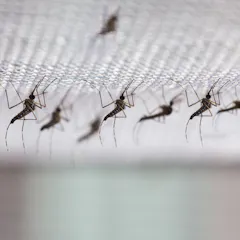
Kenya must establish policies to tackle dengue fever and chikungunya, like it did for malaria.

The international community has failed to recognise the new political visions being articulated by young musicians and activists across Africa.
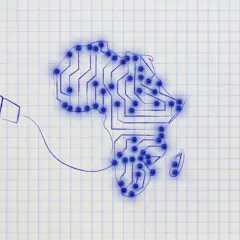
The new Internet of Things has the potential to compensate for Africa’s legacies of underdevelopment.

With his work Francis Kéré, who is one of Africa’s top architects, represents an innovative breakthrough in the collective imagery of what architecture in Africa could be in the 21st century.
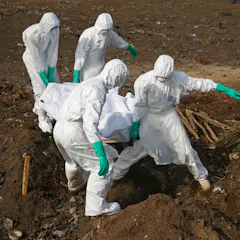
West African health systems were weak before the IMF got involved. Sadly, the policy reforms demanded by the IMF in exchange for loans have undermined governments’ ability to repair these problems.

Attempts to deepen democracy in Africa by limiting presidential terms to two have not entirely quashed a culture of entitlement to rule. Glimpses of it persist, much against citizens’ wishes.

The proposed new constitution would allow Alassane Ouattara to remain as president. Opposition parties see this move as a constitutional “coup” that will also protect his allies.
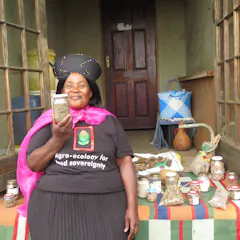
Since 2000, the growth of the commercial seed market has almost tripled. More than 63% of the world’s commercial seed is now owned by six corporations.

Many South African teachers don’t accept the theory of evolution. They feel deeply conflicted when they have to teach it to their pupils as part of the life sciences curriculum.
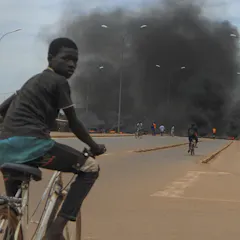
Grassroots protesters are questioning the logic of export-led ‘growth’ and renewed fiscal austerity pushed through the ‘Africa rising’ narrative. They want policies that meet their basic needs.
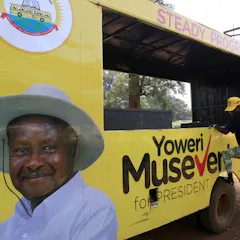
Regular changes of government through free and fair elections that reflect the wishes of the majority of citizens are a critical component of democratisation. But how significant are polls in Africa?
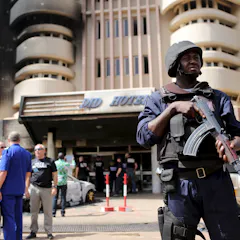
Burkina Faso is on its way to becoming a healthy and stable democracy – and that’s got West Africa’s jihadists riled.
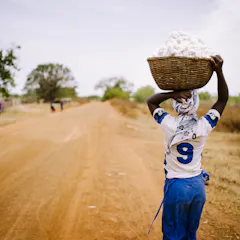
The GM debate in the developing world encompasses countries with very different priorities. Through the shrill battle of interests, the real agents for change tend to be overlooked.
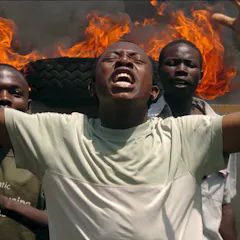
The African Peer Review Mechanism has made a difference since it was started in 2003. There are multiple examples of reforms that have been introduced as a result. All have gone unnoticed.
There are two functions of language: communication and access to knowledge. Each must be pursued as an objective in its own right rather than being lumped together.
Many African countries continue to creep along a predetermined path that takes them away from any real possibility to defend their sovereignty and meet the needs of their people.
The hope is that Buhari will be honest and efficient — but his post comes with significant baggage.
Top contributors
-

Lecturer in Political Economy of Violence, Conflict and Development, SOAS, University of London
-
Associate professor in Politics and International Relations, Leeds Beckett University
-
Extraordinary Lecturer, University of Pretoria
-
Associate Professor in Geography, University of Florida
-
Leverhulme Early Career Research Fellow, Aston University
-
Senior researcher, Arnold Bergstraesser Institute
-
Nonresident Research Fellow, Rice University
-
Associate Professor, Political Science, University of Cincinnati
-
Adjunct Research Fellow, Curtin University
-
Doctoral candidate, Regent University
-
PhD Candidate, University of Amsterdam
-
Policy Leader Fellow, School of Transnational Governance, European University Institute
-
Senior Lecturer and Researcher in Journalism, Radio and Communication, University of Sheffield
-
DPhil-Candidate in International Relations, University of Oxford
-
Professor of Conflict Studies, School of Conflict Studies, Université Saint-Paul / Saint Paul University