

To date, the program has provided nearly $10 million to roughly 137,000 of the country’s poorest citizens.
Articles on Basic Income
Displaying 21 - 40 of 45 articles

Recent developments in the organisation of production have led to the decline of wage employment across much of the world.

An economist explains what it would cost to give SNAP benefits to all Americans in households earning up to about $100,000 per year – and why it would be worth it.

The pandemic has shown us the need for widespread security.

We could do it for the price of tax cuts.

The relative success of the CERB during the pandemic shows the time is finally right for a permanent basic annual income program.

The ability of food banks to meet the needs of food insecure Canadians has plummeted just when it is needed most. But food banks have never been able to address the reason people are going hungry.

Lockdown throws our relationship with work into the spotlight.

A universal basic income could provide financially precarious people with the money they need. And it would keep money flowing through the financial system.

Francis Townsend had a similar if less ambitious idea in the 1930s that never got through Congress but ended up making Social Security a lot more generous.
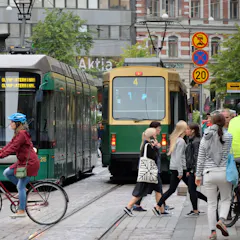
The Finnish experiment will only fuel further debate on whether or not universal basic income is a good idea.

The cancellation of Ontario’s basic income pilot not only violates our ethical obligations to participants. It also means forfeiting a valuable research opportunity on income security.

The universal basic income movement has a major problem: both critics and even many supporters don’t understand how much it would really cost.
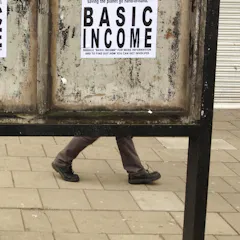
Ontario’s basic income project was deeply flawed and cursed by a lack of quality data. It needs a major overhaul.
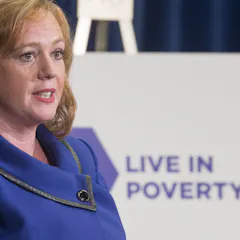
Research shows that guaranteed basic income programs spur economies and improve mental and physical health. That’s why Ontario’s decision to scrap the province’s pilot project is such a bad idea.

It’s time to update the old agenda of the 19th century: less working time and more money for all, in the form of shorter work days and a universal basic income.

A universal basic income would enable people to embrace the gig economy and give them greater leverage in the jobs they choose.

In a highly individualistic world where work prevents us from spending time with friends and family, a universal basic income could change society.

Increasing inequality, environmental degradation, financial instability – it’s clear the current system is broken.

The arguments for an universal basic income have emerged from a rising disillusionment in classic economics and expectations of more security.
Top contributors
-

Professor of Health Studies, Queen's University, Ontario
-
Lecturer (Assistant Professor), King's College London
-
Professor and Canada Research Chair (Tier 2) in Advancing the UN Sustainable Development Goals, Royal Roads University
-
Senior Lecturer in the Department of Culture, Media & Creative Industries, King's College London
-
Wayne Simpson is a Friend of The Conversation.
Professor, Department of Economics, University of Manitoba
-
Associate Professor of Economics, University of Manitoba
-
Lecturer in Social Policy, University of Salford
-
Professor, University of Manitoba
-
Canada Research Chair in Promoting Healthy Populations, Dalhousie University
-
Examination Fellow in Law, All Souls College, University of Oxford
-
Professor of Human Ecology, Lund University
-
Dean of Programs, EM Lyon Business School
-
Adjunct Faculty of History, Virginia Tech
-
Professor of Sociology, University of California, Irvine
-
Lecturer in Management, Employment and Organisation, Cardiff University