
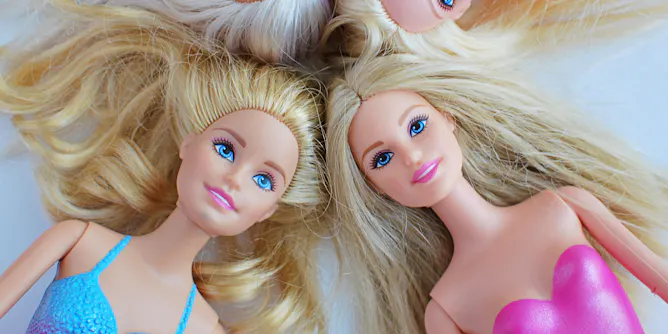
Toys are the most plastic-intensive consumer goods in the world. So how can we avoid movie tie-in fads adding to the surging plastic waste problem?
Articles on Barbie dolls
Displaying 21 - 40 of 50 articles

Greta Gerwig, the director of Barbie, has had a unique career, moving quickly from in front of the camera to behind it - with great success.

Once the context of cultural and territorial appropriation by China in Southeast Asia are understood, Vietnam’s ban of the Barbie movie isn’t surprising.

The DreamHouse blurs the lines between doll and human along with the boundaries between the real, monochromatic world of California and the fictional realm of the magical dollhouse.
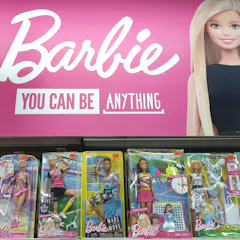
A branding expert explains how this iconic but controversial doll has gone from teenage reject to movie star in 64 years.

There is an adage that feminists and women aren’t funny. However, the history of activism reveals humour as a successful strategy for change.
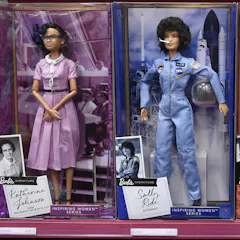
The author of a new book exploring the making of heroines throughout history asks whether Barbie can ever overcome her reputation as the plastic antithesis of feminist ideals.
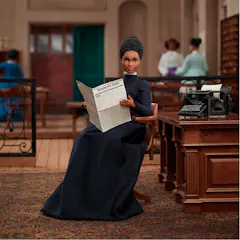
Black children are prone to internalize messages of anti-Blackness. Can a Black doll that honors one of America’s most noteworthy Black women do anything to reverse the trend?
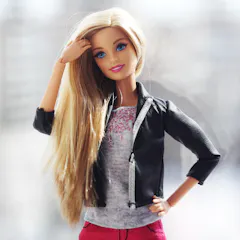
A new study found playing with ultra-thin dolls could make young girls want a thinner body.
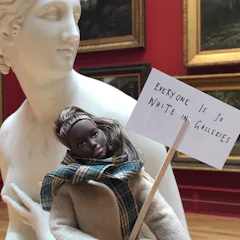
Small signs, big questions and a fabulous wardrobe. How the world’s most famous doll is calling out art’s deeply entrenched male bias.

Mattel created a new line of dolls because of research suggesting kids don’t want toys ‘dictated by gender norms’ – but supplanting those norms will take a lot more than that.
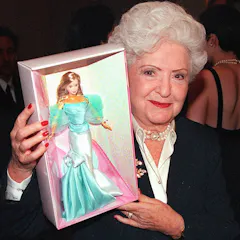
2019 marks the 60th anniversary of the world’s most famous doll, Barbie. It’s an opportunity to look back at the journey of its creator, Ruth Handler, a visionary leader and model for women.
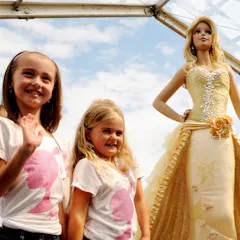
For six decades, young girls have played with Barbie dolls. But she’s changed a bit recently.
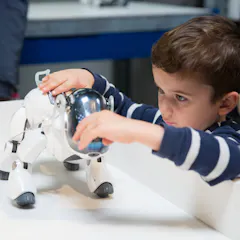
An expert argues our connection with these figures is longstanding. They are embedded in our myths and help us explore deeper questions about being human.

Ken dolls with a ‘man bun’. Female superhero action figures. At long last, the gendered distinctions of the pink and blue toy aisles are starting to break down.

As Amazon introduces a new smart-home device aimed at children, it’s important to know many internet-connected toys are not secure, putting kids’ security and privacy at risk.
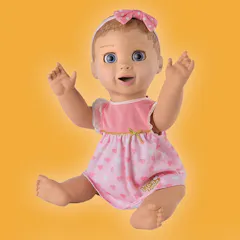
The technological revolution has hit the doll aisle this holiday season in the form of artificial intelligence dolls. What does it mean for children’s development, to confuse real bodies with machines?

With the recent death of Hugh Hefner, come questions about his impact on sexual culture: Did his empire broaden the sexual landscape or did it usher in a pitiful era of objectification of women?

After years of plastic surgery and progressive skin-bleaching, Lil’ Kim is not black any more.
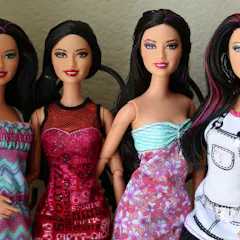
This plastic matters: girls as young as three-and-a-half associate thin dolls with being smart and heavy dolls with being sad.
Top contributors
-

Professor of History, University of Canterbury
-
PhD Candidate, Centre for Women's Studies, University of York
-
Associate Professor in Marketing, Director Centre for Organisations and Social Change, RMIT University
-
Professor of Religious Studies and Cinema and Media Studies, by special appointment, Hamilton College
-
Professor in Internet Studies, Curtin University
-
Professor of Political Science, Boise State University
-
Professor of Health Sciences, Adelaide University
-
Senior Lecturer in Marketing, RMIT University
-
Professor of Marketing, Royal Holloway, University of London
-
Marketing Academic, RMIT University
-
Associate Professor, Department of Security, Fire and Emergency Management, and Director of Center for Cybercrime Studies, John Jay College of Criminal Justice, City University of New York
-
Professor of Law, University of Melbourne; Chair of Private Law, Te Herenga Waka — Victoria University of Wellington
-
Professor
-
Associate Professor of Sociology, Deakin University
-
Associate Professor in Education, Concordia University