

Cyber security has been identified as a global challenge, with Africa facing renewed threats through increasing internet use across many platforms.
Articles on Banks
Displaying 241 - 260 of 313 articles

Financial inclusion has so far focused on enhancing a poor person’s cash flow. But it needs to involve more. Not enough consideration is given to encouraging poor people to build assets.

More robust competition between banks would benefit consumers, but there’s little policy focus on the issue.

Australia’s biggest banks seem more concerned with disclosing how much paper they recycle than their lending exposure to coal mines.

A flat rate bank deposit tax could be distorting, and not for the reasons the banks suggest.
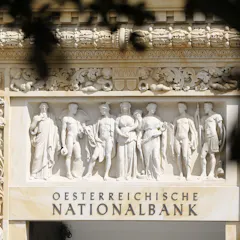
The continued ownership of shares in central banks by private investors may be a superfluous relic but it enhances governance and adds to the transparency and accountability of central banks.

US regulators chose to reveal detailed information to the public about the state of the banks. They were able to be so transparent, without triggering a run, because of a strong fiscal backstop.

There is a schism between the symbolic and substantive sustainability efforts of our Big Four banks.

A continent in shock; a country on the brink; and a model for punitive debt negotiations that serves no one but the banks.

Jailing bankers for failing to uphold an ethical code is possible - it’s simply a matter of enforcing current laws.
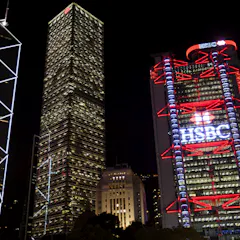
Is the business models which large banks have relied upon for the last three decades dead?

The FDIC – and taxpayers – lost US$90 billion selling almost 500 failed banks. Where did all those banks go?
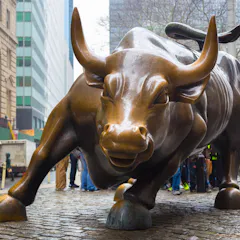
Bankers are back to their old ways, putting the global economy at risk just six years after standing at the brink of another Great Depression.

A call to break with the leadership of Greece’s ruling party has highlighted the futility of debt-led austerity and the burden it places on people on the wrong side of a banker’s bad bet.

First home buyers looking to break into the housing market are turning to their parents, but it’s not a risk-free proposition for either party.

Banks have become like Wall Street versions of “teflon don” John Gotti, able to avoid conviction despite repeated criminal prosecutions.

With more than 250,000 employees, spread over 80 countries, how can HSBC’s bosses know everything going on?

Behind all the hand-wringing over financial executive pay is a desire to moderate risk-taking. Financial markets may already have the answer to hand.
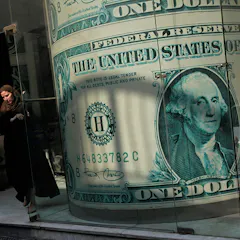
Financial assets compliant with sharia are growing at a much faster pace than the conventional kind, yet North American banks are still stuck on the sidelines.

If we keep saying high finance is operating in a morality vacuum, we will miss the chance to understand and fix its problems.
Top contributors
-

Professorial Fellow, University of Canberra
-
Visiting Fellow, Macquarie University Applied Finance Centre, Macquarie University
-
Emeritus Professor of Finance, The University of Melbourne
-
Vice Chancellor's Fellow at Victoria University and Adjunct Professor of Economics, Victoria University
-
Professor, Finance, UTS Business School, University of Technology Sydney
-
Senior Lecturer, Faculty of Law, University of Wollongong
-
Scientia Professor of Economics, UNSW
-
Head of Department of Economics, Finance & Accounting, Brunel University of London
-
Associate Professor in Finance, University of Canberra
-
Professor of Organisational Behaviour, Bayes Business School, City St George's, University of London
-
Senior Lecturer, Adelaide Law School, Adelaide University
-
Associate Professor in Marketing, Keele University
-
Vice-Chancellor and President, University of Canberra
-
Emeritus Professor of Accounting, University of Essex, University of Essex
-
Adjunct Professor, Swinburne University of Technology