
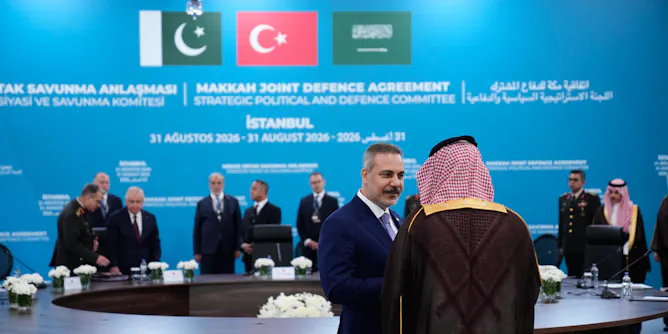
The pact with Turkey and Pakistan has evolved quickly from a vague political commitment. Riyadh hopes it will help it navigate a thorny Middle East crisis.
Articles on Bab el-Mandeb Strait
Displaying all articles
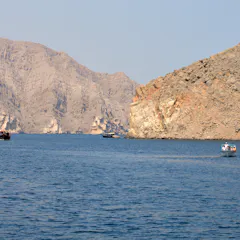
The Portuguese, Dutch and British empires all vied for control over these vital shipping lanes.

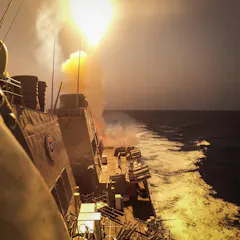
Seizure of the Bab el-Mandeb Strait complicates a widening conflict in the Persian Gulf. It also risks reigniting Yemen’s civil war.
The African shoreline is now much more valuable to outsiders who want to monitor, contain or outflank the waterway opposite them.
The resumption of fighting, paired with the ongoing closure of the Strait of Hormuz, complicates regional strategy and energy policy for the Gulf powerhouse.
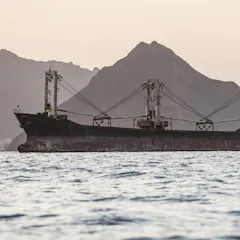
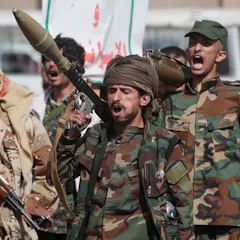
The move suggests Iran and its allies are settling in for a long war. That could mean pain for the global economy.
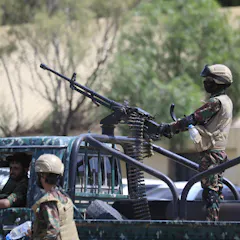
Rapid expansion of the bloc means that its 21 members have deeply divergent interests, particularly in the Middle East.
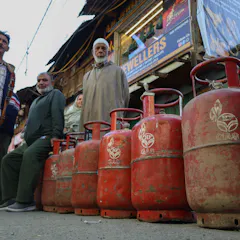
Cooking gas and diesel fuel are among the oil products whose supply levels have been affected already. Here’s why to expect long-term shortages.

Each year, about 10–12% of global shipping trade passes through the Bab el-Mandeb Strait – whose name means ‘Gate of Tears’.
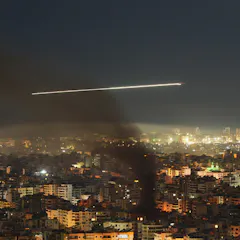
Israel’s recent actions are changing the Middle East by weakening state capacity and sustaining regional tensions.

In normal times, as much as 14% of global maritime trade goes through the Bab el-Mandeb Strait. Disruption would be felt around the world.
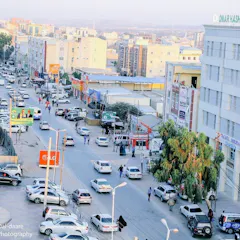
Somaliland’s growing strategic relevance masks its unresolved internal divisions.
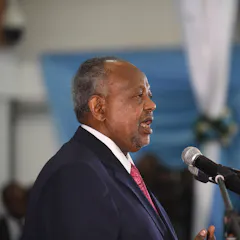
Djibouti is a presidential republic with a multiparty system, but political authority is highly centralised.
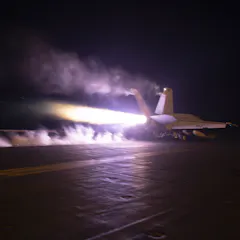
Since the outset of Israel’s invasion of Gaza, the West has aimed to prevent the conflict from escalating regionally. But strikes on the Houthis in Yemen by the U.S. and the U.K. may ensure it will.
Top contributors
-

Associate Professor of International Relations, University of Trieste
-
Associate Professor in Operations and Supply Chain Management, UTS Business School, University of Technology Sydney
-
Director, Energy, Climate Justice, and Sustainability Lab, and Research Professor, New York University; Tufts University
-
Associate Dean, School of Business and Law, Edith Cowan University
-
Assistant Professor in Global Humanities, Simon Fraser University
-
Professor of International Security, University of Birmingham
-
Associate Professor in International Relations, UNSW
-
Fellow for the Middle East at the Baker Institute, Rice University
-
Ph.D. Candidate in Political Science, Colorado State University
-
Associate Professor, Department of International Relations, Ankara Hacı Bayram Veli University
-
IE School of Humanities, IE University; California State University San Marcos
-
Associate Professor and Edward and Emily McWhinney Professor in International Relations, Simon Fraser University
-
Assistant Professor of International Relations, American University