
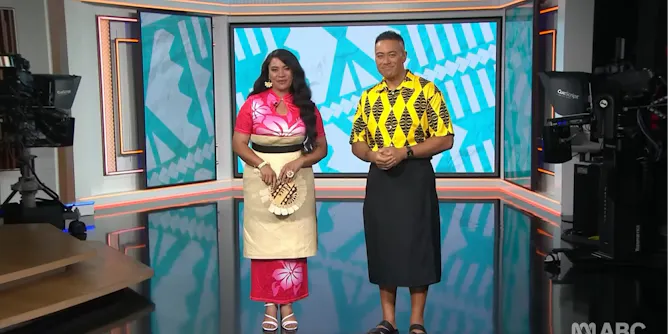
As authoritarian influence and disinformation grow across the Indo-Pacific, Australia is still failing to back one of its strongest assets: trusted journalism.
Articles on Australian foreign affairs
Displaying 1 - 20 of 66 articles
In the Trump age, how the next government, whether Labor or Coalition, will handle foreign affairs, defence and trade is shaping to be crucially important.
In this podcast, senior fellow from the Lowy Institute and expert on Asia Richard McGregor joins The Conversation to canvass the prime minister's coming trip to China.
Germany and England spend around A$4–5 per capita on cultural engagement and diplomacy. We spend 20 cents.
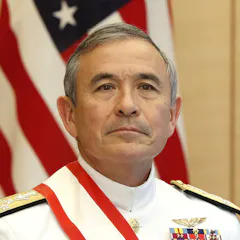
The US Ambassador to Australia post remains vacant after Admiral Harry Harris was reassigned to South Korea. But the diminished role of ambassadors means this is not cause for alarm.
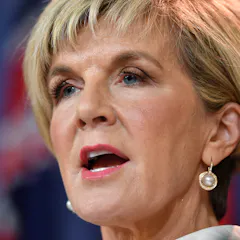
The Australian government is expelling two Russian spies as part of a broad international retaliatory action against Russia.
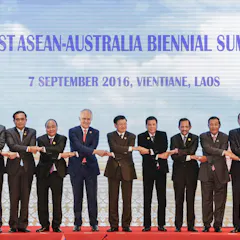
Australia’s challenge is to prove its utility to ASEAN, and vice versa.
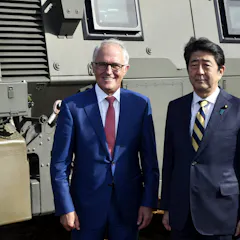
The underlying implication of Malcolm Turnbull’s Tokyo visit was the interest shared by Japan and Australia to counter the strategic rise of China.
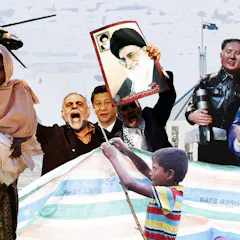
From an Australian perspective, shifting power in the Indo-Pacific will be of primary importance in 2018 and beyond.
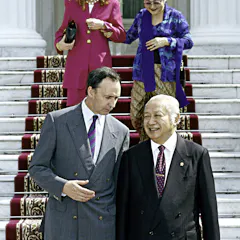
It was Paul Keating himself who first raised the idea of a security agreement between Indonesia and Australia in June 1994 to Indonesian President Soeharto.
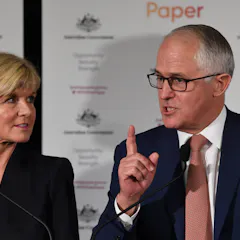
The closest idea to an actual plan in the white paper seems to be to double-down on the US relationship, and trust that the Trump administration is a blip.

Speaking with: Professor Bates Gill on Australia’s changing relationship with China
The Conversation, CC BY-ND36.5 MB (download)
William Isdale speaks with Bates Gill on the importance of Australia's relationship with China and how best to navigate the sometimes complex alliance.
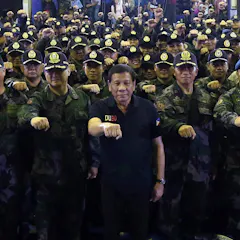
It turns out that the president of the Philippines is exactly who he said he was.
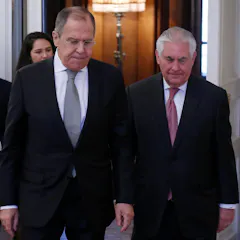
What vastly complicates Western policy in Syria is how to sanction Assad on one hand and deal with Islamic State on the other, without the country unravelling completely.
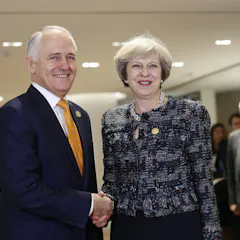
For Australia, Brexit is the diplomatic equivalent of moving into a shared house with a divorcing couple.
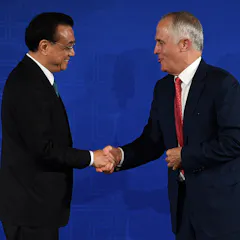
The usual procedures for extradition between countries with substantial and complex bilateral relations – like those that Australia and China have – will now not be available.
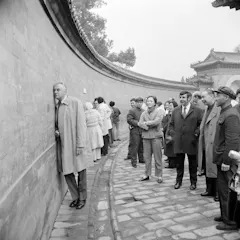
Now, more than at any time in our history, Australia needs a relationship with China ‘comparable with that which we have, or seek, with other major powers’.
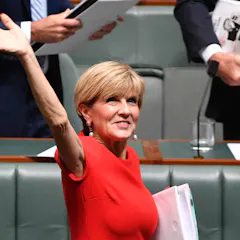
The US alliance will remain the cornerstone of Australian security, but regional partnerships will become more important and exploitable - sentimental ties aside.
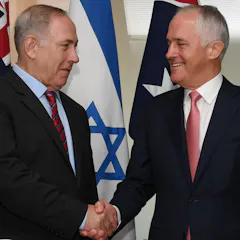
After the extraordinary attention accorded to the visit to Australia by the leader of a country whose economic importance to us is limited – if prospective – it might not be a bad idea to put all this…
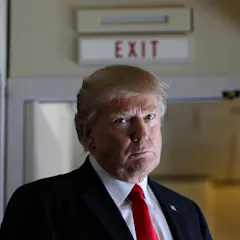
Australian and American leaders over the years have, from time to time, disagreed or said things to cause embarrassment. But, for the most part, such disagreements have been kept out of the limelight.
Top contributors
-

Adjunct Professor, Australia-China Relations Institute, University of Technology Sydney
-
Professorial Fellow, University of Canberra
-
Tony Walker AM is a Friend of The Conversation.
Director, La Trobe University
-
Adjunct Lecturer, Faculty of Economics, Hosei University
-
Director, Center for Australian, New Zealand and Pacific Studies, Georgetown University
-
Pro Vice-Chancellor Research and Professor of International Studies, La Trobe University
-
Associate Professor in Politics and International Relations, Monash University
-
Adjunct Professor, Griffith Asia Institute, Griffith University
-
Professor of International Relations, The University of Queensland
-
Course Co-ordinator, International Law Clinical Program, ANU College of Law, Australian National University
-
Dennis Altman is a Friend of The Conversation.
Vice Chancellor's Fellow and Professorial Fellow, Institute for Human Security and Social Change, La Trobe University
-
Dosen Hubungan Internasional, Universitas Islam Indonesia (UII) Yogyakarta
-
Professor, Griffith Law School, Griffith University
-
Adjunct Professor, Southern Cross University
-
Professor, Western Sydney University