

Here are 10 trends worth noting from this year’s huge Household, Income and Labour Dynamics in Australia (HILDA) survey. For starters, household spending on energy fell, even as power prices rose.
Articles on Australian economy
Displaying 81 - 100 of 204 articles
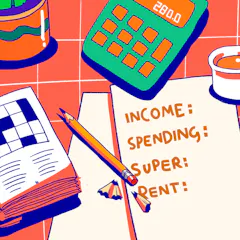
What the huge HILDA survey reveals about your economic well-being, health and family life
The Conversation, CC BY53.6 MB (download)
On today's episode, we'll hear what the huge HILDA survey says on Australians' financial literacy, energy use, how many of us are delaying getting a driver's license and how our economy is changing.
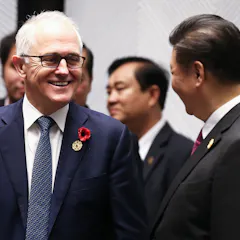
Anxiety about China’s rise is unlikely to abate any time soon – Australia needs to remain calm and realise the region is changing rapidly.
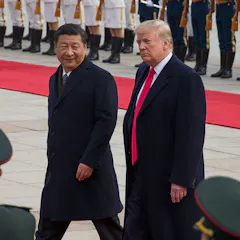
Chinese President Xi Jinping spoke of plans to further open up the Chinese economy this week - and the world economy should hope US president Trump feels vindicated by this.

On Q&A, Australian Chamber of Commerce and Industry chief executive James Pearson said almost 60% of small business owners in Australia are paid $50,000 or less. Is that right?
Housing and wages loom as stubborn problems that could bring our economy unstuck in the year ahead.
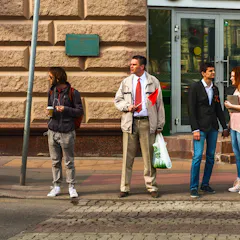
Any number of implicit and explicit deadlines make 2018 look like a more eventful year than most.
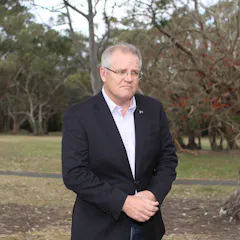
The narrative that Australia has “transitioned from the mining boom successfully” seems a lot like wishful thinking.

Business conditions aren’t translating to confidence, despite growing profits and jobs.

Why is it that the US – which suffered a major downturn – seems to have a stronger economy than Australia , which did not even go into recession in 2008-09?
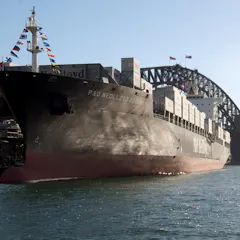
New modelling shows that Australia’s distance from Europe and the United States hurts our exports, but this will change as Asia develops.
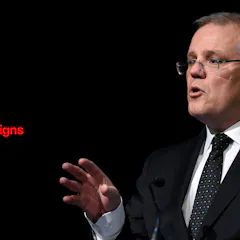
Repeatedly boasting about the past won’t distract from the fact Australia’s economy is looking shaky.

The slew of numbers across various major economies this week continue to suggest a mixed picture.
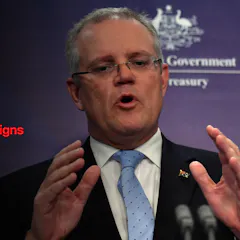
Treasurer Scott Morrison says Australia will “grow into growth”. Global economic conditions suggest otherwise.
Some seem to think the RBA is bullish on growth, but reading between the lines it seems to be hedging.
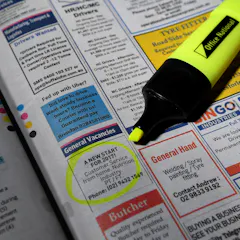
Wages are sluggish, underemployment seems stubbornly high, and there is a continued push to part-time rather than full-time employment.

There are economic arguments to be had for ensuring an appropriate rate of growth of real wages.

Face Value analyses the sentiment of business leaders in ASX top 100 companies and for 2017 it seems positive, although sometimes highly opinionated.

The current subdued level of non-mining business investment may be the “new normal”.

Uncertainty about energy prices and political dithering on company tax rates point to businesses waiting before investing heavily.
Top contributors
-

Scientia Professor of Economics, UNSW
-
Professorial Fellow, University of Canberra
-
Emeritus Professor of Economics (Griffith University) and Teaching Associate (University of Queensland), Griffith University
-
Dean of Business School, University of Southern Queensland
-
Election Analyst (Psephologist) at The Conversation; and Honorary Associate, School of Mathematics and Statistics, The University of Melbourne
-
Director, Centre of Policy Studies, Victoria University
-
Professiorial Fellow, The University of Melbourne
-
Professor of Economics, The University of Melbourne
-
Professor of Economics, Monash University
-
Industry Professor and Chief Economist, University of Technology Sydney
-
School of Social Sciences, Monash University
-
Professorial Fellow and Co-Director, HILDA Survey, Melbourne Institute of Applied Economic and Social Research, The University of Melbourne
-
Economist and Director, Centre for Future Work, Australia Institute; Honorary Professor of Political Economy, University of Sydney
-
Professor of Economics, University of Canberra
-
Professor of Macroeconomics, University of Sydney