

Asylum seekers rely on informal networks which struggle to operate under social distancing rules.
Articles on Asylum seekers
Displaying 201 - 220 of 886 articles

Television series Stateless examines our treatment of asylum seekers through ‘people like us’. It also highlights how far conditions for people transferred to offshore detention have deteriorated.

A review of more than 18,000 migration appeals cases shows that refugees with access to lawyers are seven times more likely to succeed with their reviews than those without.
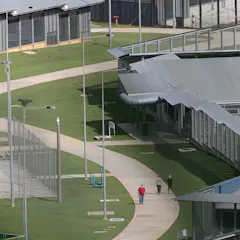
There were 8,000 forced relocations in Australia’s immigration detention system in a nearly two-year span. New research shows how distressing and destabilising these movements are for refugees.

We found refugees with insecure visas had poorer mental health than refugees with secure visas. But social interaction with the wider community seems to help.

Now that medevac has been repealed, people will once again rely on ministerial discretion for a medical transfer.

People can find themselves waiting for an asylum decision for many years, facing multiple barriers and struggling to fill the hours in their days.
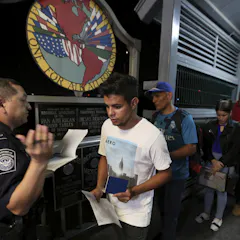
Fees for everything from green cards to naturalization are not only common, but increasingly costly and mandatory.

No matter how skilled or qualified they are, asylum seekerd say they’ve often forced to take whatever basic job they can just to survive.

Asylum seekers are not permanent residents and have to pay full fees for university courses. Just as doctors led the campaign to get kids off Nauru, academics can advocate for access to education.

The Kindertransport saved thousands of Jewish children from the Nazis before World War II. But planned reforms to UK asylum policy are putting refugee children at risk.

Why do caseworkers and immigration judges not believe that asylum seekers are gay?

Canada should stand up for international law by condemning the American assault on Central American migrants.
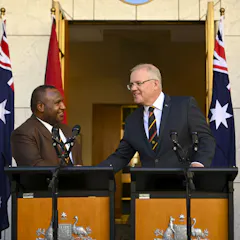
From a naval base development to asylum seekers on Manus Island, there were many things the two leaders had to discuss.
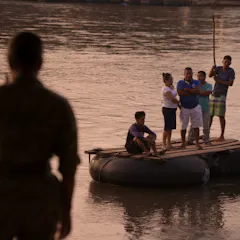
The U.S. will likely continue to threaten Mexico with trade tariffs due to Central American migrants, and Mexico will respond with more drastic, inhumane measures. None of it will stop migration.
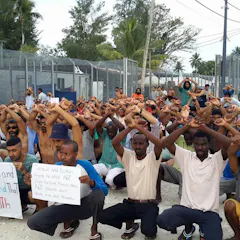
With parliament sitting next week, the home affairs minister is pressuring Labor to support a repeal of the medevac law. But the law has worked just as it was intended.

As part of a new ‘metering’ policy, US officials are turning asylum seekers away at ports of entry along the southern border. Thousands wait, straining the resources of Mexican border towns.

Dutton continues to insist the government could be compelled under the medevac legislation to transfer criminals, although the legislation gives the minister power to veto people on security grounds.
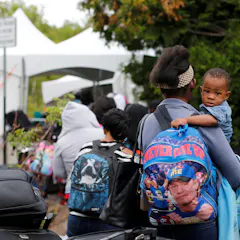
Unlike prior waves like the enslaved people on the Underground Railroad or Vietnam-era war resisters, they are children whose parents fear deportation after spending years in the United States.
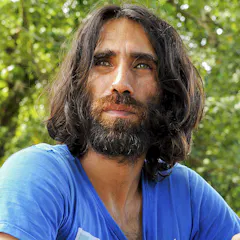
It’s critical that the Australian government take a new direction in refugee policy and move beyond its tired rhetoric of deterrence as a justification for detaining refugees on Nauru and Manus.
Top contributors
-

Professorial Fellow, University of Canberra
-
Associate Professor, School of Law, Murdoch University
-
Adjunct professor, Adelaide University
-
Lecturer, Western Sydney University
-
Professor in Human Rights and International Law, University of Newcastle
-
Deputy Director (Indo-Pacific Research) ARC Centre of Excellence for the Elimination of Violence Against Women, Griffith University
-
Professor and Director, Kaldor Centre for International Refugee Law, UNSW Law & Justice, UNSW
-
Adjunct Professor, Australian Catholic University
-
Scientia Professor and ARC Laureate Fellow, Kaldor Centre for International Refugee Law, UNSW
-
Associate Professor of Law, Member of Deakin Cyber and the Centre for Law as Protection, Deakin University, Deakin University
-
Adjunct professor, La Trobe University
-
Emeritus Professor of Sociology, University of Technology Sydney
-
Senior Research Fellow, Andrew & Renata Kaldor Centre for International Refugee Law, UNSW
-
Professor of Criminology, Monash University
-
Lecturer, Migration Law Program, Australian National University