
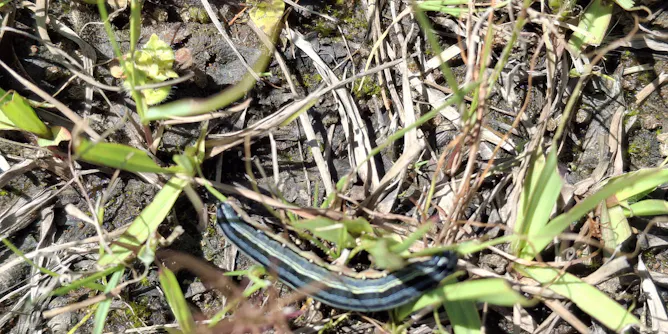
The African armyworm causes havoc for many crops and livestock.
Articles on Armyworm
Displaying all articles
With a focus on ships and cargo, we are missing the opportunity to prevent pests that ride in on the wind. It is time to invest in addressing the biosecurity threats before they arrive.

This year’s unprecedented fall armyworm invasion has laid waste to lawns, athletic fields and crops. Is it a fluke? When will it end?
Every increase in one degree of global warming will increase losses of crops to insects from 10% to 25%.
Plant diseases require as much attention now as ever to ensure that food systems are in place in the next season. There are also serious implications for forestry and the environment more broadly.
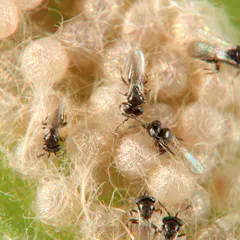
Biological control uses live organisms to kill or eat the pest insects.
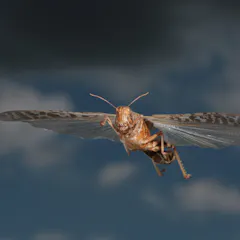
Countries should promote alternatives to pesticides and more carefully examine how to prevent insect invasions in the first place
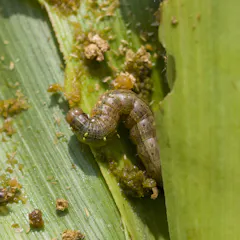
The rice-eating fall armyworm has spread across Asia in a year and is now found in half the provinces of China.
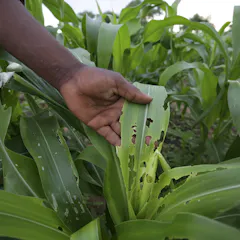
Farmers should use biopesticides - naturally occurring substances that kill pests such as the fall armyworm - instead of using pesticides, which are often highly toxic.
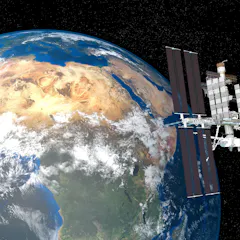
Big data can be used to properly advise smallholder farmers in Africa and help guide pest monitoring efforts.
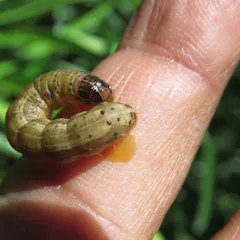
The Fall armyworm will remain in Africa for a long time unless concerted action is taken.
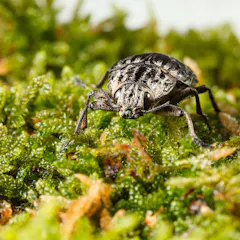
Many alien plants and animals have been introduced to Africa from other regions and spread from country to country, often having devastating effects.
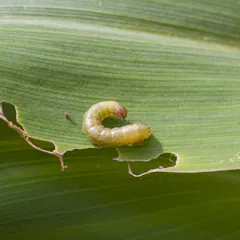
Fall armyworms have a number of characteristics that make them particularly hard to control. They are strong fliers, can breed at a high rate and also develop quick resistance to pesticides.
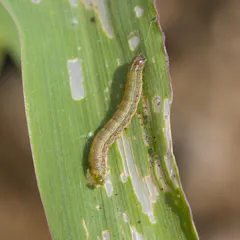
A combination of armyworms native to Africa and those normally found in the Americas are ravaging crops in sub-Saharan Africa.
Top contributors
-

Associate Professor, Department of Entomology; African-American Studies, University of Illinois Urbana-Champaign
-
Prinicipal Scientist and Insect Pathologist, International Centre of Insect Physiology and Ecology
-
Postdoctoral research fellow, University of Pretoria
-
Professor at the Lancaster Environment Centre, Lancaster University
-
Senior Lecturer Zoology and Entomology, University of Pretoria
-
Professor of Entomology and Director of the West Tennessee AgResearch and Education Center, University of Tennessee
-
Senior research scientist, Institut de recherche pour le développement (IRD)
-
Senior Lecturer in Population Genomics, University of Waikato
-
Lecturer in Integrated Crop Management, University of Neuchâtel
-
Communication officer, Institut de recherche pour le développement (IRD)
-
Head of Technology Transfer Unit, International Centre of Insect Physiology and Ecology ICIPE, International Centre of Insect Physiology and Ecology
-
Extra-ordinary Professor, Forestry and Agricultural Biotechnology Institute, University of Pretoria
-
Stockholm University
-
Professor of Insect Chemical Ecology, Keele University
-
Director: Strategic Projects and Partnerships in Agriculture - Innovation Africa@UP, University of Pretoria