
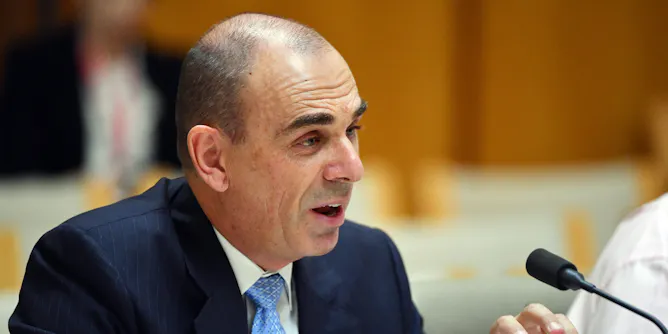
The APRA inquiry puts the regulator in the tricky position of trying to be seen to be tough on bank scandals but juggling its close relationship with the government and the CBA.
Articles on APRA
Displaying 41 - 60 of 74 articles
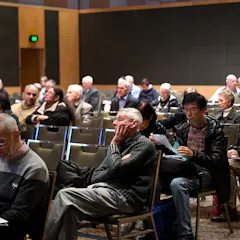
Many of us barely glance at our own superannuation account balances, so it’s reasonable to predict that only a tiny fraction are likely to go to a super fund annual meeting.

The government’s best ideas for how to grow wages and incomes do not inspire confidence.

What critics of the plan to use superannuation for housing miss is that Australia’s super system already channels a significant proportion of retirement savings into housing.
Negative gearing plus inadequate supply plus low wage growth equals financial distress.
The government’s unwillingness to consider changing the tax system to fix housing affordability, makes it more likely that APRA may have to become even more prescriptive with its lending criteria.
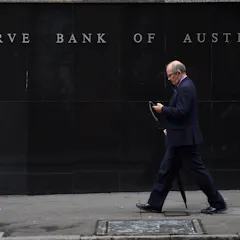
Some argue, determinedly and erroneously, that when functioning correctly bank capital levels are almost magical things.

Investor loans are on the increase again, causing pause for the regulators.

APRA has updated its guidance to lenders on concerns about the risks to financial stability from the housing market, but it should be focusing more on the banks, not hurting those with a mortgage.

Business Briefing: rate tracker mortgages
The Conversation16.3 MB (download)
Rate tracker mortgages could provide some certainty for customers and increase trust in the banking sector.

Just when we all thought that the Australian Securities and Investments Commission (ASIC) had already won the race to be most ineffective regulator of the year, up pops the Australian Prudential Regulation…
Data on the outcomes of life insurance claims will not only help individual customers but also financial advisers and super funds acting on behalf of consumers.
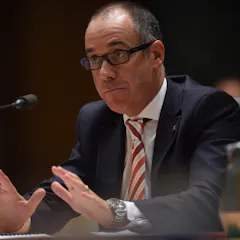
As the chief executives of Australia’s big four banks come before a House of Representatives economics committee, we ask a panel of experts what questions the banks should be answering.

The financial products offered by the shadow banking sector allow investors to be further removed from their investments and banks to escape regulation, increasing the risk in the sector overall.

Australia’s big four banks are managing risk well, this could be contributing to their strong performance.

With all the weight of evidence stacked against the banks in the case of BBSW benchmark, surely now is the time for the government to enforce regulation.
It may be the effect of the election but the regulation of banking in Australia appears to be descending into farce. Just last week, maybe in anticipation of adverse events to come, the Australian Financial…
In announcing new money for the Australian Securities and Investments Commission, the Treasurer and the Minister responsible Kelly O’Dwyer executed a synchronised back flip with tuck, declaring that “The…
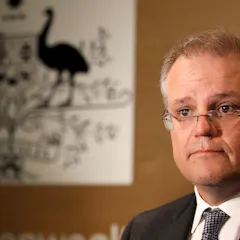
After Labor proposed a royal commission into the banking industry, Treasurer Scott Morrison said the Australian Securities and Investments Commission (ASIC) has all the powers of a royal commission and more. Is that right?

Royal Commissions work best when one specific issue can be addressed, rather than a wide range of problems.
Top contributors
-

Visiting Fellow, Macquarie University Applied Finance Centre, Macquarie University
-
Scientia Professor of Economics, UNSW
-
Senior Lecturer, Faculty of Law, University of Wollongong
-
Vice Chancellor's Fellow at Victoria University and Adjunct Professor of Economics, Victoria University
-
Emeritus Professor of Finance, The University of Melbourne
-
Associate Professor in Banking and Finance, The University of Queensland
-
Professor - Risk governance, culture, remuneration, Macquarie University
-
Visiting Fellow, Crawford School of Public Policy, Australian National University
-
Senior Lecturer, Adelaide Law School, Adelaide University
-
Professor of Law, The University of Western Australia
-
Industry Professor, University of Technology Sydney
-
Industry Fellow, Corporate Governance & Senior Lecturer, Swinburne Law School, Swinburne University of Technology
-
Professor in Finance and Banking, University of Sydney
-
Senior lecturer, Queensland University of Technology
-
Professorial fellow, Monash University