
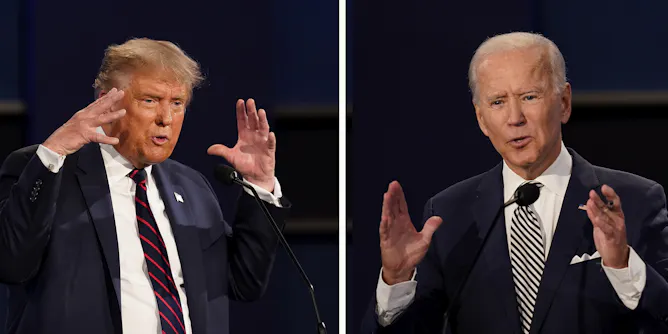
The U.S. presidential election is again serving as a symptom and a symbol of a troubled society. Whatever the outcome, history suggests anything but a quick resolution to deeply rooted problems.
Articles on Andrew Jackson
Displaying 21 - 34 of 34 articles
The technical qualifications for presidential candidates are the same, but how people seek the nation’s highest office has shifted over the centuries.

Five of the six contested presidential elections in U.S. history were resolved and the country moved on – one ended in civil war. What will happen if the upcoming election is contested?

The framers of the Constitution never mentioned a right to vote. They didn’t forget. They intentionally left it out.
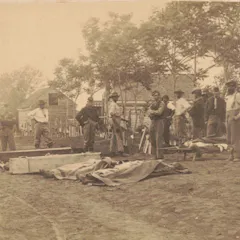
Lincoln’s chances of reelection in 1864 were dim. He was presiding over a bloody civil war, and the public was losing confidence in him. But he steadfastly rejected pleas to postpone the election.
Could defiance of court orders at the highest level undermine the Constitution’s authority in the eyes of American citizens?
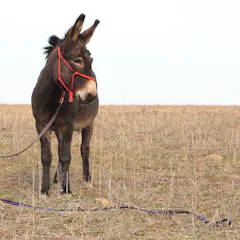
For more than two centuries, one particular epithet has resonated through US politics – and even helped inspire the unofficial mascot of a major political party.

When the electoral process was helped along by practices that either were or appeared to be underhanded, the resulting wounds took a long time to heal – and may not ever have healed.
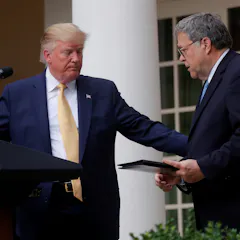
President Trump hinted that he would defy a Supreme Court ruling recently, though he later yielded to its authority. Andrew Jackson – Trump’s hero – likewise challenged the rule of law in the 1830s.

Amid all the Mueller report uncertainty, one thing is clear: Donald Trump did some wildly improper things to win the presidency. So did Thomas Jefferson, Andrew Jackson, JFK and George W. Bush.
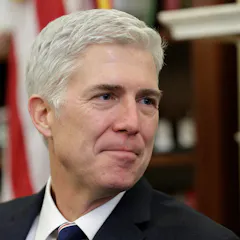
Judge Gorsuch was raised Catholic and later became an Episcopalian. An expert on Church-State issues says don’t read too much into religion as an indicator of judicial philosophy.
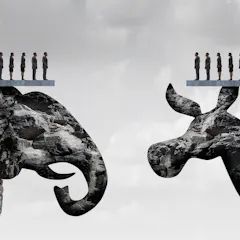
Elected officials and the media are in cahoots. Both have succumbed to a two-party system that treats voters not as independent thinkers, but as blind partisans.
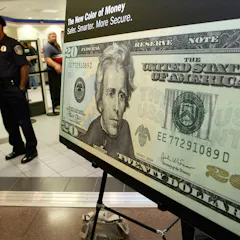
The announcement that Harriet Tubman will be the first woman on U.S. currency in more than a century recalls the history of female – and African-American – portrayals on money.
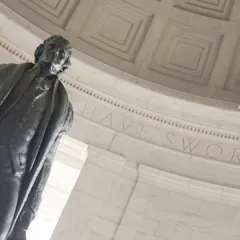
Democratic parties in four states have recently removed the names of Thomas Jefferson and Andrew Jackson from their annual fundraising dinners, a move now under consideration in at least five other states…
Top contributors
-

Professor of American History, Università di Torino
-
Associate Professor of Political Science, Clarkson University
-
Associate Professor of Political Science, Rochester Institute of Technology; Institute for Humane Studies
-
Professor of Public and Environmental Affairs Emeritus, Indiana University
-
Emeritus Professor of History, University of Toronto
-
Professor of Business Administration and of Public and International Affairs, University of Pittsburgh
-
Research Associate Professor of History, University of Tennessee
-
Professor of Political Science, Iowa State University
-
Professor of Defence Studies, Canadian Forces College
-
Wallace Stevens Professor of Law, University of Connecticut
-
William Nelson Cromwell Professor of Jurisprudence and Political Science, Amherst College
-
Professor of Law, University of Cincinnati
-
Professor of Journalism, Indiana University
-
Professor of History, Arizona State University
-
Associate Professor of Sociology, Hamilton College