
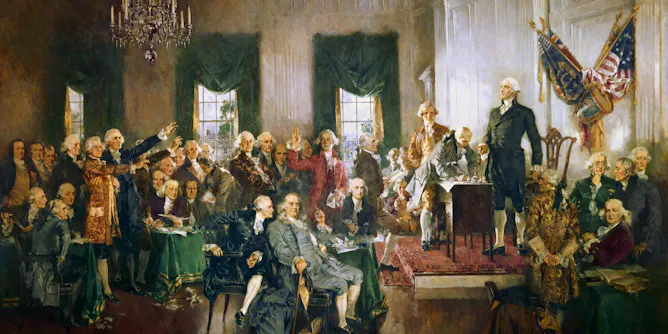
European colonial powers linked church and state. But the founders of the United States broke from that idea as surely as they broke from Britain.
Articles on America 250
Displaying 21 - 40 of 47 articles
A partisan judiciary, arbitrary power, officials beyond the reach of the people – these are the grievances that drove a revolution.
The source was a newly discovered bacterium called Legionella pneumophila that can thrive in household pipes, whirlpools, cooling units and outdoor fountains.
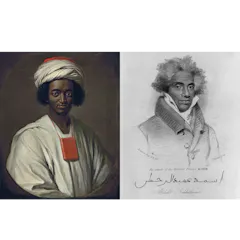
As the US approaches the 250th anniversary of the signing of the Declaration of Independence, two scholars revisit the rich legacy of American Muslims.

Dina escaped from slavery and sold pepper pot stew on the streets of Philadelphia, while her enslaver tried to recapture her.

In 1976, fans could score a ticket to the MLB All-Star Game for $6. In 2026, tickets start at over $200.
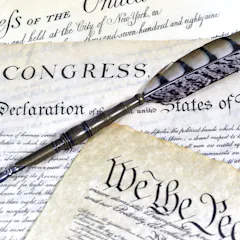
You know how important the Declaration of Independence and the Constitution were to making the United States. But do you know about The Federalist and the crucial role it played in the founding era?
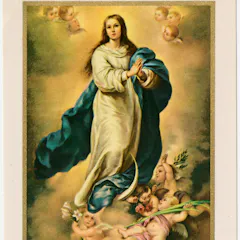
Mary, as the Immaculate Conception, became patroness of the United States before the Vatican officially defined that belief as dogma.
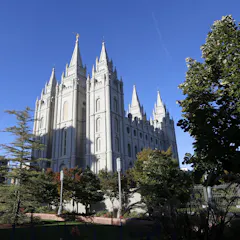
Latter-day Saints have long valued the US Constitution’s promise of religious freedom – but the church has also tested its boundaries.
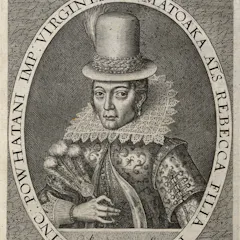
The English assumed people they colonized would convert to their way of life, including Protestant Christianity – an assumption reflected in Pocahontas’ portrait.
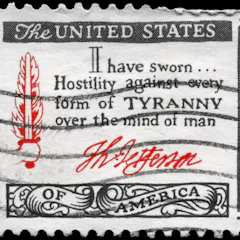
The ‘Rededicate 250’ rally raised questions about separation of church and state. Jefferson and Madison’s many letters to each other shed light on that much-debated principle.
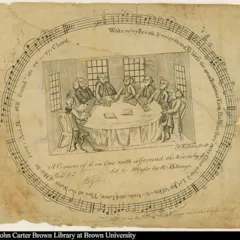
William Billings has been largely forgotten, except among music historians. But he was the country’s first notable composer, penning protest songs against Great Britain.

The founding generation in America was not of one mind. John Adams and Thomas Jefferson differed on crucial ideas, but exemplify the capacity for people to disagree and yet work for a common cause.
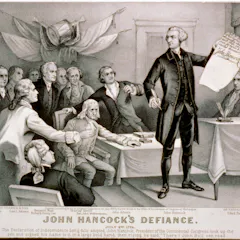
US charitable institutions rapidly changed in the 1780s as Americans established groups to support people in need and to reform society.

Matthias Aspden was a wealthy Philadelphia businessman who remained faithful to Britain. As a result, he lost his home, property and sense of belonging, and died in exile.

Is the US a democracy or a republic? That’s a misleading question, writes a historian of early America. The values of republicanism and the values of democracy have both been vital to the nation.

Stephen Girard’s silk stockings were repaired by multiple women in his household who made his enormous wealth possible.
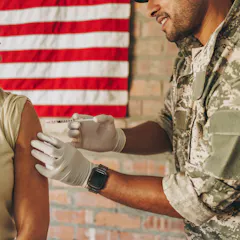
The US military helped create the first flu vaccine to keep service members in action – and the logic for requiring vaccination has not changed.
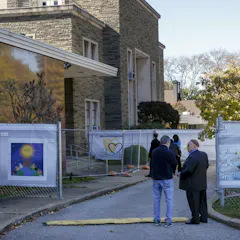
While religious minorities have often faced hostility, many Americans have long believed in religious liberty and a more inclusive society, writes a historian of American religion.
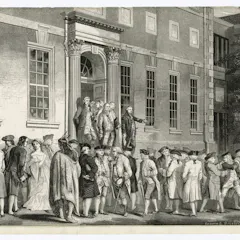
Debates about religion’s role in America often circle back to the country’s founding documents.
Top contributors
-

Distinguished Professor and Professor of the Humanities, USC Dornsife College of Letters, Arts and Sciences
-
Visiting Assistant Professor of History, Miami University
-
Senior Lecturer in Law, Bournemouth University
-
Distinguished Professor of History, UMass Amherst
-
Dean and Wake Forest Professor of the Humanities, Wake Forest University
-
Instructor in Communication, Villanova University
-
Associate Professor of Accounting, University of Dayton
-
Ph.D. Candidate in Early American History, UMass Amherst
-
Professor Emeritus of American Studies and History, University of Notre Dame
-
Associate Professor of Intellectual Heritage, Temple University
-
Assistant Professor of Epidemiology and Biostatistics, University of Illinois Chicago
-
Adjunct Professor of Domestic Terrorism, Georgetown University
-
Dean of the School of Arts and Humanities, San Juan College
-
David M. Rubenstein Curator of Philanthropy, Smithsonian Institution
-
Adjunct Associate Professor of Political Science and International Relations, USC Dornsife College of Letters, Arts and Sciences; University of Southern California