

Several scientific fields rely on visual evidence to illustrate their claims. Inaccurate AI-generated images put the credibility of science at risk.
Articles on AI images
Displaying all articles
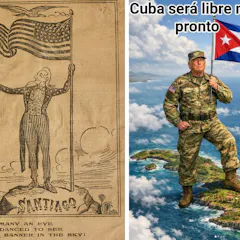
Cubans are using AI image generators to imagine US intervention in their country. The results look straight out of the 1890s.

During scrolling, the brain processes visuals quickly not critically, making it easy to miss details that reveal a fake. As technology advances, slow down, look closer and think critically.
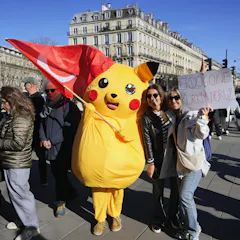
As the tide of AI ‘slop’ rises, it’s more important than ever to hone your reality-checking skills.
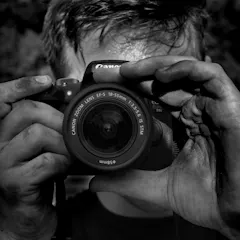
Debate is growing about ethics as concerns are raised about photographic practices across all kinds of industries, especially in light of the rise of AI-generated imagery.
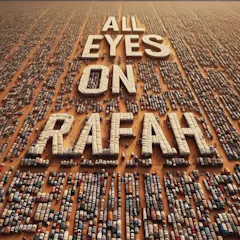
The All Eyes on Rafah image has been criticised as being overly sanitised. How does it compare to other war images? And where is the line between performative solidarity and moral responsibility?

Visually appealing and cheap to produce, AI-generated images allow scammers and spammers to post high volumes of engaging content − and Facebook’s algorithm may be promoting these posts.
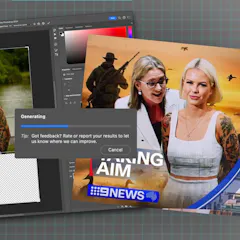
Generative AI is everywhere, including licensed software tools that news media use for their work. Everyone needs to learn more about these features, their risks and benefits.
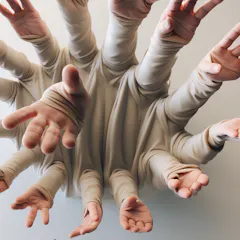
AI image generators can produce remarkable images in mere seconds. An expert explains why, despite this, they keep getting some things wrong.
Top contributors
-

Associate Professor of Visual Communication & Digital Media, RMIT University
-
Senior Lecturer, Visual Communication, School of Design, University of Technology Sydney
-
Research Assistant at the Center for Security and Emerging Technology, Georgetown University
-
Research Manager of the Stanford Internet Observatory, Stanford University
-
Research Fellow at the Center for Security and Emerging Technology, Georgetown University
-
Professor of Artificial Intelligence, Faculty of Business and Hospitality, Torrens University Australia
-
Postdoctoral research fellow, Centre for Creative Ethnography, Queen's University Belfast
-
Assistant Professor of Psychology, University of Richmond
-
Associate Professor of History, University of Miami
-
Associate Professor Visual Communication, University of Technology Sydney
-
Associate Professor of Science Communication, University of Wisconsin-Madison