
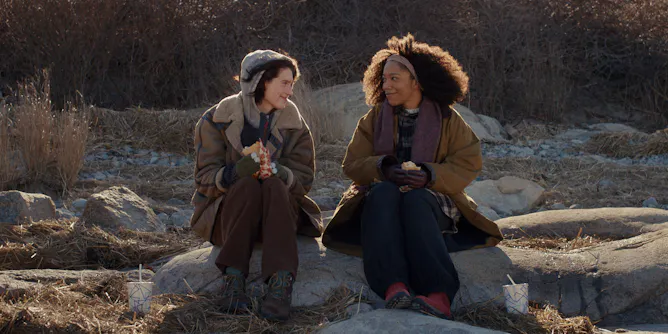
Her debut marks Eva Victor as a distinctive voice in contemporary cinema, one who trusts her characters and her audience alike.
Articles on After #MeToo
Displaying 1 - 20 of 25 articles
The public can choose to forget, to preserve the comforting fiction their favourite heartthrob is a ‘good man’.

The Netflix thriller managed to shatters the voyeuristic male gaze that pervades the true crime genre.

The powerful rites of passage drama follows the tale of three 16-year-old girls on a post-GCSE bender in a party resort in Crete.

As Playboy approaches its 70th anniversary, an expert in the brand asks – is there a place for Playboy in the post #MeToo world?
Forty years since Fame showed the vulnerability of performing arts students, we can still do more to protect them. As we resume physical contact, we can use performance to renegotiate safe intimacy.

When you play ‘devil’s advocate’, you minimise the problem.

By chance, a sociologist started an experiment the day sexual harassment allegations against Harvey Weinstein became public. As the #MeToo movement gained steam, people’s responses changed.
Since #MeToo, the number of women and men who say that they’ve been sexually assaulted or harassed in recent months has not changed much.

How do you express, feel, communicate, and embody your sexual desires and pleasures in the prevailing social climate?
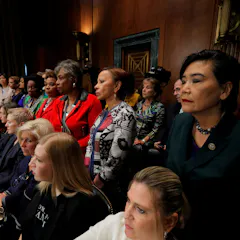
In the last year, workplace culture faced major upheaval for working women. We at The Conversation put together our reporting on that very topic from 2018.
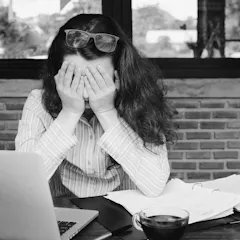
Two-thirds of people who report workplace sexual harassment say they lost their jobs or are retaliated against in other ways. Most never receive any money.
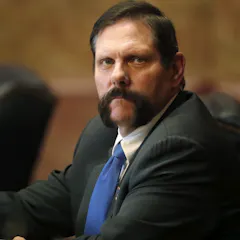
Between November 2016 and October 2018, more than 130 government officials were publicly accused of sexual harassment or assault.

Australians are more aware of domestic violence and sexual assault than before. But a worrying proportion blame victims for abuse, think women are lying, and don’t believe consent is always necessary.
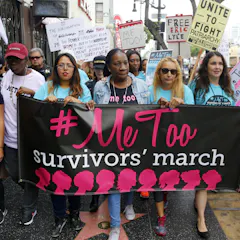
Whether the sins of our past stay with us forever has become a pertinent question of our time. A philosopher argues we don’t need to carry our past burdens – although there are some moral conditions.

We need to know more about what is going on for women in sex – what makes them suffer and what gives them pleasure.
The social structures that once enabled male artists to exploit and abuse women must be cast into the past. But castigating their work to the scrapheap is an act of cultural suicide.
Laws around the world continue to fail victims of rape and sexual abuse. It is time this, too, changed.
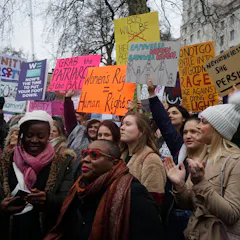
Not all women have the capacity, or freedom, to speak out about their experiences of sexual violence – be it in the workplace or at home.
MeToo drew attention to sexual harassment in the workplace. But we are still overlooking other forms of discrimination and the insidious impact of sexual harassment on women’s identities.
Top contributors
-

Associate Professor of Law and Faculty Director, Workers' Rights Institute, Georgetown University
-
Senior Lecturer (screenwriting), English & Creative Writing, University of Staffordshire
-
Instructor of Philosophy, Arizona State University
-
Professor of Family and Sexual Violence, RMIT University
-
PhD candidate, The University of Melbourne
-
Professor of Adolescent Health, Co-Head of the General Practice Clinical School, University of Sydney
-
Associate Professor, Faculty of Law, University of Technology Sydney
-
Professor of Software Systems and Cybersecurity, Monash University
-
Lecturer in Media and Communications, The University of Melbourne
-
Associate Professor of Social Work, The University of Melbourne
-
Senior Lecturer in Law, Queen's University Belfast
-
Professor of Film and Television, University of Westminster
-
Honorary Research Fellow, The University of Queensland
-
Writer, University of Westminster
-
Professorial Fellow, Jumbunna IHL, University of Technology Sydney