

Africa does not lack household savings, but only a small share of these are placed in formal institutions.
Articles on African economy
Displaying 1 - 20 of 29 articles

Colombia is an important South American regional hub and potentially important trade partner for Africa.

The commitment of African leaders remains the greatest obstacle to African renaissance and development. Consultation with citizens is also called for.
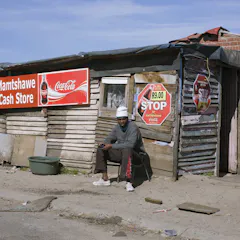
Many unemployed young people are engaged in a variety of economic activities. These may not necessarily be recognised as a form of self employment or informal employment.

There is concern over the growing influence of non-regional players in decision making at the regional bank.

Investors favoured Muhammadu Buhari’s opponent, Atiku Abubakar. So what are the Nigerian president’s economic priorities?
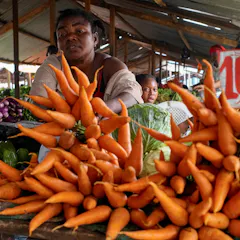
Graft is common in the way that markets in Kinshasa are run.
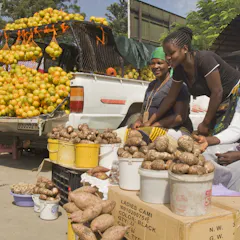
South African commercial law courses do not address the question of what norms and procedures govern business relations in indigenous African communities.

We should be wary of simplified and sweeping explanations about the scope for potential social and political reforms the middle classes can promote.

The middle class concept in Africa has remained vague and limited to number crunching. The minimum threshold for entering it in monetary terms was critically vulnerable to a setback into poverty.

The blue economy is unknown, overlooked and underdeveloped in Africa. It could represent a major growth driver for the continent.

The dynamism of domestic businesses are too often overlooked by researchers and analysts.

Zimbabwe has said it will take over all diamond mining operations in the country. But what is needed to maximise revenues isn’t state ownership, but improvements in existing regulatory practices.

Agriculture can only contribute to rural growth and development to the benefit of all if it links with an inclusive and diverse rural non-farm economy.

Nigeria’s economy is indeed under severe strain but sub-Saharn Africa’s most populus nation won’t solve its economic problems via an emergency national confab.
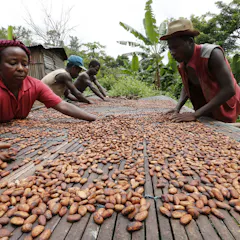
Economic growth is a necessary condition for development. But it can only pass the sufficient condition test if growth translates into high-earning jobs. Ghana’s recent history illustrates this.

Countries like Rwanda have shown that regional integration can enhance growth and reduce poverty. South Sudan should follow its lead in its engagement with the East African Community.
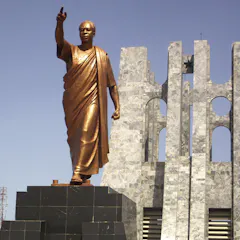
Nobel laureate and Kwame Nkrumah’s economic adviser Arthur Lewis saw Ghana as a testing ground for his ideas on economic development. But he was met with fierce resistance.

To achieve its ambition of becoming a middle income country, Uganda must accelerate the movement of workers from agriculture and the informal sector into modern industries.

Young, entrepreneurial Africans want more flexibility and values-based learning than they feel is offered by a traditional MBA.
Top contributors
-

Professor of World Politics, SOAS, University of London
-
Associate Graduate Program Director of M.A. in International Relations, Assistant Professor of Political Science and International Relations, Salve Regina University
-
Professor of Finance & Deputy Head of School, Wits Business School, University of the Witwatersrand
-
Research associate at African Centre for Cities, University of Cape Town
-
Extraordinary Professor, Department of Political Sciences, University of Pretoria
-
Professor of Economics & Business, Allegheny College
-
Director, Institute for Poverty, Land and Agrarian Studies, University of the Western Cape
-
Professor of Economics and Vice Chancellor, University of Ghana
-
Doctoral Candidate in International Development, University of Oxford
-
LLD - Private Law, University of the Western Cape
-
Honorary/Visiting Fellow, Lancaster University
-
Associate Professor of Commercial Law, University of Cape Town
-
Senior Lecturer, Economics, University of Ghana
-
Enseignant chercheur, Université de Rouen Normandie
-
Professor in International Development, University of Antwerp