Fifty years ago, students rose up against authoritarian governments, racial inequality and, most passionately, the war in Vietnam. Two historians reflect on those momentous days in 1968 – and discuss what current movements learn from them.
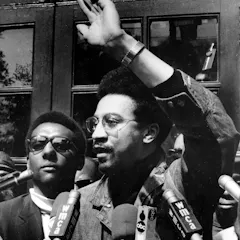
Black power militant H. Rap Brown and Stokely Carmichael (right) appeared at a sit-in protest at Columbia University in New York City on April 26, 1968.
AP
The 1968 protests at Columbia University led the institution to abandon a gym project that residents considered racist and cut off its defense work – and generated worldwide attention in the process.
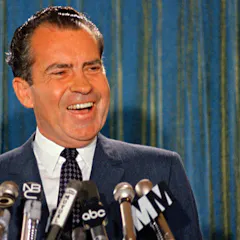
Republican presidential candidate Richard Nixon smiles for the cameras during a 1968 news conference.
AP Photo
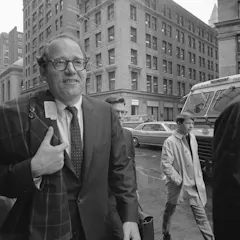
Fifty years ago, an insurance agent named Paul Simpson was convinced of rampant bias on the evening news. So he embarked on a project to record each broadcast and store them at Vanderbilt University.
Howard Yu, International Institute for Management Development (IMD)
Silicon Valley’s chip supplier de choix scored a massive own goal with smartphones. If it has got driverless cars wrong too, it could be goodnight Santa Clara.
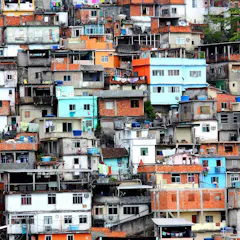
Slums like this one in Rio de Janeiro embody the problems Paul Ehrlich warned of in ‘The Population Bomb.’
dany13
Fifty years ago biologist Paul Ehrlich published ‘The Population Bomb,’ an apocalyptic warning that overcrowding would lead to wars and famine. Here’s what the book got right and wrong.
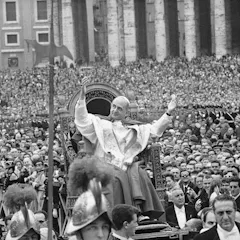
Pope Paul VI banned contraception for Catholics in the 1968 encyclical, “Humanae Vitae.”
AP Photo/Jim Pringle
July marks 50 years of Pope Paul VI’s encyclical prohibiting contraceptive use. For many years prior to it, the church had not been so explicit on its stance. How did it become such a thorny issue?
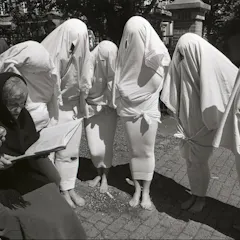
People dressed as sperm cells at Papal Nuncio building in The Hague for the sixth birthday of the encyclical, ‘Humanae Vitae.’
Nationaal Archief
On the 50th anniversary of Humanae Vitae, an encyclical released by Pope Paul VI calling for prohibition on contraceptive use, a scholar describes the struggles of Catholic women, as well as their activism.
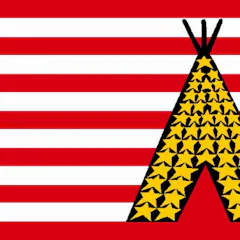
The flag of the Native American Alcatraz protest in 1969, designed by Lulie Nall, a Penobscot Indian.
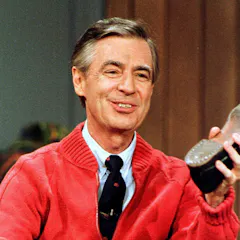
As the documentary about ‘Mister Rogers’ Neighborhood’ hits theaters, it’s worth noting that Rogers’ emphasis on kindness and love is proving to be very important to good health.
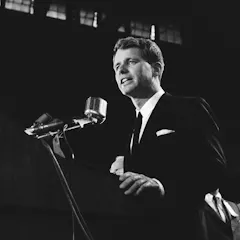
Robert F. Kennedy accepts the Democratic nomination as a candidate for the U.S. Senate in 1964.
(AP Photo/John Lent
Robert F. Kennedy, assassinated 50 years ago, began his career as a conservative anti-communist. At the end of his life, he was transformed into a liberal who championed civil and workers’ rights.
Where do baby boomers live?
oneinchpunch/shutterstock.com
The anti-Vietnam War efforts of Yale University chaplain William Sloane Coffin Jr. and other church leaders alienated many Protestant Americans – with lasting repercussions.
Fair housing protest in Seattle, Washington, 1964.
Jmabel/Wikimedia Commons
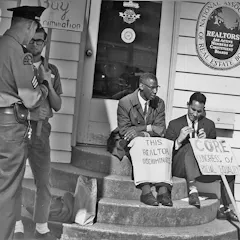
Where people live in the US is still often influenced by racial discrimination. Is the federal government doing enough to carry out the vision of the civil rights era legislation?
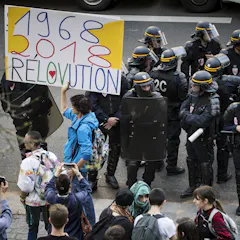
Emmanuel Macron is driving through his neoliberal agenda by relying on French police forces renowned for their violence against ethnic minority citizens, protestors and migrants.