
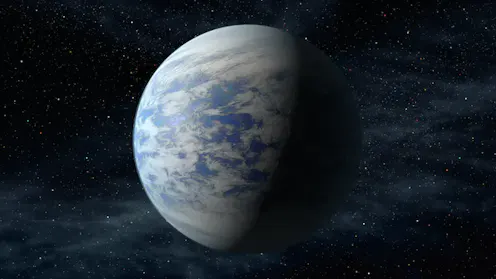
Bumi super yang baru ditemukan menambah daftar planet di sekitar bintang lain yang menawarkan peluang terbaik untuk menemukan kehidupan dan menjadi kandidat yang luar biasa.
- University Distinguished Professor of Astronomy, University of Arizona
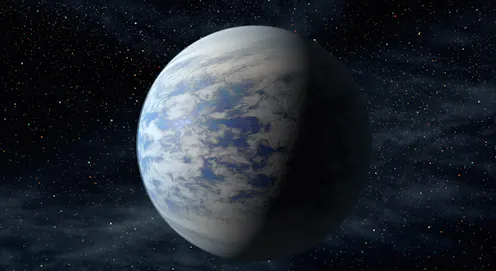
Newly discovered super-Earths add to the list of planets around other stars that offer the best chance of finding life. An astronomer explains what makes these super-Earths such excellent candidates.
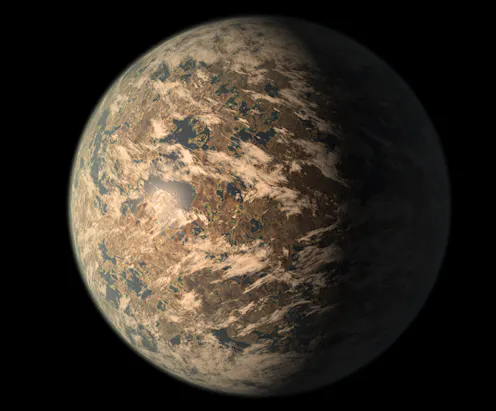
Life on Earth has dramatically changed the chemistry of the planet. Astronomers will measure light that bounces off distant planets to look for similar clues that they host life.
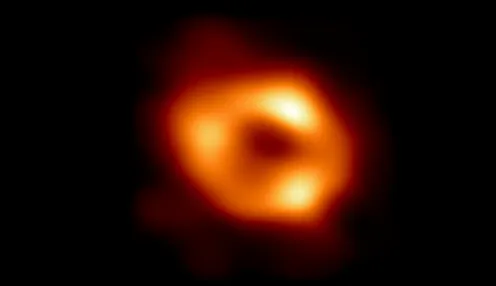
Sagittarius A* is a massive black hole at the center of the Milky Way. Now that astronomers have imaged it, they can begin to learn more about black holes within other galaxies across the universe.
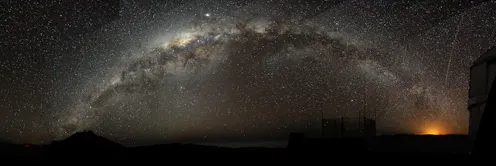
This year, two groups of astronomers plan to send messages containing information about humans and the location of Earth toward parts of space they think may be home to intelligent life.
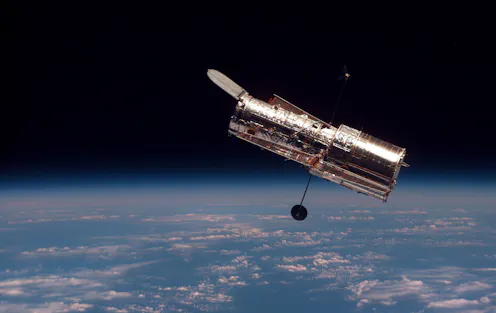
The astronomy and astrophysics decadal survey for the 2020s lays out plans to search for life on distant planets, understand the formation of galaxies and solve deep mysteries of physics.

With about 200 orbital launches scheduled and ambitious missions on everything from lunar bases to the search for life in the works, there’s a lot to watch in 2022. An astronomer explains the highlights.
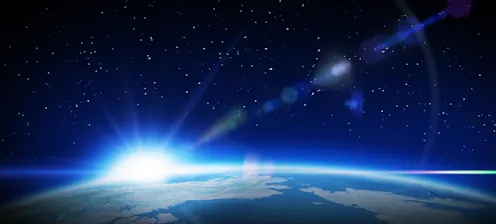
The fastest things ever made by humans are spacecraft, and the fastest spacecraft reached 330,000 mph – only 0.05% the speed of light. But there are ways to go faster.
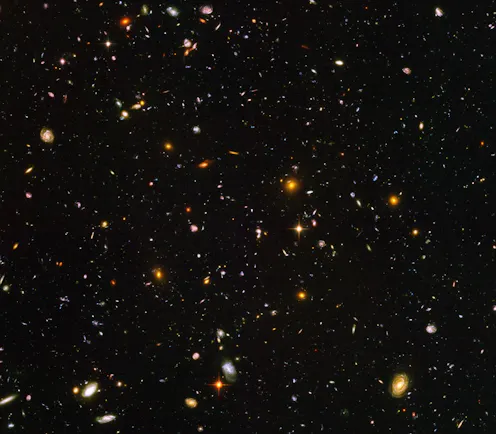
The James Webb Space Telescope is set to launch into orbit in December 2021. Its mission is to search for the first light to ever shine in the universe.
Plus, what’s happening in Chad, three months after rebels killed the president, Idriss Déby.
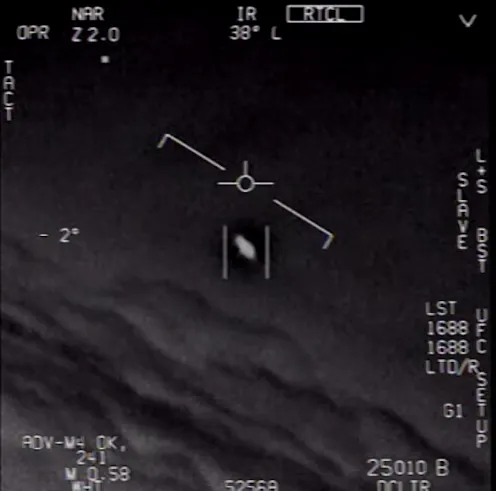
A new nine-page report, requested by Congress, doesn’t say what the 144 UFO sightings from 2004 to 2021 are, but does say that the government wants to learn more.
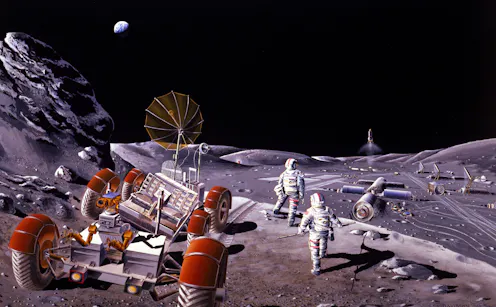
In the coming decades, governments and private companies will set up permanent bases on the Moon and Mars. And at some point, the first galactic baby will be born.
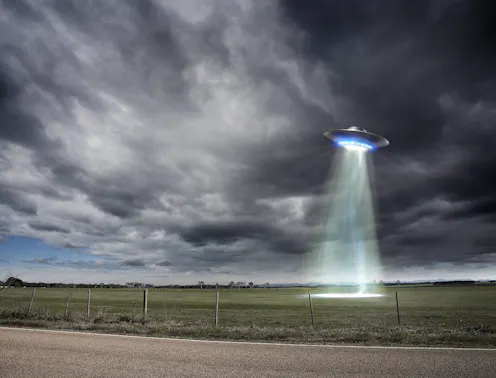
Scientists are not convinced by the current evidence of UFOs. That doesn’t mean that they don’t exist. But have Americans’ belief in UFOs gone from science to a new religion?
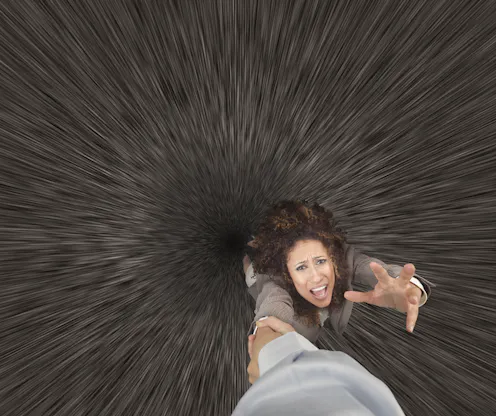
The scariest beast in the universe has an insatiable appetite and shreds its victims.
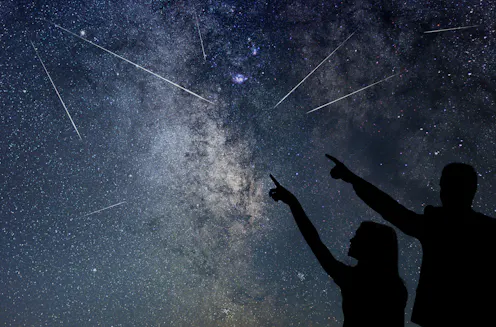
Si bien los meses de confinamiento por el COVID-19 han frenado muchas actividades, hay algunas que aún podemos realizar sin salir de casa.
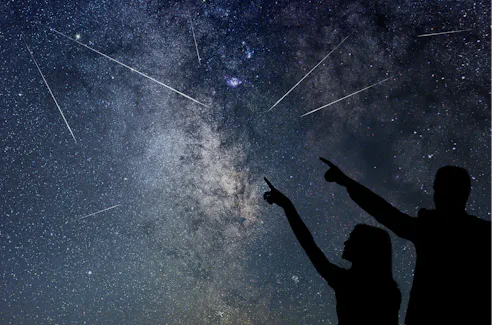
COVID-19 may have messed up school and shut down a lot of entertainment venues. But you can still brighten things up by doing a little stargazing at night, an astronomer says.

When lockdowns went into effect earlier this year, interest in massive online open courses, or MOOCs, began to surge. An expert expects the interest to continue.

Amid trying times, the collaboration between Western science and Eastern philosophy provides numerous health benefits and a path to understanding the natural world.
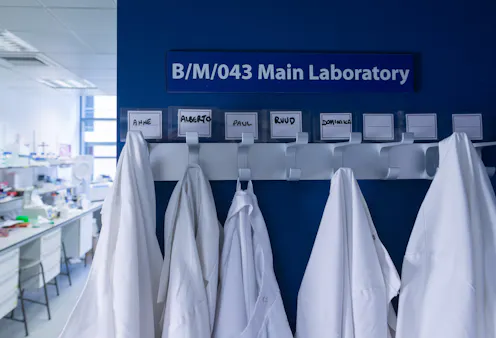
With travel halted and universities and research institutions shutting down, scientists are having trouble keeping their research running. Here’s why that matters outside the lab.
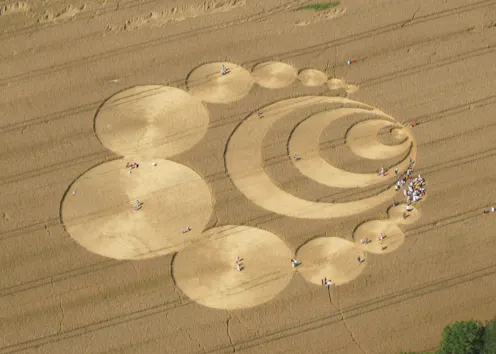
The internet has allowed pseudoscience to flourish. Artificial intelligence could help steer people away from the bad information.
Contact Chris for
- General
- Media request
- Speaking request
- Consulting / Advising
- Research collaboration
- Research supervision
- Location: Tucson, Arizona, U.S.
- X (formerly Twitter): @ImpeyChris
- Article Feed
- ORCID
-
- Joined
