
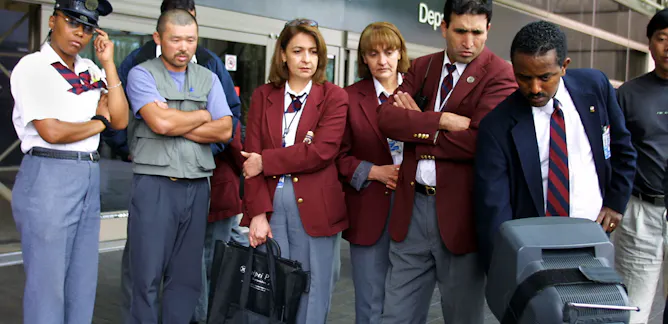
Memories are dynamic, not fixed. Even if what you’re remembering about your own experience isn’t quite how it all happened, those memories serve important roles.
The New School

The New School was founded in New York City nearly a century ago by a small group of prominent American intellectuals and educators, among them Charles Beard, John Dewey, James Harvey Robinson, and Thorstein Veblen. Frustrated by the intellectual timidity of traditional colleges, they envisioned a new kind of academic institution where faculty and students would be free to address honestly and directly the problems facing societies in the 20th century. In 1919, they created a school of advanced adult education to bring creative scholars together with citizens interested in improving their understanding of the key issues of the day through active questioning, debate, and discussion. The founders named their new school The New School for Social Research.
Over the years, The New School for Social Research, now formally named The New School, grew into an urban university with seven colleges. The university is enriched by the diversity of its students, who represent a wide range of ages, social backgrounds, aspirations, perspectives, interests, and talents.
The courses offered by The New School at first reflected the founders’ interest in the emerging social sciences, international affairs, history, and philosophy. Faculty members and visiting scholars included Harold Lasky, Franz Boas, and John Maynard Keynes. Soon, the school added courses in drama and literature, followed by classes in writing, performing arts, fine arts, foreign languages, media studies, and information processing.
Some of the finest minds of the 20th century developed pioneering courses at The New School. In 1948, W.E.B. DuBois taught the first course in African-American history and culture ever taught at a university. Around the same time, Margaret Mead taught courses in anthropology and Karen Horney and Erich Fromm introduced their new approaches to psychoanalysis. The New School’s groundbreaking courses attracted students from around the world, including young Shimon Peres. In 1962, Gerda Lerner offered the first university-level course in women’s history.
The New School also became known internationally for courses in the creative arts taught by some of the 20th century’s most innovative artists. Among them were Martha Graham, Frank Lloyd Wright, Aaron Copland, and W.H. Auden. The New School was the first American university to teach the history of film and one of the first to offer college-level courses in photography and jazz.
As the timeline above reveals, The New School has evolved continuously through the years in response to changes in the marketplace of ideas, career opportunities, and human curiosity. Formed in 1919 to challenge the intellectual and artistic status quo, this institution continues to redefine higher education almost a century later.
Each of The New School’s colleges occupies a special place in the history of higher education.
Links
Articles

The legislation is the first major housing bill to pass in decades.

If signed into law, the legislation would be the first major housing bill to pass in decades.
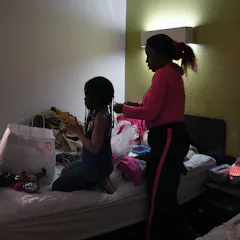
If the government supported rental assistance in amounts commensurate with the tax benefits given to homeowners, it would drastically alleviate the housing affordability crisis.

Should the world’s less developed nations be part of the “degrowth” movement? The debate involves considerations of economic dependency, neocolonialism and ecological debt.

Life is a gamble, anti-natalists say, and it’s unethical to force someone else to take the risk.
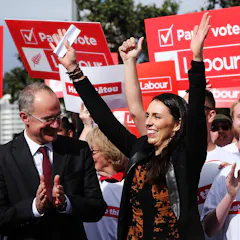
Jacinda Ardern, like Kamala Harris, unexpectedly became the leader of her political party close to the election. The similarities don’t stop there.

L'inclusion ou non du Sud global dans un scenario décroissant est sujet à de nombreux débats. Car cela implique de penser les dépendances économiques, le risque d'être néocolonial et la dette écologique.
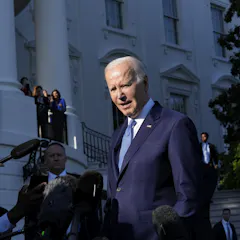
The deal would raise the ceiling for two years, cap some federal spending and impose new work requirements on certain federal benefits. It still needs the blessing of Congress.

If the US fails to increase its debt ceiling by June 1, it could be forced into an embarrassing – and hugely costly – default on its obligations.
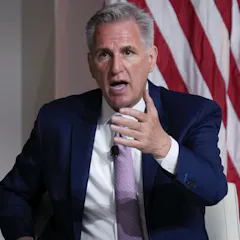
House Speaker Kevin McCarthy agreed to raise the debt ceiling – and avoid an unprecedented US default – but only if Democrats agree to freeze spending and agree to several other demands.

Reducing air pollution from cars and light trucks would pay big health dividends for low-income and minority communities. A new survey shows how to get more drivers of color into electric vehicles.
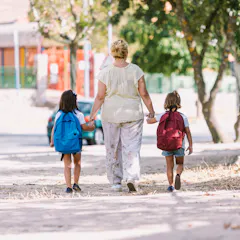
A tax credit expansion played a big role in child poverty reduction. But the government’s failure to reach all eligible Americans meant many families never got that temporary benefit.

They look like conventional school buses, but electric versions are cleaner, quieter and cheaper to maintain. States, utilities and federal agencies are helping school districts make the switch.

The median amount of cash bail is $10,000 – an immense sum for people living in poverty. Bail funds, unlike bail bondsmen, don’t charge high fees.

Most carbon dioxide captured in the U.S. today is used to extract more oil. Two scholars point to another way: biological sequestration.
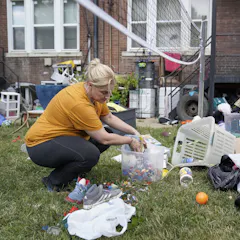
California and other states plan to build more homes in an effort to fix America’s affordable housing problem. But that’s not the main reason housing remains unaffordable for millions of people.

Publicly, companies have been paying more attention to social and environmental issues, but their priority remains profit. Climate change is forcing an evolution, a business strategy expert writes.
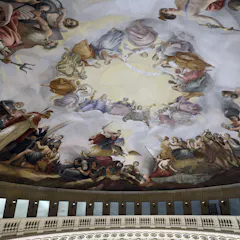
Republicans and Democrats have negotiated a draft deal that may avert a financial crisis, but why does the US have a debt ceiling in the first place?

Electric cars offer benefits for low-income and minority drivers, including cleaner air and lower maintenance costs. But it will take more than rebates on new models to make EVs accessible for all.
Authors
-

Emeritus Professor of Urban Policy, The New School
-
Assistant Professor of Environmental Policy and Sustainability Management, The New School
-
Adjunct Lecturer in Urban Studies, The New School
-
PhD in economics, The New School
-
Research Specialist and PhD Candidate in Urban and Social Policy, The New School
-
Assistant Professor of Applied Psychology, The New School
-
PhD Student in Anthropology, The New School
-
Senior Research Fellow, Visiting Scholar, The New School
-
PhD Candidate in Politics, The New School
-
Assistant Professor of Strategic Design & Management, The New School
-
Postdoctoral Fellow in Psychology at the New School for Social Research, The New School
-
Part-Time Professor of Economics, The New School
-
Fellow at the India China Institute, The New School
-
Professor of Psychology, The New School