
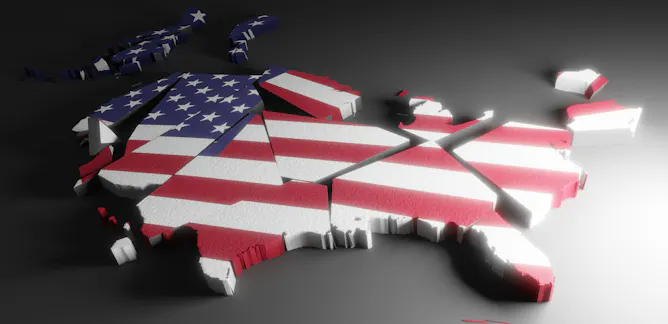
There are no guarantees that pollsters’ troubles in recent elections and popular skepticism about their dependability will be alleviated anytime soon.
American University School of Communication

Based in Washington, D.C., the American University School of Communication offers a comprehensive approach to media practice, production and research, with bachelor’s, master’s, doctoral and certificate programs in Communication Studies, Film and Media Arts, Games, Journalism, and Public Communication.
Links
Articles
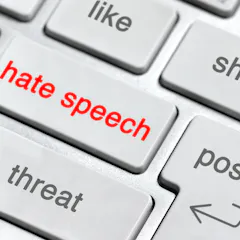
Tracking hate speech online is challenging even when terms are explicit. Coded speech is harder to detect – but pairing AI tools with human research teams can help.

Informal research methodologies informed by a distinctly Jewish approach can provoke new and more inclusive ways of engaging with generative AI.

The fediverse promises an egalitarian, noncommercial alternative to Big Tech for social media, but there’s a lot of work needed to make it work.

With a history of presidential polls getting it wrong − sometimes very wrong − how did this year’s polling fare? Some US pollsters did better, but a Brazilian pollster did the best.

The New York Times, dismayed by wayward polls in the 1952 presidential race, sent teams of reporters across the country to assess public opinion in the 1956 campaign. Its effort was no rousing success.

Polls help set the public’s expectations in a presidential race. In 2020, presidential polls overall were the worst in 40 years. No misfire was more striking than CNN’s. Will CNN do better in 2024?

An impending election doesn’t mean that people have to avoid social media altogether. When used wisely, it can still be an important source for political information and an outlet to express opinions.
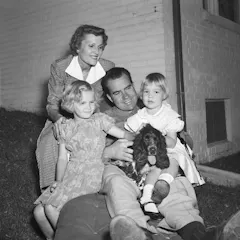
Facing an uproar over use of a private fund to cover expenses, vice presidential candidate Sen. Richard Nixon invoked the family dog, Checkers, to salvage his political career in 1952.
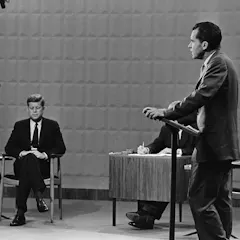
While people now reflect on how or whether Nixon’s sweaty, haggard appearance during the debate cost him the election, the view in 1960 was that the debate was a draw.

Starting in 1950, as the fear of communist subversion spread throughout America, McCarthy launched hearings that were based on scant evidence and overblown charges.

Imprecision in election polling has long been recognized. But advance polls are still useful in recognizing trends in voter preferences, and candidates’ weak points.
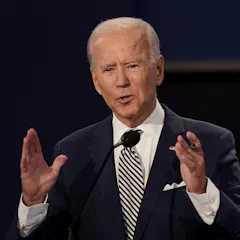
The unusual candidacy of former President Donald Trump has made election polling especially appealing, more than a year from the election. But consumers beware: Those polls may be wrong.
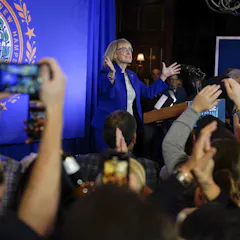
Polling for the 2022 midterms was more accurate than the dramatically wrong predictions of 2016 and 2020, leading one pollster to boast, ‘The death of polling has been greatly exaggerated.’

Will some polls misfire in prominent races in the 2022 midterms? Probably. Will such errors be eye-catching? In some cases, perhaps. Will the news media continue to tout polls? Undoubtedly.
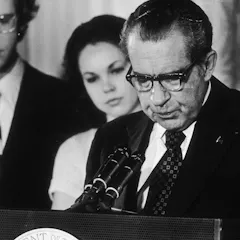
Washington Post reporters Carl Bernstein and Bob Woodward broke stories about the Watergate scandal that helped unravel Richard Nixon’s presidency. But they were not the sole force to bring him down.
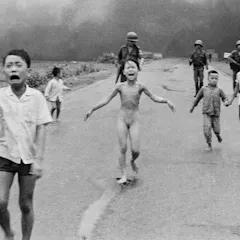
The ‘Napalm Girl’ photo is much more than powerful evidence of war’s indiscriminate effects on civilians. It also shows how false assertions can get traction in the media.

Addressing American domestic radicalism will require new ways of thinking about the nation’s problems, and new ways of solving them.
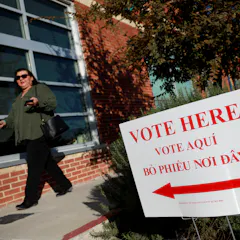
A task force of polling experts found surveys notably understated support for Donald Trump, both nationally and at the state level. Here’s what may have gone wrong, according to a polling historian.
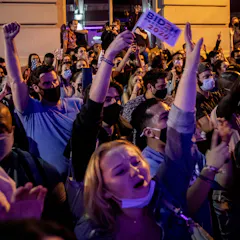
Stung by their failure to accurately predict the outcome of the 2020 presidential election, pollsters collectively went off to figure out what went wrong. They have yet to figure out what or why.
Authors
-

Professor of Communication Studies, American University School of Communication
-
Journalist in Residence, American University School of Communication
-
Executive Director of the Center for Media & Social Impact, Assistant Professor, American University School of Communication
-
Professor, School of Communication; Executive Editor, Investigative Reporting Workshop, American University School of Communication
-
Assistant Professor of Communication Studies, American University School of Communication
-
Professor of Film and Media Arts, American University School of Communication
-
Faculty Fellow, Internet Governance Lab, American University School of Communication
-
Assistant Professor, American University School of Communication
-
Associate Professor, American University School of Communication
-
Assistant Professor of Public Communications, American University School of Communication
-
Assistant Professor of Public Communication, American University School of Communication
-
Professor and Interim Dean, American University School of Communication
-
Assistant Professor of Journalism, Accountability and Democracy, American University School of Communication
-
Professor Emeritus of Communication, American University School of Communication
-
Associate Professor of Journalism, American University School of Communication