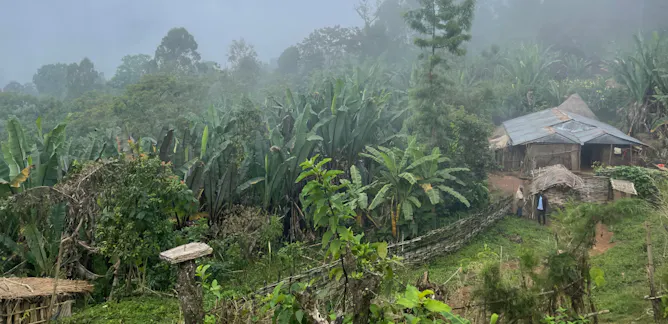
Ethiopia’s protected areas conserve almost 10% of the country, but new research has found that people living near nature reserves may be more likely to go hungry.
Addis Ababa University

Addis Ababa University (AAU) was established in 1950 as the University College of Addis Ababa and is the oldest and the largest higher learning and research institution in Ethiopia. Since inception, the University has been the leading center in teaching-learning, research and community services.
AAU currently has 48,673 students, including 33,940 undergraduate, 13,000 graduate and 1733 PhD students, and 6043 staff, including 2,408 academics and 3,635 support staff. In its 14 campuses, the University runs 70 undergraduate and 293 graduate programs, including 72 PhD and 221 Masters, and various specializations in Health Sciences. Over 222,000 students have graduated from AAU since its establishment.
In recent years, the University has been undertaking various reform schemes in order to cope with and respond to the fast changing national and international educational dynamics. At present the University has 10 colleges, 4 institutes that run both teaching and research, and 6 research institutes that predominantly conduct research. Within these academic units, there are 55 departments, 12 centers, 12 schools, and 2 teaching hospitals.
Links
Articles

Legal ways to make a decent life inside and outside Ethiopia should be increased.

Taxonomy does not exist in a vacuum. It is deeply entwined with history and society.
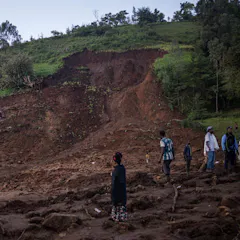
Half of Ethiopia’s territory is prone to medium to very high landslide risk.
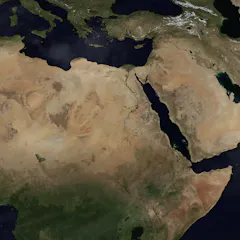
The climate ‘flickered’ between wet and dry, before finally drying out for good.
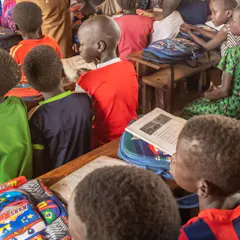
Ethiopia’s unmet refugee education reforms highlight the ways in which bureaucratic structures and interests can shape policy.
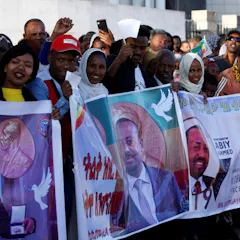
Governments coming to power riding a wave of youth protests can employ authoritarian tactics to silence dissent from the same movements.

More than half a million Ethiopian migrants have been deported from Saudi Arabia since 2017.

Ethiopian history shows that the demands of its young people can’t go unaddressed for long.

Ethiopia’s party system is extremely volatile due to the prevalence of weakly institutionalised and fragmented political parties.
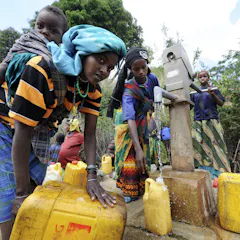
Parts of Ethiopia will likely be hotter, drier, and more water stressed - with consequences for human and economic development.
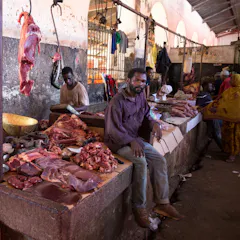
Los estudios sobre la alimentación en Etiopía revelan que impulsar la demanda de alimentos en condiciones por parte de los consumidores es fundamental para detener los millones de muertes y enfermedades causadas por patógenos transmitidos por la comida en todo el continente.
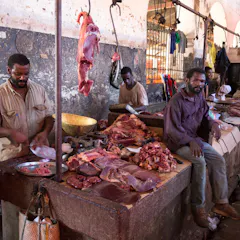
Food safety studies in Ethiopia reveal that unlocking consumer demand for safe food is critical to stopping the millions of deaths and illnesses from foodborne pathogens across the continent.

Easy access to alcohol and exposure to alcohol advertisements affect social and health outcomes.

To be better prepared for future eruptions there’s a need to understand and monitor poorly known volcanoes, even in remote places.
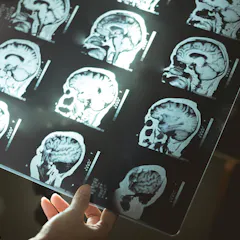
There’s been significant advances in mental health genetics research, but Africa has largely been excluded.

Solar radiation management might be able to reduce some of the risks of global warming while countries get their emissions under control.

South Africa considers itself to be playing a key role in promoting the ‘African Agenda’ in continental and world affairs. But perceptions in the rest of Africa tell a different story.

Cinq sommités de différentes universités en Afrique questionnent le milliardaire américain sur la lutte contre le sida sur ce continent. On apprend autant de leurs questions que de ses réponses.
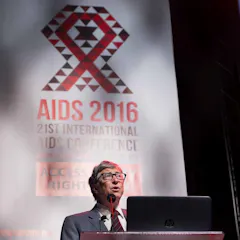
Bill Gates, who has been identified as the world’s most significant donor in the fight against AIDS, shares his thoughts on the pandemic with Africa’s most prominent HIV/AIDS academics.
Authors
-

Assistant Professor and a faculty in the Center for Comparative Education and Policy Studies, Addis Ababa University
-
Professor, Addis Ababa University
-
Assistant Professor, Addis Ababa University
-
Assistant Professor, Political Science and International Relations, Addis Ababa University
-
Professor, Center for Federal Studies, Addis Ababa University
-
Assistant Professor and Head, Department of Psychiatry, Addis Ababa University
-
Honorary doctorate, Addis Ababa University
-
Fellow, Centre for Federalism and Governance Studies, Addis Ababa University
-
Assistant Professor and Interim Director, Institute of Geophysics, Space Science and Astronomy, Addis Ababa University
-
Professor, Addis Ababa University
-
Advisory Board Member, Research Center for Forced Displacement and Migration Studies, Addis Ababa University
-
Associate Professor of Law, Addis Ababa University
-
Country Programme Manager, REACH: Improving Water Security for the Poor, Addis Ababa University
-
Professor of Plant Taxonomy and Biodiversity, Addis Ababa University
-
Associate Professor, Addis Ababa University